

.jpg/1920px-The_Arrival_of_the_James_Webb_Space_Telescope_in_French_Guiana_(51583872962).jpg)

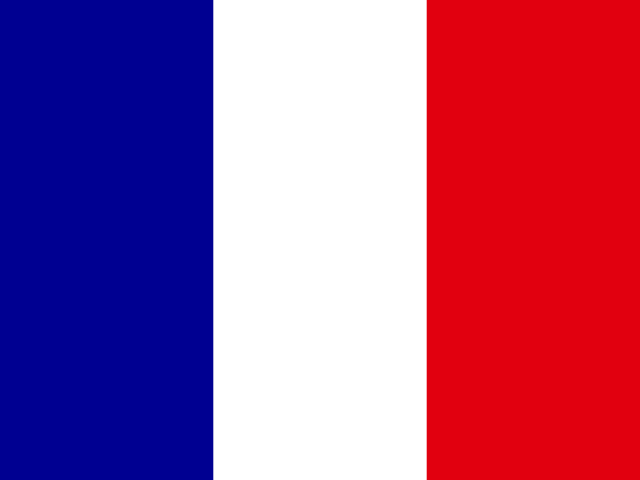
French Guiana📸 Photo album · 4 photos · Ultra-HD
Rainforest, rocket launches and French-Creole culture
🕒 –:– local time1 stories this week1 sources 6 top placesCapital Cayenne
French Guiana sits on the north-east shoulder of South America, a land of rivers and dense rainforest. For thousands of years it was home to Indigenous peoples including the Kali'na, Arawak, Palikur, Wayana, Wayampi and Teko, who lived by fishing, hunting and cultivating cassava along the coast and great rivers such as the Maroni and Oyapock.
Europeans arrived in the 16th century, and after several failed attempts France established a lasting settlement at Cayenne in the 1600s. Plantations of sugar and other crops were worked by enslaved Africans, some of whom escaped into the interior to found Maroon communities whose descendants, including the Saramaka, Aluku and Ndyuka, keep their cultures alive today. A disastrous colonisation scheme at Kourou in 1763 cost thousands of settlers' lives. Slavery was finally abolished in 1848, and gold rushes later drew prospectors deep into the forest.
From the 1850s to the mid-20th century the colony was infamous for its penal settlements, known collectively as the bagne, to which France sent tens of thousands of convicts. The Îles du Salut, including Devil's Island, became notorious worldwide, not least through the Dreyfus affair. The bagne was closed after the Second World War, and in 1946 French Guiana became an overseas department of France. In 1964 Kourou was chosen as the site of a space centre, now Europe's spaceport.
Today French Guiana is part of France and the European Union, with a diverse population of Creoles, Indigenous peoples, Maroons, Hmong farmers, Brazilians, Haitians and metropolitan French. Visitors can explore penal-colony ruins, watch rockets lift off, encounter giant leatherback turtles and venture into an Amazonian rainforest that covers most of the territory. Creole cooking, a famously long carnival and riverside Maroon villages add rich cultural colour to the journey.
Entry rules depend on your passport and change often.
Before you book, check the official rules for your passport:
The latest visa and entry news for French Guiana appears below as soon as publishers report it.
Guyana Aligns With France As Trans Guyana Airways Prepares Direct Georgetown–Cayenne Flights To Boost Tourism Growth Guyana and France advance direct Georgetown–Cayenne flights, cutting travel time while boosting tourism, trade…
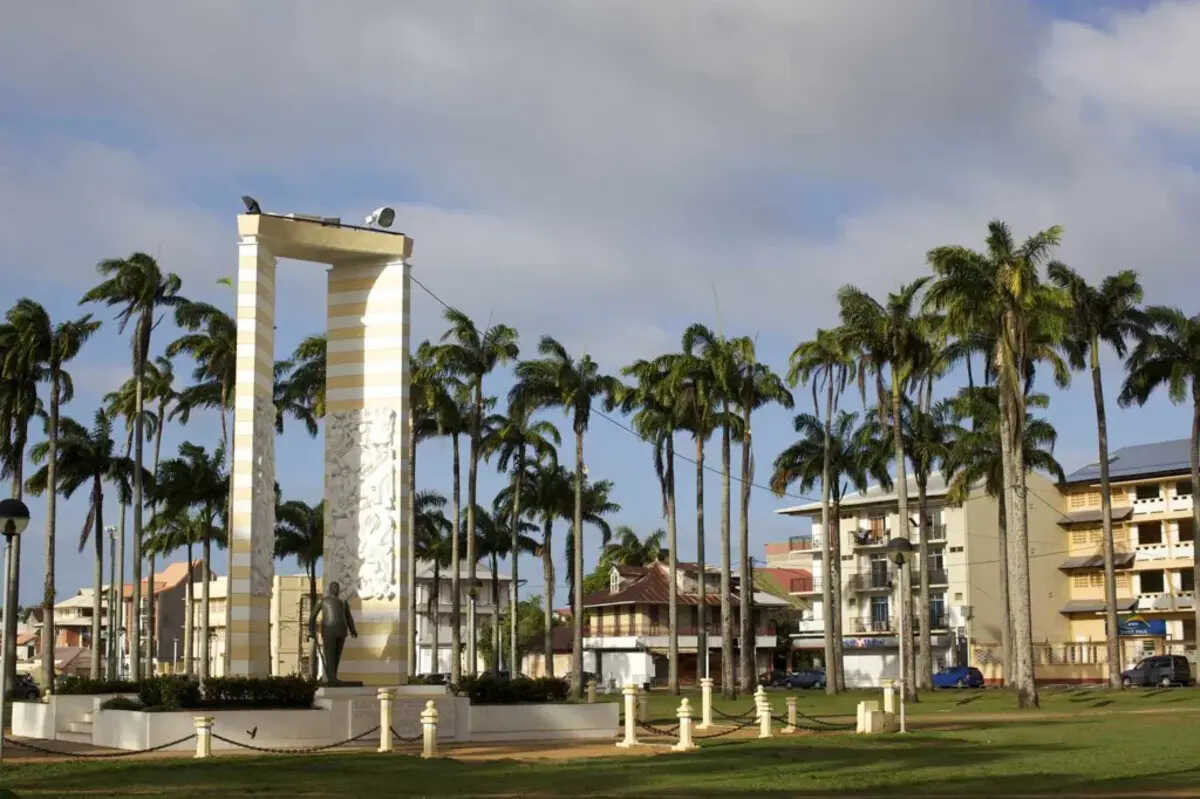 #Guyana#France#Georgetown#Cayenne
French Guiana has an equatorial climate that is hot and humid all year with little temperature variation. Rainfall is heavy for much of the year, peaking in May, with a main dry season from August to November.
Typical daytime highs and rain in Cayenne (approximate averages).
Days 1-2 explore Cayenne and the Rémire-Montjoly beaches. Day 3 visit Kourou and the space centre. Days 4-5 take a boat to the Îles du Salut and stay overnight on Île Royale.
Days 1-4 cover Cayenne, Kourou and the Îles du Salut. Days 5-6 continue west to Saint-Laurent-du-Maroni and Awala-Yalimapo, then spend Days 7-10 on a pirogue and hammock-camp trip into the rainforest or the Kaw Marshes.
Backpacker budget: about $70–100 a day
Emergency: 112 · 17 police · 15 ambulance · 18 fire
Cayenne's Félix Eboué Airport has flights from Paris and the French Caribbean. Land crossings connect with Brazil over the Oyapock River bridge and with Suriname by boat across the Maroni.
✈️ Cheap flights to French Guiana: airports, flight times & best time to fly →
Most visits are trouble-free, but crime rates are higher than in mainland France. Stay alert in towns at night and travel into the forest only with reputable guides.
It depends on your passport; note that French Guiana is not part of the Schengen area, so rules may differ from mainland France. Check the official French government website or embassy before you travel.
August to November is the dry season and the best time for travel. Carnival in January to March is a great cultural experience despite the rain.
Yes, the public can watch launches from designated viewing sites around Kourou. Launch dates can change, so check schedules and book viewing places early.
French is the official language, and Guianese Creole is widely spoken. You'll also hear Portuguese, Sranan Tongo, Hmong and Indigenous languages.
Approximate daily cost per person (stay, food, local transport).
Rent a car to travel along the coast road. Boats and small planes reach interior villages.
Nothing in this tab yet – the agents add new stories every few minutes.
🌏 You reached the start of our archive.

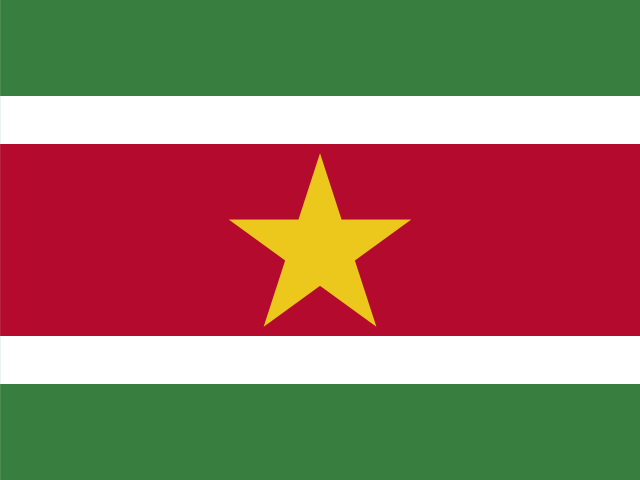 SurinameDutch colonial charm, rainforest rivers and many cultures
.jpg/500px-Iwokrama_Rainforest,_Guyana_(12179378186).jpg)
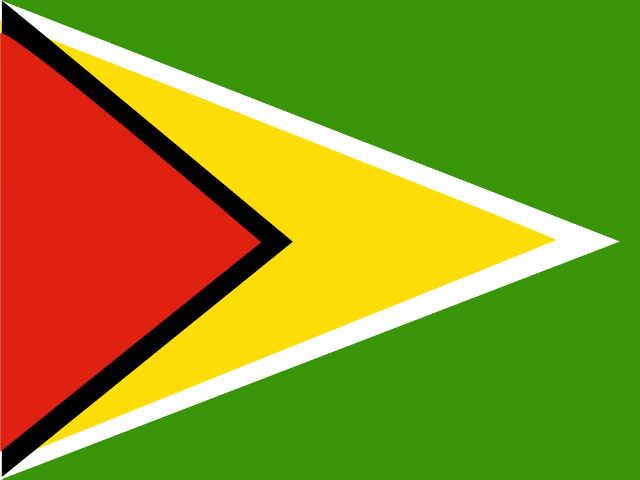 GuyanaGiant waterfalls, wild savannahs and untouched rainforest
 Trinidad and TobagoCarnival, steelpan music and rainforest birdlife
 BarbadosCalm west coast beaches, rum shops and island rhythms
 GrenadaThe Spice Isle of nutmeg, rainforest and white-sand bays
 Saint Vincent and the GrenadinesA volcano island and a string of sailing-paradise isles
 Saint LuciaTwin Pitons, rainforest and volcanic hot springs
 MartiniqueFrench Caribbean island of flowers, rum and volcanoes