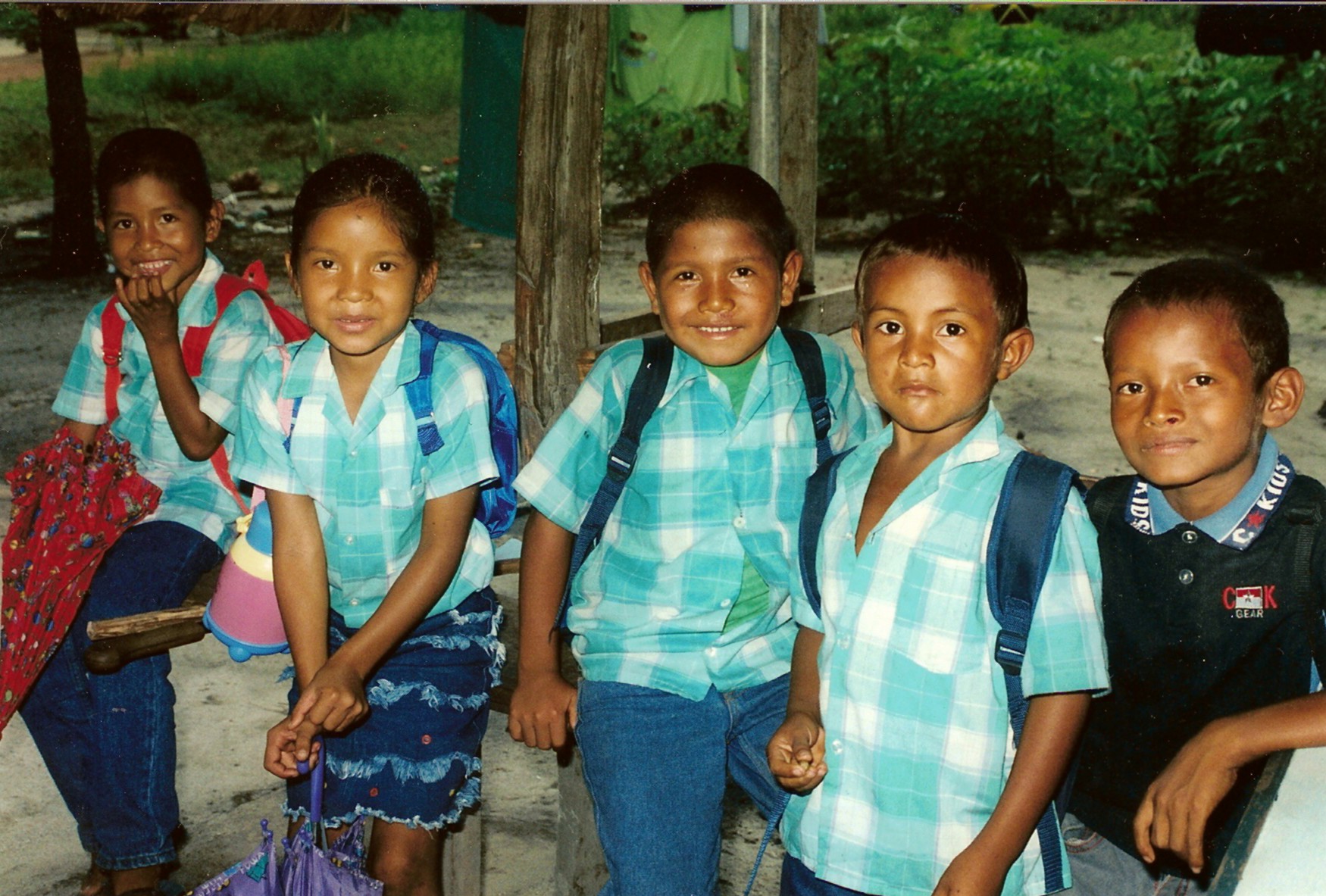
Suriname, on the north-east coast of South America, is a land of rainforest, rivers and coastal plains. Its first inhabitants were Indigenous peoples, including the Arawak (Lokono) and Carib (Kaliña), as well as forest communities such as the Trio and Wayana in the interior. They fished, farmed cassava and travelled by canoe along the great rivers, and their descendants still live in villages across the country.
Europeans began exploring the coast in the sixteenth century, and English settlers established plantations in the mid-seventeenth century. In 1667 the Dutch took control, and in exchange England retained New Amsterdam, now New York. Under Dutch rule, sugar, coffee and cocoa plantations relied on enslaved Africans brought across the Atlantic. Many escaped into the rainforest and formed free communities, known today as Maroons, who fought for and won treaties recognising their freedom in the eighteenth century. Their descendants, including the Saramaka and Ndyuka, preserve rich African-rooted traditions.
Read the full history
Slavery was abolished in 1863, followed by a period of state supervision that ended in 1873. To replace plantation labour, the Dutch brought contract workers from China, India and Java, creating one of the most ethnically diverse populations in the world. In the twentieth century, bauxite mining became important, and Suriname gained autonomy in 1954. It became independent from the Netherlands on 25 November 1975, and after a period of military rule in the 1980s, democracy was restored.
Today Suriname is a place where mosques and synagogues stand side by side, and Hindustani, Creole, Javanese, Maroon, Chinese and Indigenous cultures blend. Visitors can explore the UNESCO-listed wooden architecture of Paramaribo, cycle past old plantations in Commewijne, and head deep into the interior, where vast protected rainforests make up much of the country.
Timeline
c. 3000 BCIndigenous peoples live along Suriname's rivers and coast
1650English settlers establish plantations
1667Dutch take control; England keeps New Amsterdam
1760First peace treaty signed with the Ndyuka Maroons
1863Slavery is abolished
1873Arrival of the first contract workers from India
1975Suriname gains independence from the Netherlands
2002Paramaribo's historic inner city becomes a UNESCO site
Suriname🛂 Visa & entry
Entry rules depend on your passport and change often.
CARICOM – CARICOM member – Caribbean Community citizens often have easier entry.
Before you book, check the official rules for your passport:
Exercise normal precaution in Suriname . Suriname is generally a safe destination for travelers Review the Travel Guidance to learn how to prepare for a safe trip.
There were no changes to the advisory level or risk indicators. Advisory summary was updated. Suriname is generally a safe destination for travelers Review our Travel Guidance for Suriname to learn how to prepare for a safe trip.…
Walk Paramaribo's historic centreStroll among white wooden colonial houses, Fort Zeelandia and the riverside Waterkant.
See a mosque and synagogue side by sideVisit Keizerstraat, where a mosque and a synagogue stand next to each other.
Cycle the Commewijne plantationsCross the river by boat and bike through old plantation estates and quiet villages.
Spot river dolphinsTake a sunset boat trip to see Guiana dolphins where the Suriname and Commewijne rivers meet.
Explore the Central Suriname Nature ReserveVenture into a vast UNESCO-protected rainforest with waterfalls and abundant wildlife.
Stay in a Maroon villageTravel up the Upper Suriname River to stay in a lodge and learn about Maroon culture.
Watch nesting sea turtlesSee leatherback and green turtles nesting at Galibi beach in season.
Climb the VoltzbergHike through jungle to a granite dome with sweeping views over the rainforest.
Eat your way through the culturesTry roti, Javanese bami and saoto soup, pom and Chinese-Surinamese dishes.
Suriname🗺️ Where to visit in Suriname
Where to go in Suriname
📍
ParamariboCapital · colonial architectureA UNESCO-listed city of wooden buildings, markets and multicultural life.
📍
Commewijne DistrictCoast · plantationsHistoric plantations, Fort Nieuw Amsterdam and countryside cycling.
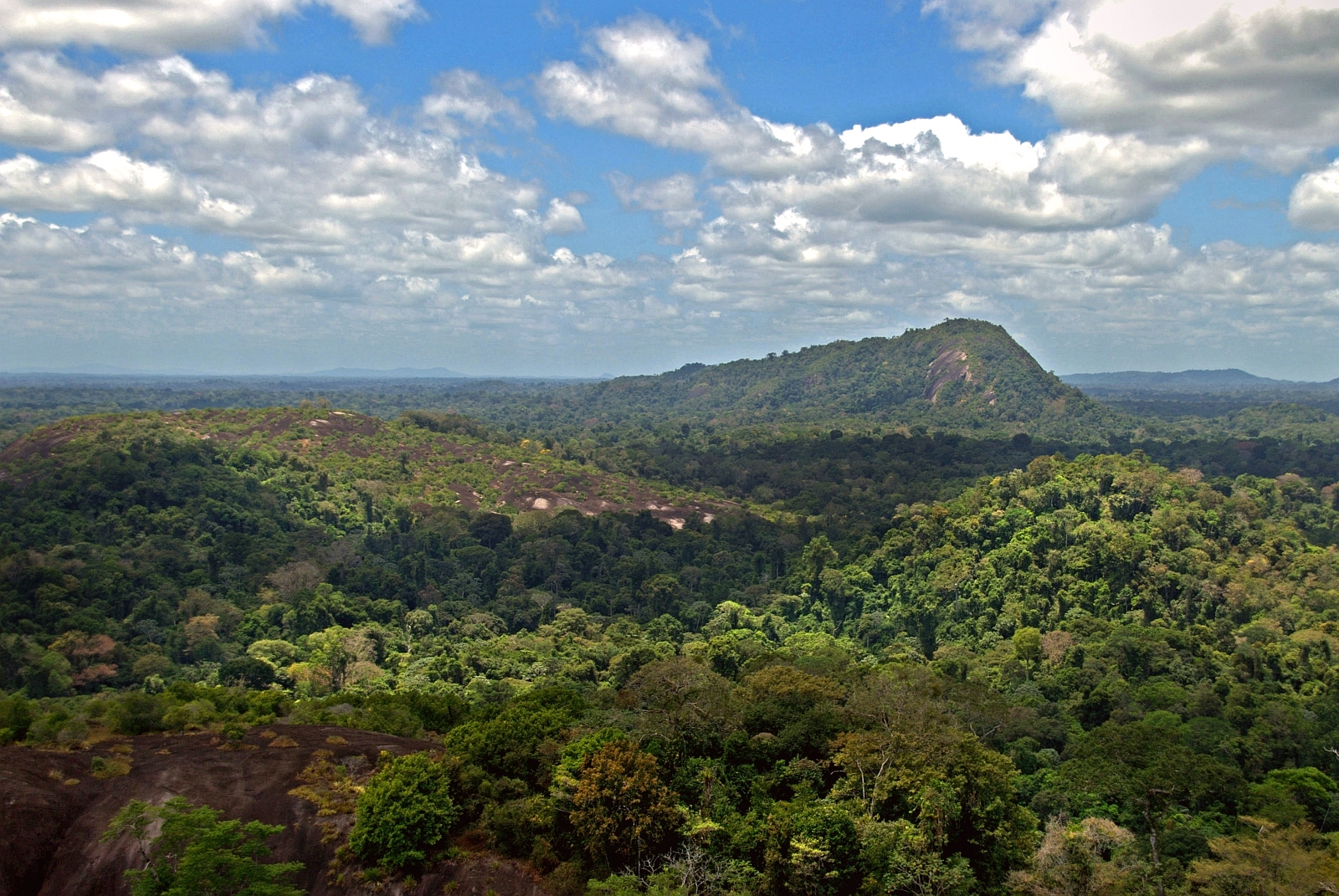
Central Suriname Nature ReserveInterior · rainforestHuge pristine rainforest with Raleigh Falls and the Voltzberg dome.
Brownsberg Nature ParkInterior · mountain viewsA hilltop park with monkeys, waterfalls and views over the Brokopondo Reservoir.
📍
Upper Suriname RiverInterior · Maroon villagesRiver lodges and traditional villages reached by dugout canoe.
📍
Galibi Nature ReserveNortheast · turtle beachesImportant nesting beaches for sea turtles near Indigenous Kaliña villages.
📍
Bigi PanWest coast · wetlandsMangrove lagoons famous for scarlet ibis and other birds.
Suriname✨ Must-do experiences
Walk the historic centre of Paramaribo
Cycle past old plantations in Commewijne
Take a boat trip to Maroon villages on the Upper Suriname River
Watch for river dolphins at sunset
Suriname🍽️ Taste of Suriname
Roti – flatbread with curried chicken and potatoes
Pom – baked dish of chicken and grated tayer root
Bami – Javanese-style fried noodles
Moksi alesi – mixed rice with meat and vegetables
Suriname🌦️ Weather & best time to visit Suriname
Best time to visit Suriname
Suriname is hot and humid all year, with temperatures around 30-33°C and two rainy and two dry seasons. The interior can be wetter and is best visited in the drier months.
BestMid-August to November – the long dry season, ideal for jungle trips and river travel.
ShoulderFebruary to April – the short dry season, with good conditions between the rains.
AvoidMay to mid-August – the long rainy season, when trails are muddy, though rivers are high and the forest is lush.
30°💧💧Jan
30°💧Feb
31°💧Mar
31°💧💧Apr
31°💧💧💧May
31°💧💧💧Jun
31°💧💧Jul
32°💧Aug
33°☀️Sep
33°☀️Oct
32°💧Nov
31°💧💧Dec
Typical daytime highs and rain in Paramaribo (approximate averages).
Suriname🎉 Festivals & events in Suriname
1 July
Keti KotiEmancipation Day celebrates the abolition of slavery with music, traditional dress and food.
31 December
Owru YariParamaribo's New Year's Eve celebration, famous for massive firecracker displays.
March
Phagwa (Holi)The Hindu spring festival brings coloured powder and joyful celebrations.
25 November
Independence DayNational celebrations mark independence from the Netherlands.
9 August
Indigenous Peoples DayA public holiday honouring the culture and rights of Indigenous communities.
Suriname🧭 Suriname itinerary ideas
How many days in Suriname?
5 daysParamaribo and Commewijne
Day 1-2: explore Paramaribo's historic centre, markets and riverside. Day 3: cycle the Commewijne plantations and visit Fort Nieuw Amsterdam. Day 4: a dolphin-spotting boat trip. Day 5: a day trip to Brownsberg Nature Park.
10 daysCity and rainforest
Day 1-3: Paramaribo and Commewijne. Day 4-6: travel up the Upper Suriname River to stay in a jungle lodge near Maroon villages. Day 7-9: fly into the Central Suriname Nature Reserve for Raleigh Falls and the Voltzberg. Day 10: return to Paramaribo.
Suriname🎒 Backpacking Suriname – tips & hacks
Backpacker budget: about $40–60 a day
Shared minibuses run between Paramaribo and towns along the coast cheaply, but trips into the interior usually need an organised tour.
Cycling is a great way to explore Paramaribo and Commewijne, and bike hire is easy to find.
Eat at warungs and roti shops for cheap, filling meals.
Budget guesthouses can be found in central Paramaribo near the historic centre.
Dutch is the official language and Sranan Tongo the lingua franca, but English is widely understood in tourist areas.
Suriname🛡️ Safety & money in Suriname
Stay safe
Use normal precautions in Paramaribo, especially at night, and avoid isolated areas.
Drive on the left and watch out for scooters and animals on rural roads.
Take mosquito precautions and check health advice for the interior.
Travel in the interior with reputable operators, as river and jungle conditions can be challenging.
Money
The currency is the Surinamese dollar (SRD); US dollars and euros are also widely used for larger purchases.
ATMs are available in Paramaribo, but cards are not always accepted, so carry cash for the interior and markets.
Tipping around 10% in restaurants is common if service is not included.
Emergency: 115 police · 113 ambulance · 110 fire
Suriname🛬 Getting to Suriname
Johan Adolf Pengel International Airport near Paramaribo has flights from the Netherlands, the Caribbean and South America. Ferries and boats cross the border rivers to Guyana and French Guiana.
Suriname is the smallest sovereign country in South America by area.
Rainforest covers the vast majority of Suriname's land.
The Dutch exchanged New Amsterdam (now New York) for Suriname in the peace settlement of 1667.
Suriname is the only country in South America where Dutch is the official language.
People drive on the left in Suriname, unlike most of the Americas.
Suriname❓ Suriname travel FAQ
Suriname travel questions
Is Suriname safe for tourists?
Suriname is generally safe for visitors who use normal precautions, especially in Paramaribo at night. Travel with reputable operators in the interior.
When is the best time to visit Suriname?
The long dry season from mid-August to November is best for rainforest trips. February to April is also good.
How many days do you need in Suriname?
Five days covers Paramaribo and the nearby plantations. Ten days or more lets you add the interior and Maroon villages.
Do I need a visa or tourist card for Suriname?
It depends on your passport – check the official government site or embassy before you travel.
What language is spoken in Suriname?
Dutch is the official language, while Sranan Tongo is widely spoken day to day. Hindustani, Javanese and Maroon languages are common, and many people speak English.
Suriname💰 What a trip costs
$$price level
$40–60backpacker / day
$90–160mid-range / day
Approximate daily cost per person (stay, food, local transport).
Suriname🚌 Getting around
Rent a car or use minibuses on the coast. Boats and small planes reach the interior.
Suriname🛕 Sacred & spiritual places
Neveh Shalom Synagogue and Keizerstraat Mosque – Synagogue and mosque standing peacefully side by side
Jodensavanne – Ruins of a 17th-century Jewish settlement and synagogue
Suriname🤝 Local etiquette
Greet people when entering shops or homes
Respect the many religions – dress modestly at places of worship
Ask before taking photos in Maroon and Indigenous villages
Nothing in this tab yet – the agents add new stories every few minutes.
📰 Older Suriname stories Everything our agents ever found – keeps loading as you scroll




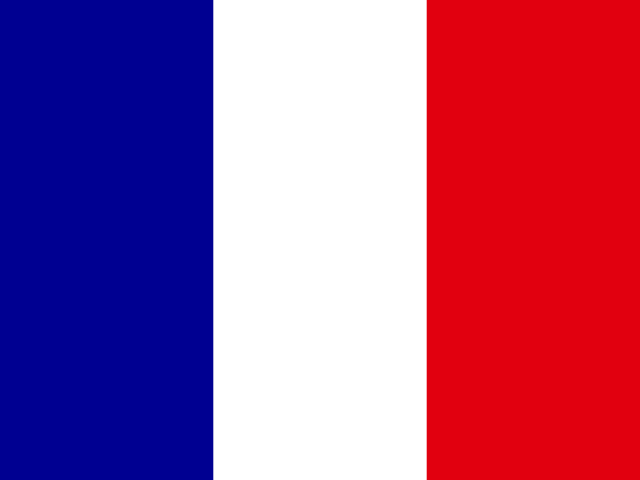 French GuianaRainforest, rocket launches and French-Creole culture
.jpg/500px-Iwokrama_Rainforest,_Guyana_(12179378186).jpg)
 GuyanaGiant waterfalls, wild savannahs and untouched rainforest
 Trinidad and TobagoCarnival, steelpan music and rainforest birdlife
 BarbadosCalm west coast beaches, rum shops and island rhythms
 GrenadaThe Spice Isle of nutmeg, rainforest and white-sand bays
 Saint Vincent and the GrenadinesA volcano island and a string of sailing-paradise isles
.JPG/500px-Sur_de_M%C3%A9rida_(Venezuela).JPG)
 VenezuelaThe world's tallest waterfall, tabletop mountains and Caribbean isles
 Saint LuciaTwin Pitons, rainforest and volcanic hot springs