


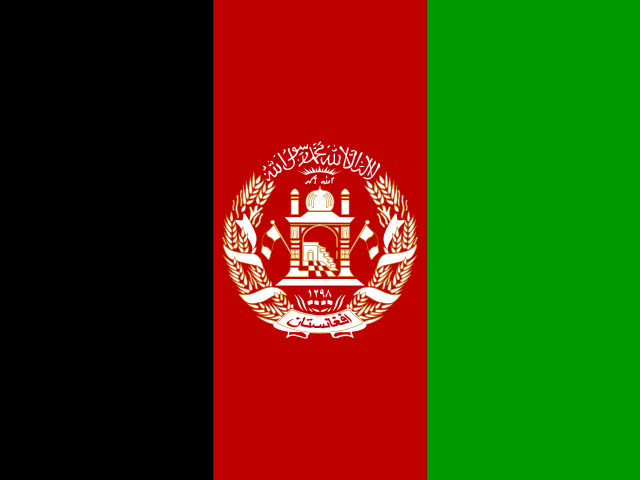
Afghanistan📸 Photo album · 8 photos · Ultra-HD
Turquoise mosques, mountain valleys and the Silk Road
🕒 –:– local time0 stories this week0 sources 6 top placesCapital Kabul
Afghanistan sits at one of the great crossroads of Asia, where the trade routes of Persia, India and Central Asia met among high mountain passes. Bronze Age farming towns flourished here, and in the 6th century BC the region became part of the Persian Achaemenid Empire. Alexander the Great marched through in the 4th century BC, leaving behind Greek-influenced kingdoms in Bactria whose coins and city ruins still surprise archaeologists.
Over the following centuries the land became a meeting point of faiths and art. The Kushan Empire promoted Buddhism, and the Gandhara style blended Greek and Indian sculpture, culminating in the giant Buddhas carved into the cliffs of Bamiyan. Islam arrived from the 7th century onward, and dynasties such as the Ghaznavids and Ghurids built mosques, minarets and courts of poetry. Mongol invasions in the 13th century devastated cities, but the Timurids later made Herat a glittering centre of miniature painting, calligraphy and architecture.
Modern Afghanistan took shape in 1747 when Ahmad Shah Durrani united Pashtun tribes and founded a powerful kingdom. In the 19th century the country became a buffer in the 'Great Game' between the British and Russian empires, fighting several wars with Britain before regaining full control of its foreign affairs in 1919. A long monarchy gave way to a republic in 1973, and the decades that followed brought Soviet intervention, civil war and repeated changes of government that have shaped the nation's recent story.
For travellers, Afghanistan's heritage remains extraordinary: the empty niches of Bamiyan, the turquoise lakes of Band-e Amir, the Friday Mosque of Herat and the remote Minaret of Jam, a UNESCO World Heritage Site. Its hospitality, Persian poetry tradition, carpets and cuisine are legendary. However, travel conditions are highly uncertain and most governments advise against visits, so anyone considering a trip must check their government's latest official advice first.
Entry rules depend on your passport and change often.
Before you book, check the official rules for your passport:
The latest visa and entry news for Afghanistan appears below as soon as publishers report it.
🛰️ The agents haven't spotted fresh news about Afghanistan in the last few days – here is the travel guide, plus the latest from nearby countries.
Latvia’s Interior Ministry proposed temporarily suspending visas for Uzbek citizens, citing security concerns and a need for better screening and...
 #Latvia#Uzbekistan#Visas & Entry Rules
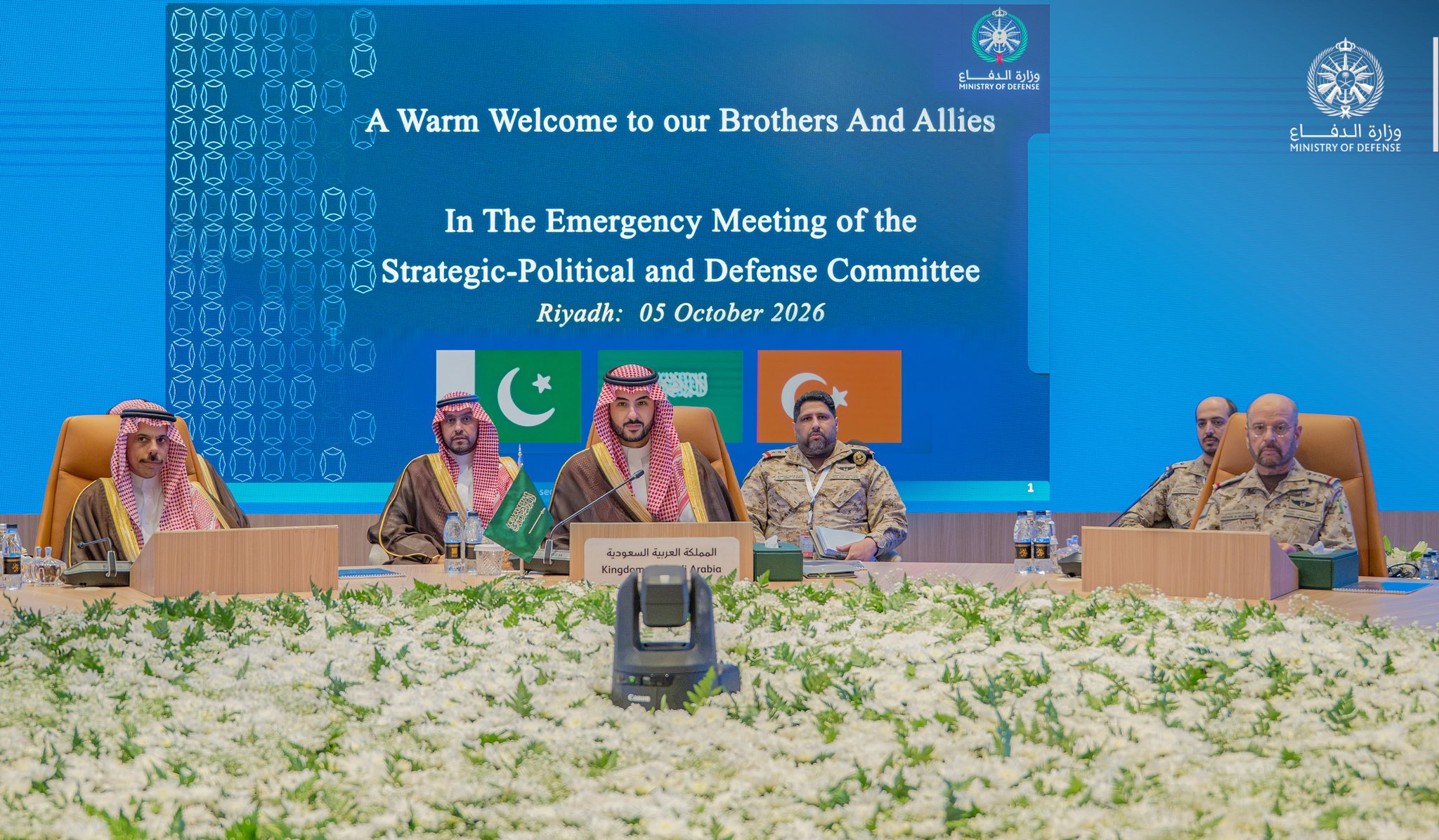
RIYADH: Saudi Arabia, Pakistan and Turkiye on Monday agreed to immediately implement collective-defense commitments under the Makkah Defense Alliance, including the swift deployment of agreed forces and military capabilities to…
 #Saudi Arabia#Pakistan#Pilgrimage & Spiritual
RIYADH: Saudi Arabia, Pakistan and Turkiye on Monday agreed to immediately implement collective-defense commitments under the previously agreed Makkah Defense Alliance, including the swift deployment of agreed forces and other…
#Saudi Arabia#Pakistan#Pilgrimage & Spiritual
Kazakhstan Walks Alongside Uzbekistan And More In Safeguarding Travel Security As Central Asia Tightens Border Controls The Republic of Kazakhstan adds to the measures of Central Asian countries in increasing border controls in…
 #Kazakhstan#Uzbekistan#Central
There were no changes to the advisory level or risk indicators. Advisory summary was updated. Exercise normal precautions in Turkmenistan. Advisory summary Turkmenistan is generally a safe destination for travelers. Medical…
#Turkmenistan#Visas & Entry RulesExercise increased caution in Tajikistan due to the risk of terrorism , unexploded landmines , and limited ability to assist U.S.-Tajik dual nationals . Some areas have increased risk. Read the entire Travel Advisory.. Terrorism…
#Tajikistan#Travel advisory#Visas & Entry RulesExercise normal precaution in Turkmenistan . Turkmenistan is generally a safe destination for travelers. Medical services for routine and emergency procedures are limited. Review the Health section of the Travel Guidance on this…
#Turkmenistan#Visas & Entry RulesAfghanistan has a dry continental climate with hot summers and cold, snowy winters at altitude. Kabul and the central highlands are much cooler than the hot southern and western plains.
Typical daytime highs and rain in Kabul (approximate averages).
Day 1-2 explore Kabul's museum, Babur's Gardens and bazaars. Day 3-4 head to Bamiyan for the Buddha niches and old fortresses. Day 5 visit the lakes of Band-e Amir before returning.
Day 1-2 Kabul, Day 3-5 Bamiyan and Band-e Amir. Day 6-7 Mazar-i-Sharif and the Blue Mosque, then Day 8-10 Herat's mosque, citadel and craft workshops – only where current official advice allows.
Backpacker budget: about $25–45 a day
Emergency: 119 police
Kabul International Airport is the main gateway, with limited flights from the Gulf and neighbouring countries. Land borders with Pakistan, Iran and Central Asian states exist but conditions and openings change often.
✈️ Cheap flights to Afghanistan: airports, flight times & best time to fly →
Travel to Afghanistan is considered very high risk and most governments advise against all travel. Conditions can change quickly and consular help is limited. Always check your government's latest travel advice before considering a trip.
It depends on your passport and the current situation. Check the official government site or embassy before you travel, as requirements can change without notice.
Spring (April-June) and autumn (September-October) bring the most comfortable temperatures. Winters are bitterly cold in the mountains and summers very hot in the lowlands.
Dari (a form of Persian) and Pashto are the main languages. English is limited outside a few circles, so a local guide or interpreter is essential.
Try Kabuli pulao, mantu dumplings, ashak (leek-filled dumplings), kebabs and fresh naan. Meals are often shared on a cloth on the floor with plenty of green tea.
Approximate daily cost per person (stay, food, local transport).
Domestic flights and shared taxis link the main cities. Most visitors travel with a local guide and driver.
Nothing in this tab yet – the agents add new stories every few minutes.
🌏 You reached the start of our archive.
.jpg/500px-Landscape_in_Balochistan_(Pakistan).jpg)
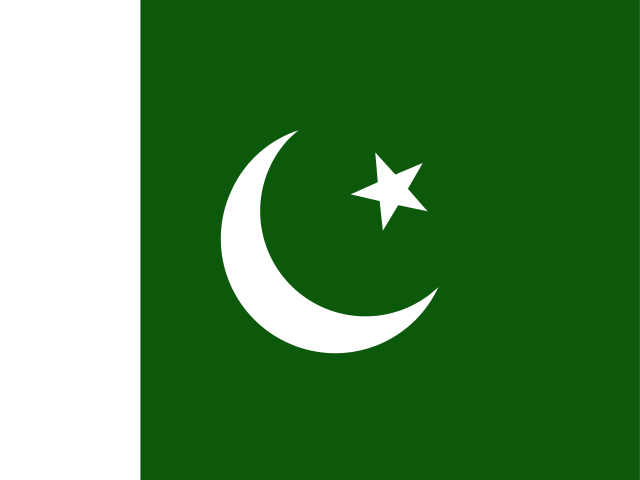 PakistanGiant peaks, Mughal cities and legendary hospitality
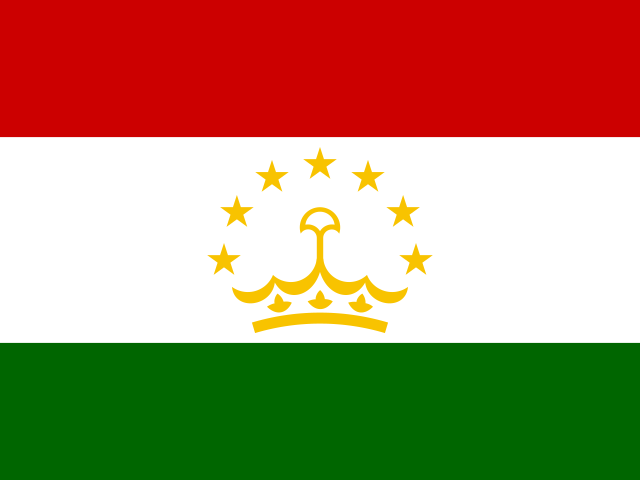 TajikistanRoof-of-the-world peaks and turquoise mountain lakes
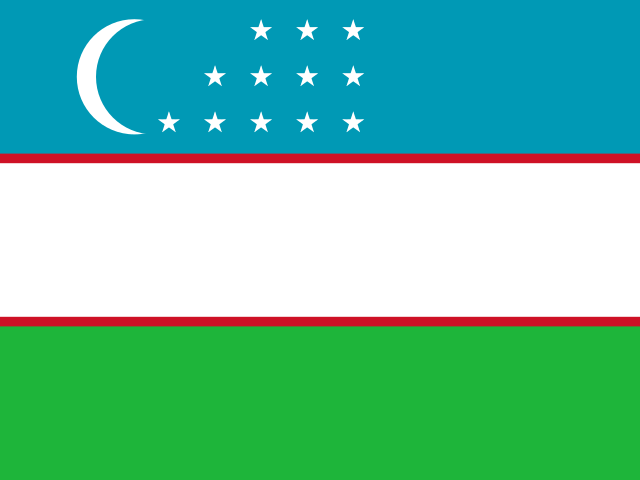 UzbekistanTurquoise domes and legendary Silk Road cities
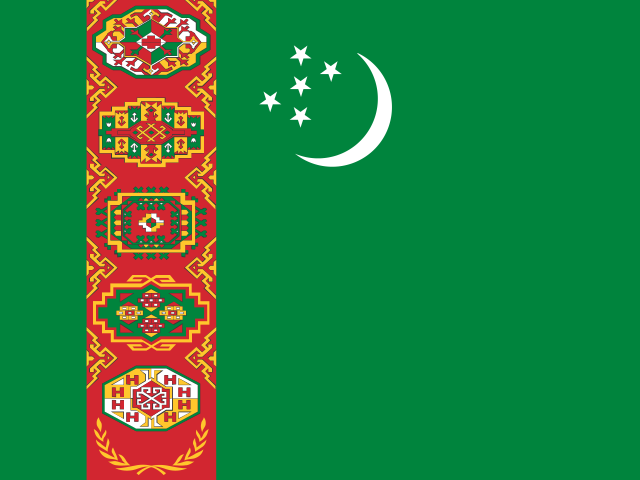 TurkmenistanWhite-marble capital, fiery crater and Silk Road ruins
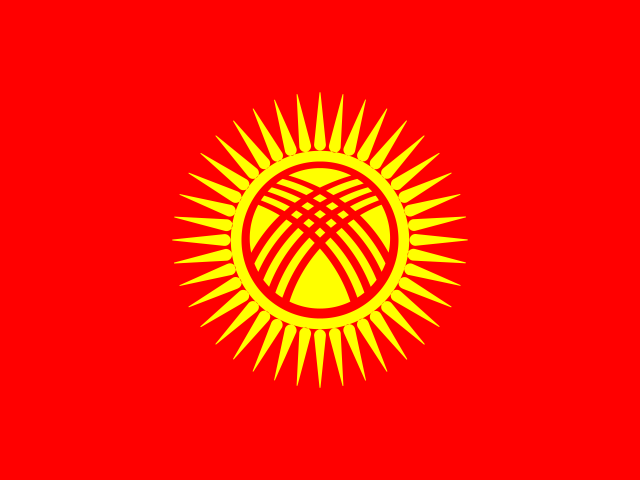 KyrgyzstanWild mountains, alpine lakes and nomad yurt camps
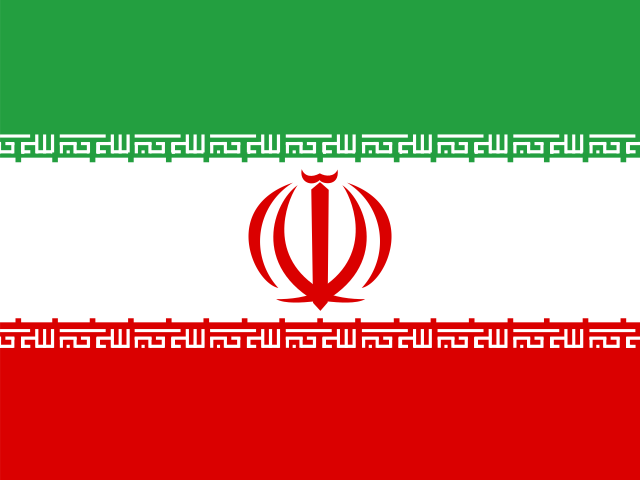 IranPersian gardens, tiled mosques and desert cities
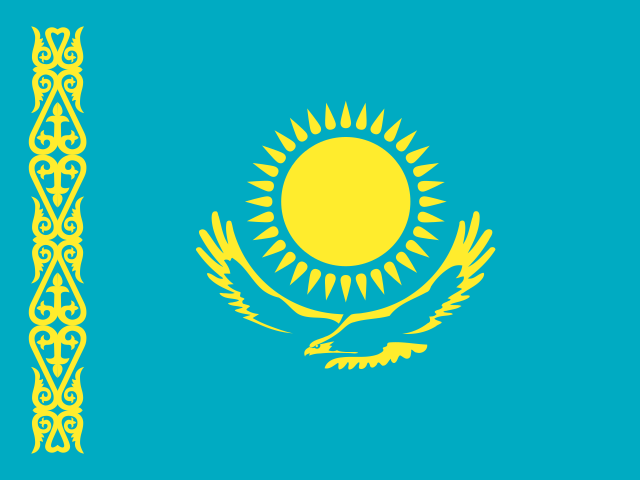 KazakhstanEndless steppe, alpine lakes and futuristic Astana

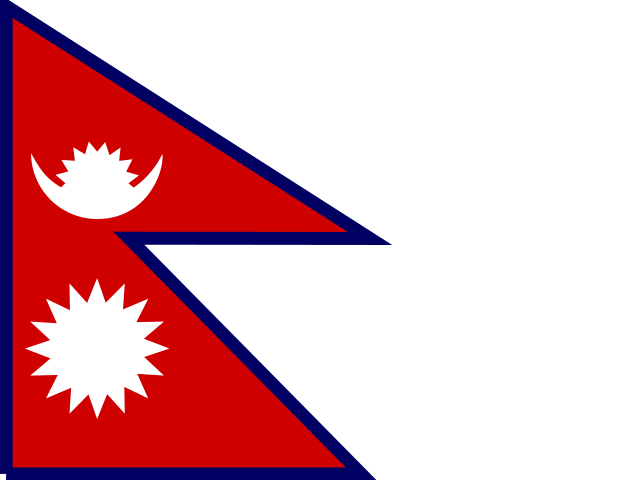 NepalHimalayan treks, ancient temples and jungle safaris