Tajikistan's high valleys have been inhabited since the Stone Age, and the Bronze Age town of Sarazm near Panjakent, a UNESCO site, shows that people were farming and trading metals here around 5,000 years ago. In ancient times the region formed part of Sogdiana and Bactria, lands of Iranian-speaking peoples absorbed into the Persian Achaemenid Empire and later conquered by Alexander the Great, who is said to have married the local princess Roxana.
Over the following centuries the area lay on vital branches of the Silk Road. Sogdian merchants from towns such as Panjakent carried goods, languages and religions between China and Persia, and their frescoed houses can still be traced in the ruins. Arab armies brought Islam in the 8th century, and under the Persian Samanid dynasty of the 9th and 10th centuries, centred in Bukhara, Persian language and culture flourished. Tajiks regard the Samanid ruler Ismoil Somoni as a founding father of the nation.
Read the full history
Turkic and Mongol rulers, including Timur, later dominated the region, and by the 19th century much of it was under the Emirate of Bukhara while the Pamirs remained remote mountain principalities. The Russian Empire extended its control in the late 1800s, and after the Russian Revolution the Tajik Soviet Socialist Republic was created in 1929. Soviet rule brought roads such as the Pamir Highway, cotton farming and hydroelectric dams.
Tajikistan became independent in 1991, and a civil war in the 1990s ended with a peace agreement in 1997. Since then, the country has slowly opened to tourism. Today it is one of the most spectacular adventure destinations in Asia, where travellers drive the Pamir Highway, trek to turquoise lakes in the Fann Mountains, stay in homestays in the Wakhan Valley and experience Persian-speaking culture, Ismaili traditions and famously warm hospitality.
Timeline
c. 3500 BCProto-urban settlement of Sarazm flourishes near Panjakent
329 BCAlexander the Great campaigns in Sogdiana and Bactria
5th–8th centuriesSogdian city of Panjakent thrives on the Silk Road
9th–10th centuriesSamanid dynasty fosters a Persian cultural revival
1929Tajik Soviet Socialist Republic is established
1991Tajikistan declares independence
1997Peace agreement ends the civil war
Tajikistan🛂 Visa & entry
Entry rules depend on your passport and change often.
Before you book, check the official rules for your passport:
Exercise increased caution in Tajikistan due to the risk of terrorism , unexploded landmines , and limited ability to assist U.S.-Tajik dual nationals . Some areas have increased risk. Read the entire Travel Advisory.. Terrorism…
Drive the Pamir HighwayTravel one of the world's highest roads past moonscape plateaus, yurt camps and snow-capped peaks.
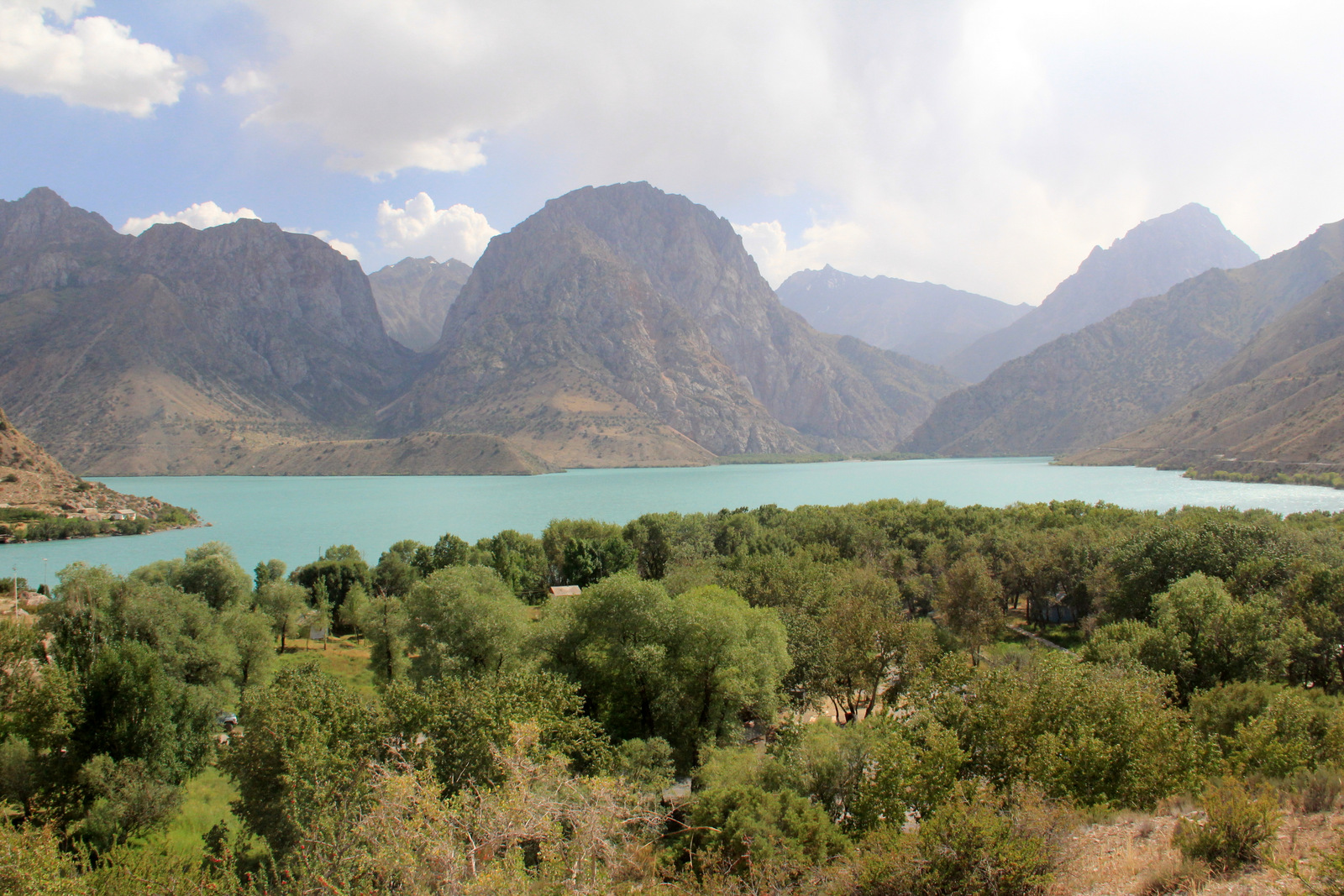
Trek the Fann MountainsHike between the Seven Lakes and Iskanderkul through some of Central Asia's best trekking terrain.
Explore the Wakhan ValleyFollow the Panj River along the Afghan border, visiting ancient forts, petroglyphs and hot springs.
Stay in a Pamiri homestaySleep in a traditional house with a skylight roof and share bread and tea with your hosts.
Swim at IskanderkulPicnic on the shores of a glacial lake linked in legend to Alexander the Great.
Browse Dushanbe's marketsWander the Mehrgon and Green Bazaars for dried fruits, nuts, spices and fresh flatbread.
Visit ancient PanjakentWalk the ruins of a Sogdian Silk Road town and the nearby Bronze Age site of Sarazm.
Soak in Garm ChashmaBathe in the mineral-rich hot springs and travertine terraces of the western Pamirs.
Camp by Karakul LakeSpend a night beside a vast high-altitude lake ringed by mountains near the Kyrgyz border.
Taste Tajik plovShare a steaming dish of rice, carrots and lamb cooked in a giant cauldron.
Tajikistan🗺️ Where to visit in Tajikistan
Where to go in Tajikistan
DushanbeCapital cityA green, relaxed capital of tree-lined avenues, museums, teahouses and bustling bazaars.
📍
Fann MountainsSughd · trekkingJagged peaks and turquoise lakes make this the most accessible trekking area in the country.
IskanderkulFann Mountains · glacial lakeA stunning mountain lake and waterfall, reachable on a day trip from Dushanbe.
KhorogGorno-Badakhshan · Pamir hubThe main town of the Pamirs, with a botanical garden and a base for the highway and valleys.
Wakhan ValleyGorno-Badakhshan · river valleyRemote villages, fortress ruins and views across to Afghanistan's Hindu Kush.
📍
Murghab and KarakulEastern Pamirs · high plateauA stark high-altitude landscape of yaks, yurts and sweeping lakes.
📍
PanjakentSughd · ancient ruinsHome to Sogdian ruins and close to the UNESCO-listed site of Sarazm.
KhujandSughd · historic cityOne of the oldest cities in Central Asia, with a fortress and a lively Panjshanbe Bazaar.
Tajikistan✨ Must-do experiences
Road-trip the Pamir Highway
Trek in the Fann Mountains
Stay with a family in a Pamiri homestay
Shop at Khujand's Panjshanbe Bazaar
Tajikistan🍽️ Taste of Tajikistan
Qurutob – bread pieces soaked in yogurt sauce with onions
Plov (osh) – rice cooked with carrots and meat
Sambusa – baked pastry filled with meat and onion
Shashlik – grilled meat skewers
Tajikistan🌦️ Weather & best time to visit Tajikistan
Best time to visit Tajikistan
Tajikistan is over 90 percent mountains, with hot, dry summers in the lowland valleys and harsh winters at altitude. The Pamirs can be cold at night even in summer, so pack warm layers.
BestJune to September – the only reliable window for the Pamir Highway and high-mountain treks, with clear, sunny days.
ShoulderApril to May and October – pleasant in Dushanbe and the lowlands, but high passes may still be snowy.
AvoidNovember to March – heavy snow closes many mountain roads and treks, though Dushanbe stays relatively mild.
8°💧💧Jan
10°💧💧Feb
15°💧💧Mar
22°💧💧Apr
27°💧May
33°☀️Jun
36°☀️Jul
35°☀️Aug
30°☀️Sep
23°💧Oct
16°💧Nov
10°💧Dec
Typical daytime highs and rain in Dushanbe (approximate averages).
Tajikistan🎉 Festivals & events in Tajikistan
March
NavruzThe Persian New Year is the biggest celebration of the year, with feasts, music, sumalak pudding and traditional games.
September
Independence DayConcerts, parades and fireworks mark independence, especially in Dushanbe.
Varies (lunar calendar)
Eid al-Fitr (Idi Ramazon)The end of Ramadan is celebrated with family visits, sweets and prayers.
July
Roof of the World FestivalA cultural festival in Khorog showcasing Pamiri music, dance and crafts, held in some years.
Tajikistan🧭 Tajikistan itinerary ideas
How many days in Tajikistan?
5 daysDushanbe and the Fann Mountains
Day 1 explore Dushanbe's bazaars, parks and National Museum. Day 2-3 drive to Iskanderkul and the Seven Lakes for hiking and a homestay. Day 4-5 continue to Panjakent and Sarazm, or cross into Uzbekistan towards Samarkand.
10 daysPamir Highway adventure
Day 1 Dushanbe, then Day 2-3 drive the scenic route to Khorog. Day 4-6 explore the Wakhan Valley's forts, hot springs and homestays. Day 7-9 cross the high plateau via Murghab and Karakul Lake, finishing on Day 10 at the border with Kyrgyzstan towards Osh.
Tajikistan🎒 Backpacking Tajikistan – tips & hacks
Backpacker budget: about $25–40 a day
Shared taxis are the main way to get around – they leave when full from set stands and are much cheaper than private hire.
Homestays in the Pamirs and Fann Mountains offer simple rooms and home-cooked meals at budget prices.
Team up with other travellers to share a 4x4 and driver along the Pamir Highway.
Carry snacks, water purification and cash – shops and ATMs are scarce once you leave the main towns.
Hitch-hiking and cycling the Pamir Highway are popular, but leave plenty of time for slow, rough roads.
Tajikistan🛡️ Safety & money in Tajikistan
Stay safe
Tajikistan is generally welcoming, but border areas with Afghanistan can be sensitive – check your government's latest travel advice before going.
A special permit is required for Gorno-Badakhshan (the Pamirs); carry it and your passport for frequent checkpoints.
Altitude sickness is a real risk on the Pamir Highway – acclimatise gradually and descend if you feel unwell.
Mountain roads can be closed by landslides, floods or snow; build flexibility into your plans.
Money
Cash is essential; ATMs are mostly found in Dushanbe, Khujand and Khorog and may not always work with foreign cards.
Bring clean, undamaged banknotes in a major currency for exchanging at banks or official offices.
Tipping is not expected, but a small amount for guides, drivers and homestay hosts is appreciated.
Emergency: 102 police · 103 ambulance · 101 fire
Tajikistan🛬 Getting to Tajikistan
Most international flights arrive in Dushanbe, with some to Khujand; land borders with Uzbekistan and Kyrgyzstan are popular for overland travellers.
Tajikistan💡 Did you know? 5 facts about Tajikistan
More than 90 percent of Tajikistan is mountainous, and its highest peak, Ismoil Somoni, rises above 7,400 metres.
Tajik is a form of Persian, closely related to Farsi and Dari, but written in Cyrillic.
Dushanbe means 'Monday' in Tajik, after the weekly market that once took place there.
The Fedchenko Glacier is one of the longest glaciers outside the polar regions.
The Pamir Highway's Ak-Baital Pass climbs to more than 4,600 metres, among the highest road passes in the former Soviet Union.
Tajikistan❓ Tajikistan travel FAQ
Tajikistan travel questions
Is Tajikistan safe for tourists?
Tajikistan is generally safe and famously hospitable, but areas near the Afghan border can be sensitive and travel advice can change. Check your government's latest travel advice before you go and carry permits for the Pamirs.
When is the best time to visit Tajikistan?
June to September is best for the Pamir Highway and mountain trekking. Spring and autumn suit Dushanbe and lowland areas.
How many days do you need in Tajikistan?
Five days covers Dushanbe and the Fann Mountains, while 10 to 14 days is needed for the full Pamir Highway journey.
Do I need a visa for Tajikistan?
It depends on your passport – some nationalities can visit visa-free or with an e-visa, and the Pamirs require an extra permit. Check the official government site or embassy before you travel.
What language is spoken in Tajikistan?
Tajik, a form of Persian, is the national language, and Russian is widely understood. In the Pamirs, people speak local Pamiri languages, and English is limited outside tourist services.
Tajikistan💰 What a trip costs
$price level
$25–40backpacker / day
$60–110mid-range / day
Approximate daily cost per person (stay, food, local transport).
Tajikistan🚌 Getting around
Shared taxis and hired 4x4s with drivers are the main way to travel between towns and in the mountains. Domestic connections are limited.
Tajikistan🛕 Sacred & spiritual places
Sheikh Muslihiddin Mausoleum – Historic mausoleum and mosque beside Khujand's main bazaar
Tajikistan🤝 Local etiquette
Accept tea and bread when offered; never put bread upside down
Remove shoes when entering a home
Dress modestly, especially in rural areas
Nothing in this tab yet – the agents add new stories every few minutes.
📰 Older Tajikistan stories Everything our agents ever found – keeps loading as you scroll

.JPG/1920px-Tajikistan_Fan-Mauntains_(2).JPG)


.jpg/1920px-Historical_Museum_of_Sughd_region_in_Khujand,_Tajikistan_(2025).jpg)

 KyrgyzstanWild mountains, alpine lakes and nomad yurt camps
 AfghanistanTurquoise mosques, mountain valleys and the Silk Road
 UzbekistanTurquoise domes and legendary Silk Road cities
.jpg/500px-Landscape_in_Balochistan_(Pakistan).jpg)
 PakistanGiant peaks, Mughal cities and legendary hospitality
 TurkmenistanWhite-marble capital, fiery crater and Silk Road ruins
 KazakhstanEndless steppe, alpine lakes and futuristic Astana

 NepalHimalayan treks, ancient temples and jungle safaris
 IranPersian gardens, tiled mosques and desert cities