


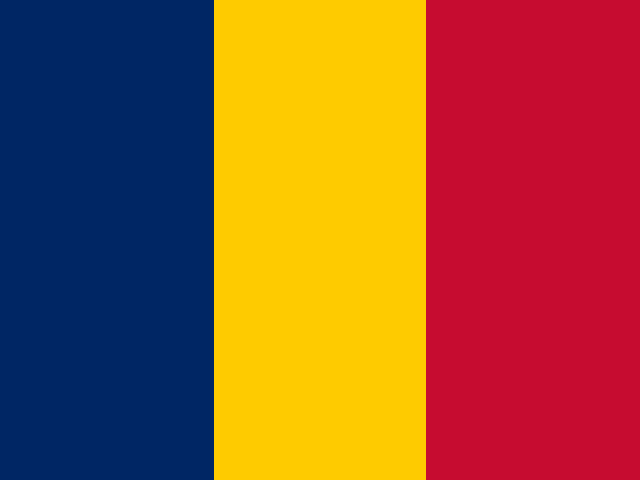
Chad📸 Photo album · 5 photos · Ultra-HD
Sahara arches, desert lakes and a reborn wildlife park
🕒 –:– local time2 stories this week2 sources 6 top placesCapital N'Djamena
Chad holds some of humanity's deepest history. In the Djurab Desert, scientists found the skull nicknamed Toumaï, among the oldest known members of the human family, and the rock walls of the Ennedi and Tibesti mountains are covered with thousands of years of paintings of cattle, giraffes and hunters. These images record a time when the Sahara was green and Lake Chad was a vast inland sea.
Around the lake rose powerful states. The Kanem Empire emerged before the 10th century, adopted Islam, and controlled trans-Saharan caravan routes carrying salt, horses and goods between North Africa and the Sahel. Its successor, Kanem-Bornu, remained a major power for centuries, while further east the kingdoms of Baguirmi and Ouaddaï grew strong from trade and cavalry. This mixing of Saharan, Arab and Central African peoples created the remarkable diversity of more than a hundred ethnic groups and languages found today.
France conquered the region around 1900 and made it part of French Equatorial Africa. During the Second World War, Chad was the first French colony to rally to Free France, giving it a notable place in that story. Chad gained independence in 1960, and the decades since have seen long periods of instability, conflict and changes of government, alongside the discovery and export of oil.
For adventurous travellers, Chad offers some of Africa's most spectacular and least-visited landscapes: the sandstone arches and canyons of Ennedi, the volcanic peaks of Tibesti, the Ounianga lakes in the desert and the revitalised wildlife of Zakouma National Park. Travel conditions are challenging and many areas are considered unsafe, so visits are best arranged with specialist operators after checking official travel advice.
Entry rules depend on your passport and change often.
Before you book, check the official rules for your passport:
The latest visa and entry news for Chad appears below as soon as publishers report it.
Egypt, Alongside South Africa and Others, Accelerates Tourism, Investment and Trade Cooperation Across Africa Together with South Africa, Equatorial Guinea and Chad, Egypt is speeding up tourism, investment and economic…
 #Egypt#South Africa
On 29/09/2026, a flood started in Chad, lasting until 01/10/2026 (last update). The flood caused 0 deaths and 0 displaced .
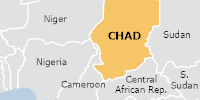 #Chad#Weather & Alerts
Chad ranges from Saharan desert in the north to tropical savanna in the south. The south has a rainy season in summer, while the north stays almost completely dry year-round.
Typical daytime highs and rain in N'Djamena (approximate averages).
Day 1 N'Djamena's market and museum. Day 2-6 fly or drive to Zakouma National Park for game drives and birdwatching. Day 7 return to the capital.
Day 1-2 N'Djamena, then Day 3-12 a fully supported 4x4 expedition through the Ennedi Massif, Guelta d'Archei and the Ounianga lakes. Day 13-14 return to the capital – only with specialist operators and current official approval.
Backpacker budget: about $60–100 a day
Emergency: 17 police · 18 fire
N'Djamena International Airport is the main entry point, with connections via Paris, Addis Ababa, Istanbul and regional hubs. Land borders exist but are often closed or unsafe.
✈️ Cheap flights to Chad: airports, flight times & best time to fly →
Chad is considered a high-risk destination and many governments advise against travel to large areas of the country. Visits are best made with specialist operators. Always check your government's latest travel advice first.
It depends on your passport. Check the official government site or embassy before you travel, as additional permits are often needed for travel outside the capital.
November to February is the most comfortable time, with cooler, dry weather. This is also the main season for desert expeditions and wildlife viewing.
French and Arabic are the official languages, and Chadian Arabic is widely used as a common language. Dozens of local languages are also spoken.
Highlights include the Ennedi Massif, the Ounianga lakes and Zakouma National Park. They are remote and require careful planning.
Approximate daily cost per person (stay, food, local transport).
Long distances and few paved roads mean desert trips are done by 4x4 with experienced operators. Charter flights serve Zakouma.
Nothing in this tab yet – the agents add new stories every few minutes.
🌏 You reached the start of our archive.

 Central African RepublicDeep rainforest, forest elephants and the Ubangi River
 Cameroon'Africa in miniature' – volcano, rainforest, beaches and kingdoms
 NigerSahara mountains, Tuareg culture and desert cities
 LibyaVast Roman cities by the sea and Saharan rock art
 SudanPyramids of Meroë, the Nile and the Red Sea
 NigeriaBig-city energy, Afrobeats and lush highlands
 South SudanVast wetlands, cattle cultures and the White Nile
 Republic of the CongoRainforest gorillas, the Congo River and Brazzaville