

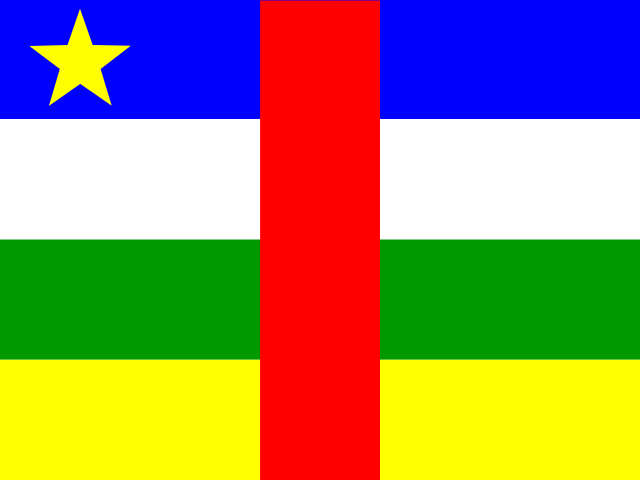
Central African Republic📸 Photo album · 4 photos · Ultra-HD
Deep rainforest, forest elephants and the Ubangi River
🕒 –:– local time0 stories this week0 sources 4 top placesCapital Bangui
The Central African Republic sits at the heart of the continent, where savanna meets rainforest. People have lived here for many thousands of years, and around Bouar in the west stand hundreds of ancient standing stones, the tazunu megaliths, raised by communities whose story is still being studied. Forest peoples such as the BaAka have long lived in the southwestern rainforest, while groups including the Gbaya, Banda and Sara-related peoples farmed and traded across the savanna.
In the eighteenth and nineteenth centuries the region suffered from slave raiding by powerful sultanates to the north and east, which depopulated large areas. French expeditions arrived along the Ubangi River in the late nineteenth century, and Bangui was founded as a post in 1889. The territory, called Oubangui-Chari, became part of French Equatorial Africa in 1910, and concession companies exploited rubber and other resources through harsh forced-labour systems.
Barthélemy Boganda, a former priest, led the push for self-rule and proclaimed the Central African Republic in 1958, though he died in a plane crash shortly before full independence on 13 August 1960. The decades that followed were marked by coups and authoritarian rule, most famously the period when Jean-Bédel Bokassa declared himself emperor between 1976 and 1979. Since then, the country has experienced repeated political crises and armed conflict.
Today large parts of the country remain insecure and tourism is extremely limited. For the few who do visit with expert support, the rewards are rare wildlife encounters: forest elephants gathering in Dzanga Bai, habituated western lowland gorillas, and BaAka culture in the Dzanga-Sangha forests. The country's heritage also lives on in its music, the Sango language spoken nationwide, and the vast wild landscapes of its national parks.
Entry rules depend on your passport and change often.
Before you book, check the official rules for your passport:
The latest visa and entry news for Central African Republic appears below as soon as publishers report it.
🛰️ The agents haven't spotted fresh news about Central African Republic in the last few days – here is the travel guide, plus the latest from nearby countries.
Equatorial Guinea Joins Nigeria to Boost Tourism as Grand Hotel Djibloho Drives Corporate Travel Growth Equatorial Guinea joins Nigeria to grow tourism as Grand Hotel Djibloho expands corporate travel, events and regional…
 #Equatorial Guinea#Nigeria#Hotels & Stays
Egypt, Alongside South Africa and Others, Accelerates Tourism, Investment and Trade Cooperation Across Africa Together with South Africa, Equatorial Guinea and Chad, Egypt is speeding up tourism, investment and economic…
 #Egypt#South Africa
Do not travel to the Democratic Republic of the Congo (DRC) due to health , crime , unrest , terrorism , and kidnapping Due to the Ebola outbreak in the DRC, the Department of Homeland Security has implemented new restrictions…
#DR Congo#Visas & Entry RulesOn 02/10/2026, a forest fire started in Sudan, until 04/10/2026.
#Sudan#Weather & AlertsDo not travel to the Democratic Republic of the Congo (DRC) due to health , crime , unrest , terrorism, and kidnapping. Due to the Ebola outbreak in the DRC, the Department of Homeland Security has implemented new restrictions…
#DR Congo#Visas & Entry RulesOn 29/09/2026, a flood started in Chad, lasting until 01/10/2026 (last update). The flood caused 0 deaths and 0 displaced .
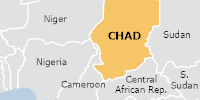 #Chad#Weather & Alerts
The Central African Republic is hot and humid year-round, with a wet season roughly from April to November in the south. The far north is drier and closer to Sahel conditions, while the southwest rainforest is wet for most of the year.
Typical daytime highs and rain in Bangui (approximate averages).
Only with a specialist operator: Day 1 arrive in Bangui and fly to Bayanga. Days 2-4 visit Dzanga Bai for elephants, track gorillas and walk with BaAka guides. Day 5 return to Bangui and fly out.
Only with a specialist operator: Days 1-2 Bangui and, if security allows, a trip to Boali Falls. Days 3-7 in Dzanga-Sangha for gorillas, elephants, river trips and forest walks. Day 8 return to Bangui.
Backpacker budget: about $60–100 a day
Emergency: 117 police · 118 fire
Bangui M'Poko International Airport is the main entry point, with a limited number of international flights. Land borders exist but are generally unsafe for travellers.
✈️ Cheap flights to Central African Republic: airports, flight times & best time to fly →
No – most governments advise against all travel because of ongoing conflict, crime and kidnapping risks. Check your government's latest travel advice; the rare visits that take place are organised by specialist operators with security support.
The dry season from December to February is easiest for travel and wildlife viewing. Heavy rains from July to October make roads very difficult.
Yes, habituated western lowland gorillas can be tracked in Dzanga-Ndoki National Park within the Dzanga-Sangha area. Visits depend on the security situation and must be arranged with the park or a specialist operator.
It depends on your passport – most visitors need to arrange documents in advance. Check the official government site or embassy before you travel.
French and Sango are the official languages. Sango is the everyday language for most people, and French is used in government and business.
Approximate daily cost per person (stay, food, local transport).
Roads are limited, so trips to remote areas are usually arranged with a tour operator, sometimes using charter flights. Taxis run in Bangui.
Nothing in this tab yet – the agents add new stories every few minutes.
🌏 You reached the start of our archive.

 Republic of the CongoRainforest gorillas, the Congo River and Brazzaville
 Cameroon'Africa in miniature' – volcano, rainforest, beaches and kingdoms
 ChadSahara arches, desert lakes and a reborn wildlife park
 South SudanVast wetlands, cattle cultures and the White Nile
 DR CongoMountain gorillas, lava lakes and the mighty Congo River
 SudanPyramids of Meroë, the Nile and the Red Sea
.jpg/500px-Nationalpark_Monte_Al%C3%A9n_(Tafel).jpg)
 Equatorial GuineaVolcanic Bioko island, rainforest and sea-turtle beaches
 GabonRainforest parks where elephants walk on the beach