


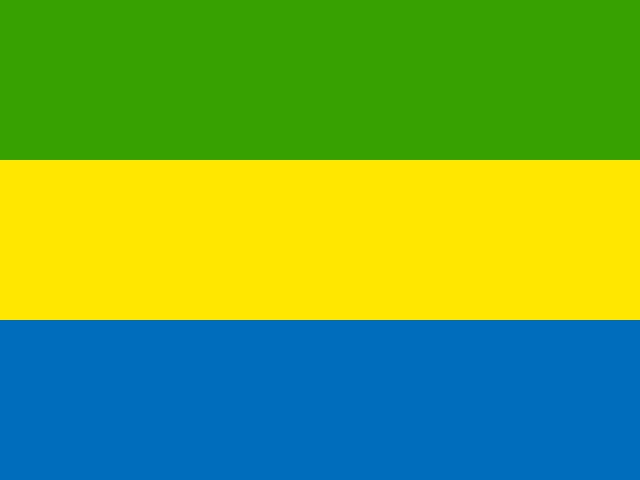
Gabon📸 Photo album · 5 photos · Ultra-HD
Rainforest parks where elephants walk on the beach
🕒 –:– local time1 stories this week1 sources 6 top placesCapital Libreville
Gabon's rainforests have sheltered people for tens of thousands of years, and stone tools and rock engravings in the Lopé area testify to a long human presence. Forest peoples such as the Baka and Babongo were among the earliest inhabitants, followed over many centuries by Bantu-speaking farmers and ironworkers. Over time dozens of groups, including the Mpongwe, Punu, Myene and later the Fang, settled the coast and interior, developing rich traditions of mask carving, music and the Bwiti spiritual practice.
Portuguese sailors arrived at the Komo estuary in the 1470s and are said to have named it 'Gabão' after a hooded cloak whose shape they thought it resembled. For centuries the coast was a trading zone for ivory, timber and, tragically, enslaved people. France signed treaties with coastal chiefs from 1839, and in 1849 Libreville – 'free town' – was founded by people freed from a captured slave ship. Gabon became part of French Equatorial Africa, and in 1913 the doctor Albert Schweitzer opened his famous hospital at Lambaréné on the Ogooué River.
Gabon became independent on 17 August 1960. Discoveries of oil, manganese and uranium brought revenue and made it one of the more prosperous countries in central Africa, and political life was long dominated by a single family. In 2002 the government took a landmark step for conservation, creating a network of thirteen national parks covering around a tenth of the country's territory.
For travellers, Gabon is one of Africa's last great wilderness destinations. Rainforest still covers most of the land, and visitors can see forest elephants on the beach, gorillas and huge troops of mandrills, nesting leatherback turtles and humpback whales offshore. Lopé National Park is a UNESCO World Heritage Site for both nature and archaeology, and Libreville offers seafood, markets and a laid-back coastal atmosphere.
Entry rules depend on your passport and change often.
Before you book, check the official rules for your passport:
The latest visa and entry news for Gabon appears below as soon as publishers report it.
The central African nation is a precious discovery for those who appreciate what it means to be wild.
 #Gabon#Safari#Destinations
Gabon is hot and humid all year, with two dry and two wet seasons. The coast around Libreville is very wet overall, while the interior savannas around Lopé are a little drier.
Typical daytime highs and rain in Libreville (approximate averages).
Day 1-2: Libreville's seafront, markets and a boat to Pointe-Denis. Day 3-5: overnight train to Lopé National Park for mandrill tracking, savanna drives and rock-engraving sites, then return.
Day 1-2: Libreville and Akanda. Day 3-5: Lopé National Park. Day 6: Lambaréné and the Ogooué lakes. Day 7-10: fly or travel to Loango National Park for beach wildlife, lagoon boat trips and whale watching in season.
Backpacker budget: about $70–110 a day
Emergency: 1730 police · 18 fire
Léon M'ba International Airport in Libreville is the main gateway, with flights from Europe and other African hubs; overland routes connect with Cameroon and the Republic of the Congo.
✈️ Cheap flights to Gabon: airports, flight times & best time to fly →
Gabon is generally one of the more stable countries in central Africa, but petty crime occurs and political situations can change. Check your government's latest travel advice and take usual city precautions.
June to August, the long dry season, is best for travel and whale watching. December to February is another drier window and the time to see nesting turtles.
Five days allows Libreville and Lopé. Ten days or more is ideal to add Loango and the Ogooué River.
French is the official language and is widely spoken, alongside local languages such as Fang. English is rarely spoken outside top hotels.
Yes, Gabon is one of Africa's more expensive destinations, especially for park visits and flights. Using the train and eating locally helps reduce costs.
Approximate daily cost per person (stay, food, local transport).
Domestic flights and the Transgabonais railway link Libreville to the interior. Park trips are usually arranged with lodges or tour operators.
Nothing in this tab yet – the agents add new stories every few minutes.
🌏 You reached the start of our archive.
.jpg/500px-Nationalpark_Monte_Al%C3%A9n_(Tafel).jpg)
 Equatorial GuineaVolcanic Bioko island, rainforest and sea-turtle beaches
 Republic of the CongoRainforest gorillas, the Congo River and Brazzaville
 Sao Tome and PrincipeChocolate islands on the equator, wild and green
 Cameroon'Africa in miniature' – volcano, rainforest, beaches and kingdoms
 NigeriaBig-city energy, Afrobeats and lush highlands
 DR CongoMountain gorillas, lava lakes and the mighty Congo River
 Central African RepublicDeep rainforest, forest elephants and the Ubangi River
 AngolaWild coastlines, giant waterfalls and a booming Atlantic capital