Fiji's islands were first settled around 3,000 years ago by seafaring Lapita people, famous for their stamped pottery, who sailed east across the Pacific in ocean-going canoes. Over the following centuries further waves of contact, including with Melanesian and Polynesian neighbours such as Tonga and Samoa, shaped a distinctive Fijian society organised into powerful chiefdoms. Fijians became skilled navigators and builders of great double-hulled canoes, and villages were centred on chiefly houses and ceremonial life.
Dutch navigator Abel Tasman sighted parts of the group in 1643, and Captain William Bligh sailed through the group after the Bounty mutiny of 1789. In the nineteenth century sandalwood and sea cucumber traders, missionaries and settlers arrived, and Christianity spread widely. Rival confederacies competed for power until the chief Ratu Seru Cakobau, facing debts and unrest, ceded Fiji to Britain in 1874. To work the sugar plantations, the colonial government brought over tens of thousands of indentured labourers from India between 1879 and 1916, whose descendants became a large part of the population.
Read the full history
Fiji gained independence on 10 October 1970. The decades that followed were marked by tensions over land and political power, with several coups between 1987 and 2006, before new constitutions and elections restored parliamentary government. Through it all, Fiji has grown into the transport and tourism hub of the South Pacific, and its rugby sevens team has become a national passion, winning Olympic gold in 2016.
For visitors, Fiji's heritage is a welcoming blend of iTaukei (Indigenous Fijian) village traditions, Indo-Fijian temples, curries and festivals, and colonial towns like Levuka, a UNESCO World Heritage Site. Taking part in a kava ceremony, visiting a village and hearing a choir sing on Sunday are as memorable as the islands' famous beaches and reefs.
Timeline
c. 1000 BCLapita voyagers first settle the islands
1643Abel Tasman sights parts of the Fiji group
1874Fiji ceded to Britain by Ratu Seru Cakobau
1879First indentured labourers arrive from India
1970Independence from Britain on 10 October
2013Levuka Historical Port Town listed by UNESCO
2016Fiji wins its first Olympic gold in rugby sevens
Fiji🛂 Visa & entry
Entry rules depend on your passport and change often.
Commonwealth – Commonwealth member.
Before you book, check the official rules for your passport:
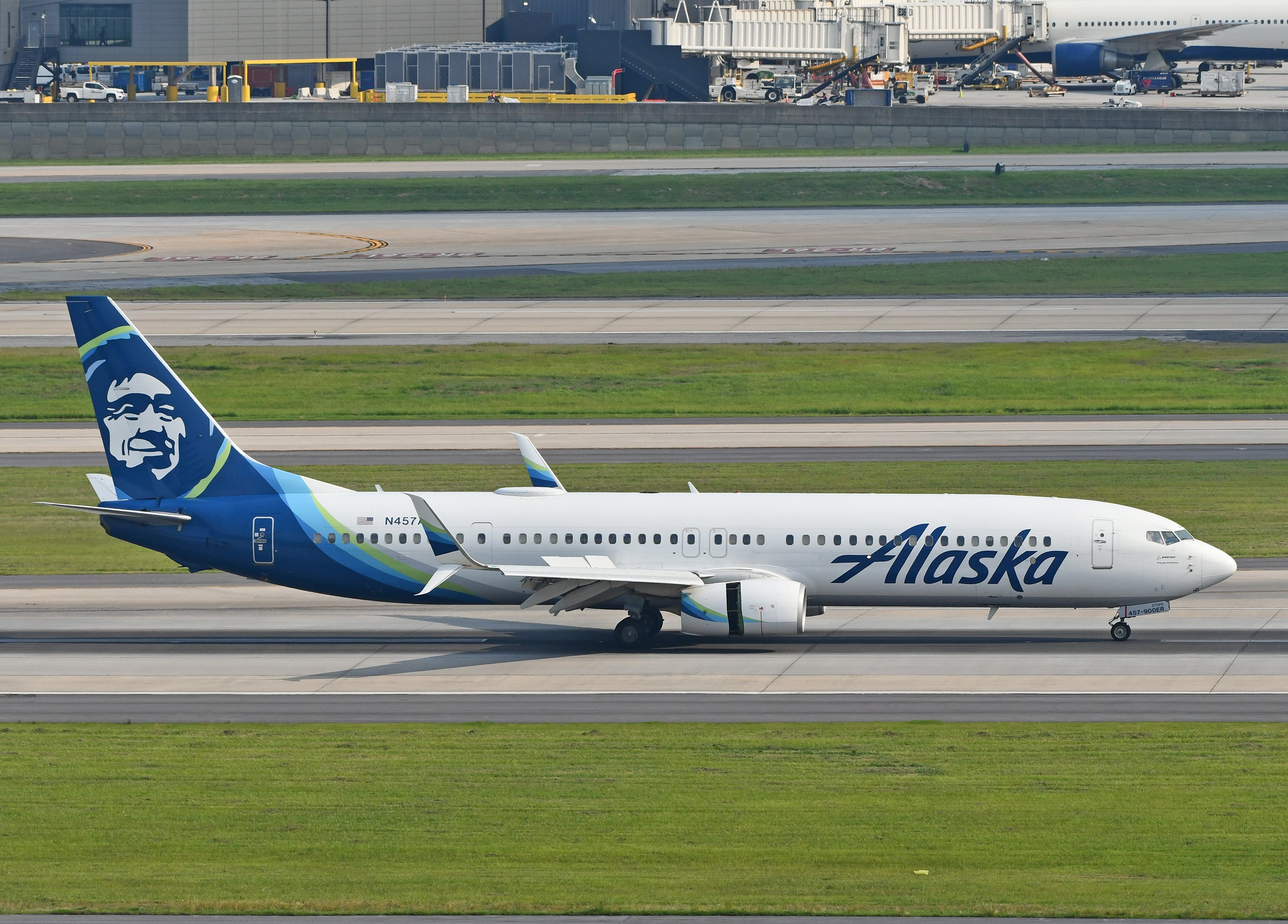
Alaska’s Atmos Rewards is a valuable airline loyalty program thanks to its high-value airline partners, such as Cathay Pacific and Fiji Airways, and excellent redemption rates on American Airlines flights. Given the number of…
Island-hop the YasawasHop between rugged volcanic islands and palm-fringed beaches on the daily catamaran from Nadi.
Snorkel with manta raysSwim alongside giant manta rays in the channels of the Yasawa Islands during the cooler months.
Join a kava ceremonySit cross-legged in a village and share bowls of earthy kava (yaqona) to welcome you as a guest.
Dive the soft coralsExplore the Rainbow Reef and Great White Wall off Taveuni, famed for kaleidoscopic soft corals.
Shark dive at Beqa LagoonWatch bull and reef sharks up close on one of the world's best-known shark dives.
Raft the Upper Navua RiverPaddle through steep canyons and waterfalls in the rainforested highlands of Viti Levu.
Visit Sri Siva Subramaniya TempleAdmire the colourful Dravidian architecture of Nadi's great temple, often described as the largest Hindu temple in the Southern Hemisphere.
Walk the Sigatoka Sand DunesTrek across giant coastal dunes where archaeologists found Lapita pottery fragments.
Explore Bouma National Heritage ParkHike to the Tavoro Waterfalls through Taveuni's lush rainforest.
Watch Fijian rugbyFeel the passion at a local rugby match, the national sport and a source of huge pride.
Fiji🗺️ Where to visit in Fiji
Where to go in Fiji
📍
Nadi & DenarauViti Levu · gatewayThe main arrival point, with markets, a famous Hindu temple and easy boat transfers to the islands.
Mamanuca IslandsIslands · beaches & resortsClose to Nadi, with powdery beaches, clear lagoons and easy snorkelling and day trips.
Yasawa IslandsIslands · backpacker beachesA long chain of dramatic islands with budget-friendly eco-resorts and manta ray snorkelling.
📍
Coral CoastSouth Viti Levu · coastA string of beaches, villages and resorts, with the Sigatoka dunes and cultural shows nearby.
SuvaCapital · city lifeFiji's bustling, multicultural capital with the Fiji Museum, markets and colonial buildings.
📍
TaveuniGarden Island · nature & divingA lush, mountainous island with waterfalls, rainforest hikes and world-class soft-coral diving.
📍
LevukaOvalau · historic townFiji's first colonial capital, a UNESCO-listed port town with a sleepy, old-world atmosphere.
Pacific HarbourSouth Viti Levu · adventureBase for shark diving in Beqa Lagoon and river rafting in the highlands.
Fiji✨ Must-do experiences
Take part in a kava ceremony
Island-hop by boat through the Yasawas
Dive the soft-coral reefs
Visit a traditional Fijian village
Fiji🍽️ Taste of Fiji
Kokoda – raw fish in lime and coconut cream
Lovo – food cooked in an earth oven
Rourou – taro leaves in coconut milk
Fiji curry – Indo-Fijian curry with roti
Fiji🌦️ Weather & best time to visit Fiji
Best time to visit Fiji
Fiji has a tropical climate with temperatures around 26–31 °C all year. The western sides of the big islands, around Nadi, are much drier and sunnier than the windward east, where Suva gets frequent rain.
BestMay–October – the dry season brings cooler, less humid days, calm seas and the best diving visibility.
ShoulderApril and November – warm weather and fewer crowds, with occasional showers.
AvoidNo bad time – but December to March is hot, humid and wet, and the cyclone season runs from November to April.
31°💧💧Jan
31°💧💧Feb
31°💧💧Mar
30°💧Apr
29°💧May
28°☀️Jun
28°☀️Jul
28°☀️Aug
29°☀️Sep
30°💧Oct
30°💧Nov
31°💧💧Dec
Typical daytime highs and rain in Nadi (approximate averages).
Fiji🎉 Festivals & events in Fiji
August
Hibiscus FestivalSuva's long-running carnival features parades, food stalls, rides and a popular pageant.
July
Bula FestivalNadi celebrates the Fijian spirit of 'bula' with music, dancing, rides and a festival queen contest.
October–November
DiwaliIndo-Fijian communities light up homes with lamps and share sweets during the festival of lights.
10 October
Fiji DayIndependence is celebrated with ceremonies, parades and community gatherings across the country.
Fiji🧭 Fiji itinerary ideas
How many days in Fiji?
6 daysMamanucas & Coral Coast
Day 1: arrive in Nadi and visit the temple and market. Day 2-4: base on a Mamanuca island for snorkelling and beach time. Day 5-6: head to the Coral Coast for the Sigatoka dunes and a village visit.
12 daysIslands & rainforest
Day 1: Nadi. Day 2-6: island-hop through the Yasawas by catamaran. Day 7-8: Pacific Harbour for shark diving or rafting. Day 9: Suva. Day 10-12: fly to Taveuni for waterfalls and soft-coral diving.
Fiji🎒 Backpacking Fiji – tips & hacks
Backpacker budget: about $50–80 a day
A hop-on hop-off catamaran pass is the easiest way to explore the Yasawas, with budget island lodges that include meals.
Local buses on Viti Levu are cheap, frequent and open-sided – great for seeing the countryside between Nadi and Suva.
Eat at Indo-Fijian roti shops and market stalls for cheap, delicious curries.
Bring a small bundle of kava root (sevusevu) as a gift when visiting a village.
Stock up on snacks and sunscreen in Nadi, as island prices are much higher.
Fiji🛡️ Safety & money in Fiji
Stay safe
Fiji is generally safe, but avoid walking alone at night in Suva and Nadi town and keep valuables secure.
Dress modestly in villages – cover shoulders and knees and remove hats.
Check weather forecasts and follow local advice during the November–April cyclone season.
Reef cuts and coral scrapes can get infected quickly in the tropics, so clean any wound promptly.
Money
The Fijian dollar is the local currency; ATMs are found in towns but are rare on outer islands.
Cards are accepted at resorts and larger businesses, but carry cash for buses, markets and village visits.
Tipping isn't customary, though many resorts have a staff Christmas fund you can contribute to.
Emergency: 911 emergency · 917 police
Fiji🛬 Getting to Fiji
Nadi International Airport (NAN) on Viti Levu is the main gateway, with direct flights from Australia, New Zealand, the US and Pacific neighbours. Suva's Nausori Airport handles some regional and domestic flights.
Fiji is made up of more than 300 islands, about a third of which are inhabited.
The 180° meridian passes through Fiji, but the International Date Line bends around it so the whole country shares one date.
Fiji's sevens rugby team won the country's first Olympic gold medal in 2016.
A fire-walking tradition is practised by people from the island of Beqa.
'Fiji time' is a well-known local phrase for the relaxed approach to schedules.
Fiji❓ Fiji travel FAQ
Fiji travel questions
Is Fiji safe for tourists?
Fiji is generally safe and famously friendly. Petty theft can happen in towns, so take normal precautions, especially at night.
When is the best time to visit Fiji?
May to October is the dry season, with sunny days and the best diving conditions. November to April is hotter, wetter and the cyclone season.
How many days do you need in Fiji?
A week lets you combine Nadi with an island stay. Ten days to two weeks is ideal to explore the Yasawas or Taveuni too.
Do I need a visa for Fiji?
It depends on your passport – many nationalities can enter visa-free for short stays. Check the official Fiji government or immigration site before you travel.
What language is spoken in Fiji?
English, iTaukei (Fijian) and Fiji Hindi are all official languages. English is widely spoken, so getting around is easy.
Fiji💰 What a trip costs
$$price level
$50–80backpacker / day
$140–260mid-range / day
Approximate daily cost per person (stay, food, local transport).
Fiji🚌 Getting around
Buses and taxis run around Viti Levu, and ferries and small planes reach the outer islands. Boat passes make island-hopping easy.
Fiji🛕 Sacred & spiritual places
Sri Siva Subramaniya Temple – Colourful Hindu temple in Nadi, the largest in the Southern Hemisphere
Fiji🤝 Local etiquette
Cover shoulders and knees in villages
Remove hats and sunglasses in villages
Bring kava as a gift (sevusevu) when visiting a village
Nothing in this tab yet – the agents add new stories every few minutes.
📰 Older Fiji stories Everything our agents ever found – keeps loading as you scroll
_-_August_2016.jpg/1920px-Naviti_island,_Yasawa,_Fiji_(1)_-_August_2016.jpg)

.jpg/1920px-Sigatoka_Sand_Dunes_National_Park_(6).jpg)


 #United States#Hong Kong#American Airlines#Alaska Airlines

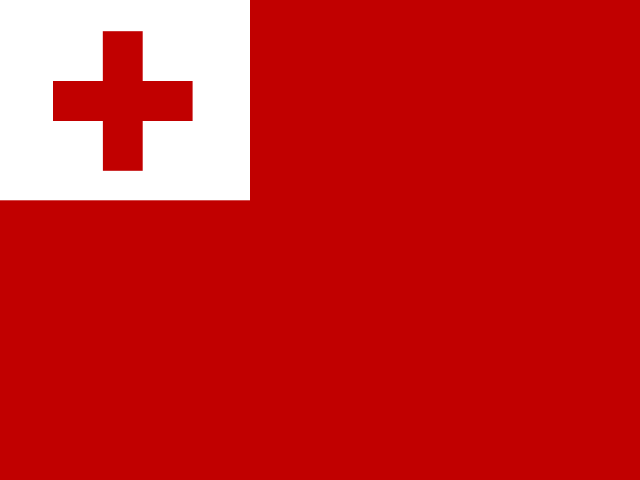 TongaThe Pacific's last kingdom, with whales and quiet islands
.jpg/500px-Landscape,_Tuvalu,_2011._Photo-_DFAT_(12779525995).jpg)
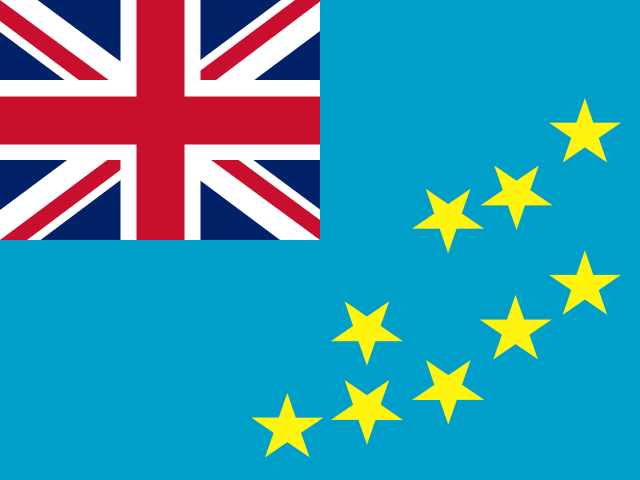 TuvaluTiny coral atolls and a calm lagoon far from the crowds
 SamoaWaterfalls, ocean trenches and traditional Polynesian life
 VanuatuActive volcanoes, blue holes and WWII wreck diving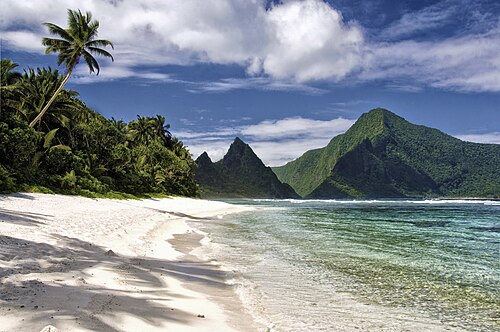
 American SamoaRainforest peaks, quiet reefs and traditional Samoan life
 NiueA raised coral island of sea caves, chasms and humpback whales
 New CaledoniaFrench flair, Kanak culture and a giant turquoise lagoon
 Solomon IslandsWWII history, lagoons and village life off the beaten track