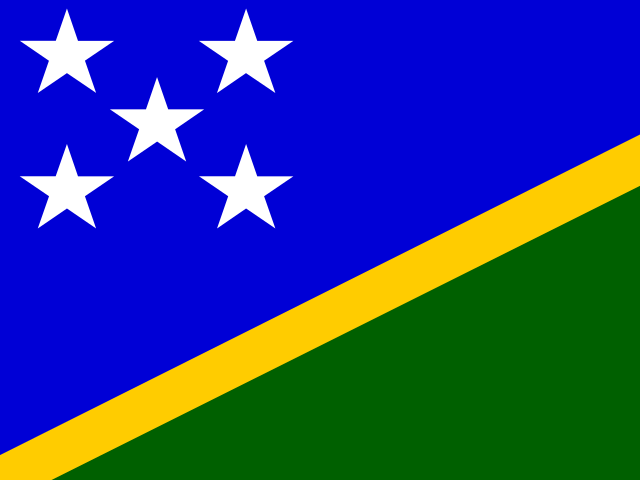
Solomon Islands📸 Photo album · 1 photos · Ultra-HD

WWII history, lagoons and village life off the beaten track
🕒 –:– local time0 stories this week0 sources 6 top placesCapital Honiara
The Solomon Islands were settled tens of thousands of years ago by people moving east from New Guinea, making them among the earliest inhabited places in the Pacific. Around three thousand years ago, Austronesian-speaking seafarers associated with Lapita pottery arrived, and over time the islands developed a remarkable diversity of cultures and dozens of languages. Communities lived by gardening, fishing and trading, with shell money and elaborate carvings playing important roles in social life.
The Spanish navigator Álvaro de Mendaña reached the islands in 1568 and named them after King Solomon, hoping to find riches. Sustained European contact came only in the nineteenth century with whalers, traders and missionaries, as well as labour recruiters who took islanders to work on plantations in Queensland and Fiji, a practice known as blackbirding. Britain declared a protectorate over the southern islands in 1893, later extending it across most of the archipelago.
During the Second World War the islands became a major battleground. The Guadalcanal campaign of 1942–1943 between Allied and Japanese forces was a turning point in the Pacific War, and wrecks of ships and aircraft still lie in the waters around Honiara and the Western Province. Solomon Islanders served as scouts and coastwatchers, playing a vital part in the campaign. After the war, movements for self-government grew, and the country became independent on 7 July 1978.
In the late 1990s and early 2000s, a period of internal tensions led to a regional assistance mission that helped restore stability. Today the Solomon Islands offer travellers an off-the-beaten-path Pacific experience: lagoons fringed with coral, villages where traditions remain strong, superb diving on reefs and wartime wrecks, and warm hospitality.
Entry rules depend on your passport and change often.
Before you book, check the official rules for your passport:
The latest visa and entry news for Solomon Islands appears below as soon as publishers report it.
🛰️ The agents haven't spotted fresh news about Solomon Islands in the last few days – here is the travel guide, plus the latest from nearby countries.
Alaska’s Atmos Rewards is a valuable airline loyalty program thanks to its high-value airline partners, such as Cathay Pacific and Fiji Airways, and excellent redemption rates on American Airlines flights. Given the number of…
 #United States#Hong Kong#American Airlines#Alaska Airlines
The Solomon Islands have a hot, humid tropical climate with little temperature change throughout the year. Rain falls year-round, peaking between December and April.
Typical daytime highs and rain in Honiara (approximate averages).
Day 1-2 explore Honiara, its market and museum. Day 3 tour WWII battlefields. Day 4-5 dive or snorkel wrecks off the coast.
Days 1-3 Honiara and Guadalcanal. Days 4-7 fly to Munda and explore Marovo Lagoon. Days 8-11 Gizo, Kennedy Island and diving. Day 12 return to Honiara.
Backpacker budget: about $60–100 a day
Emergency: 999 or 911 police & ambulance · 988 fire
Honiara International Airport is the main gateway, with flights from Australia, Fiji, Papua New Guinea and Vanuatu.
✈️ Cheap flights to Solomon Islands: airports, flight times & best time to fly →
The Solomon Islands are generally safe, with friendly locals. Occasional unrest can occur in Honiara, so check your government's latest travel advice.
May to October is the best time, with drier weather and calmer seas. The wet season peaks from January to March.
Five days covers Honiara and Guadalcanal. Ten to fourteen days lets you explore the Western Province's lagoons and dive sites.
It depends on your passport – many visitors receive a visitor permit on arrival, but rules vary. Check the official government site or embassy before you travel.
English is the official language, while Pijin is widely spoken as a common language. Dozens of local languages are also spoken.
Approximate daily cost per person (stay, food, local transport).
Domestic flights and boats link the islands; roads are limited. In Honiara use taxis or minibuses.
Nothing in this tab yet – the agents add new stories every few minutes.
🌏 You reached the start of our archive.

 VanuatuActive volcanoes, blue holes and WWII wreck diving
 NauruA tiny coral island nation with rugged cliffs and quiet beaches
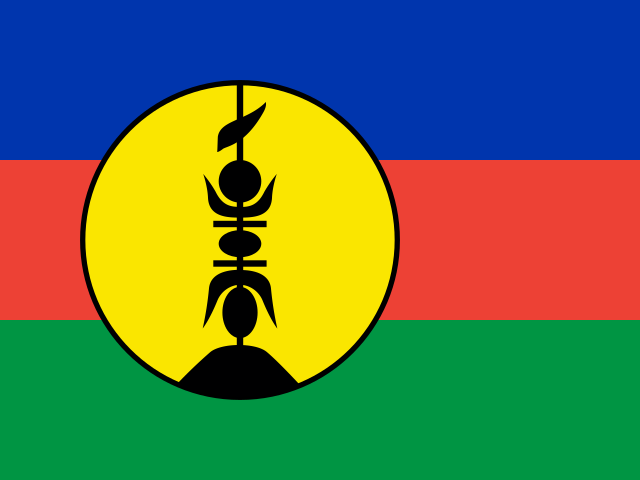 New CaledoniaFrench flair, Kanak culture and a giant turquoise lagoon
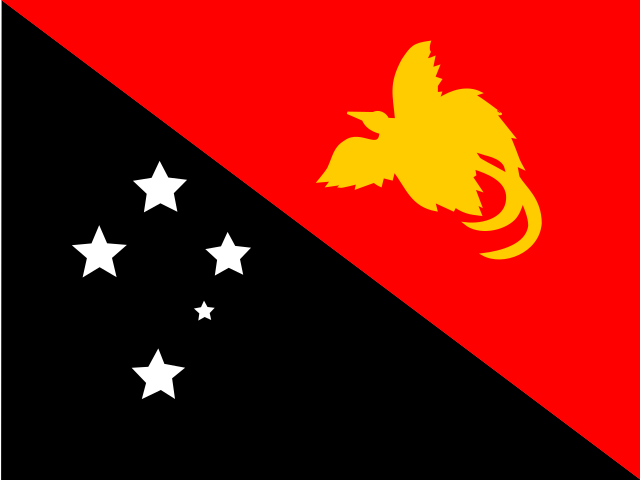 Papua New GuineaHighland festivals, rainforests and hundreds of cultures
.jpg/500px-Landscape,_Tuvalu,_2011._Photo-_DFAT_(12779525995).jpg)
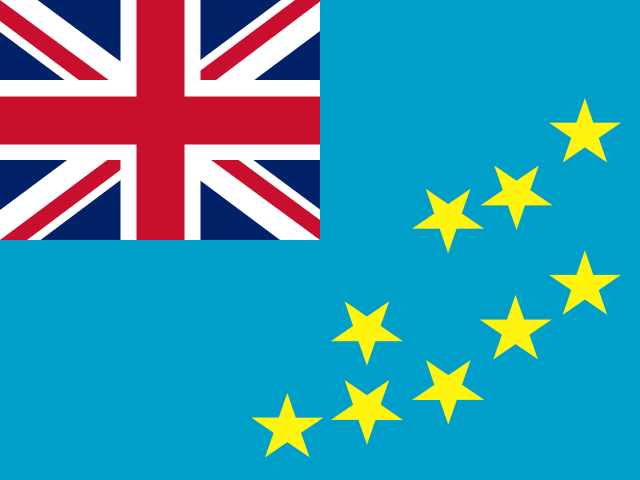 TuvaluTiny coral atolls and a calm lagoon far from the crowds
_-_August_2016.jpg/500px-Naviti_island,_Yasawa,_Fiji_(1)_-_August_2016.jpg)
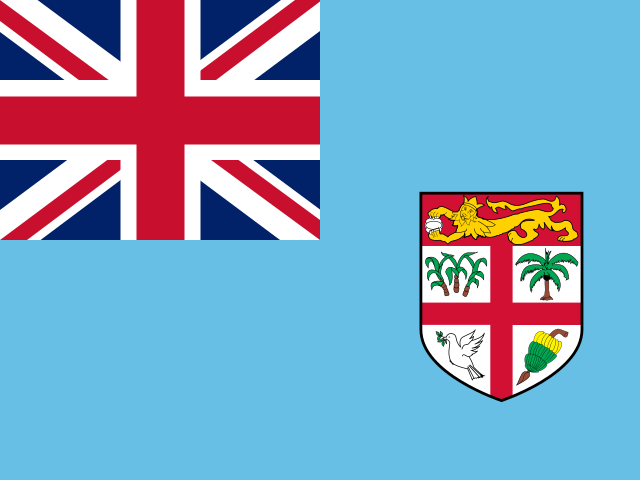 FijiBula spirit, coral islands and soft white beaches
.jpg/500px-Pacific_Partnership_2024-2_Band_Performs_at_Gilman_Elementary_School_in_Yap,_Federated_States_of_Micronesia_(8643664).jpg)
 MicronesiaAncient stone ruins, WWII wrecks and remote Pacific islands
 Marshall IslandsTurquoise lagoons and coral atolls in the central Pacific