

.jpg/1920px-Budva_(26871774051).jpg)

.jpg/1920px-Sveti_Stefan_(06).jpg)

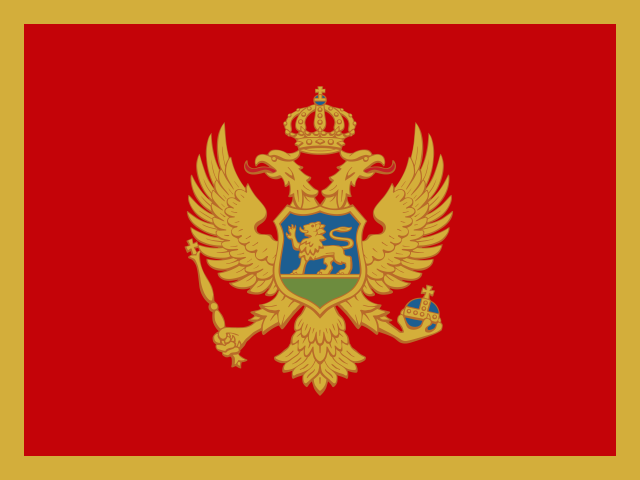
Montenegro📸 Photo album · 8 photos · Ultra-HD
Fjord-like bays, mountain canyons and Adriatic beaches
🕒 –:– local time3 stories this week2 sources 6 top placesCapital Podgorica
Montenegro's mountains and coast have been inhabited since prehistoric times. Illyrian tribes settled the region, and Queen Teuta ruled an Illyrian kingdom whose influence reached the Bay of Kotor before Rome conquered it. The Romans founded towns such as Doclea near today's Podgorica, and Greek and Roman traders sailed the Adriatic shore. After the division of the Roman Empire, the area lay on the border between Western and Eastern Christianity.
Slavs arrived in the sixth and seventh centuries, and the medieval state of Duklja, later known as Zeta, emerged. The coastal towns of Kotor, Budva and Herceg Novi fell under Venetian rule for centuries, leaving them with fortified walls, palaces and Catholic churches. Inland, as the Ottoman Empire spread through the Balkans, the mountain region around Cetinje held out under its prince-bishops, the vladikas of the Petrović-Njegoš dynasty. Prince-Bishop Petar II Petrović-Njegoš also wrote 'The Mountain Wreath', an epic poem still central to the national identity.
Montenegro's independence was recognised internationally at the Congress of Berlin in 1878, and it became a kingdom in 1910 under King Nikola. After the First World War it was absorbed into the Kingdom of Serbs, Croats and Slovenes, later Yugoslavia. After the Second World War it became one of the six republics of socialist Yugoslavia, with Titograd, now Podgorica, as its capital.
When Yugoslavia dissolved, Montenegro remained in a union with Serbia until a referendum in 2006 restored its independence. It has since joined NATO and become a candidate for European Union membership, while tourism has boomed. Visitors can explore the UNESCO-listed old town of Kotor beneath its fortress walls, the historic royal capital Cetinje, cliffside Ostrog Monastery, and the wild peaks of Durmitor, making this small country one of Europe's great all-in-one destinations.
Entry rules depend on your passport and change often.
Before you book, check the official rules for your passport:
The latest visa and entry news for Montenegro appears below as soon as publishers report it.
Montenegro Tourism Boom as Tourist Arrivals Surge 7.8% to 1.62 Million as Adriatic Hotspot Explodes in 2026 for Surprising Reasons Montenegro recorded strong tourism growth in the first seven months of 2026, with 1.62 million…
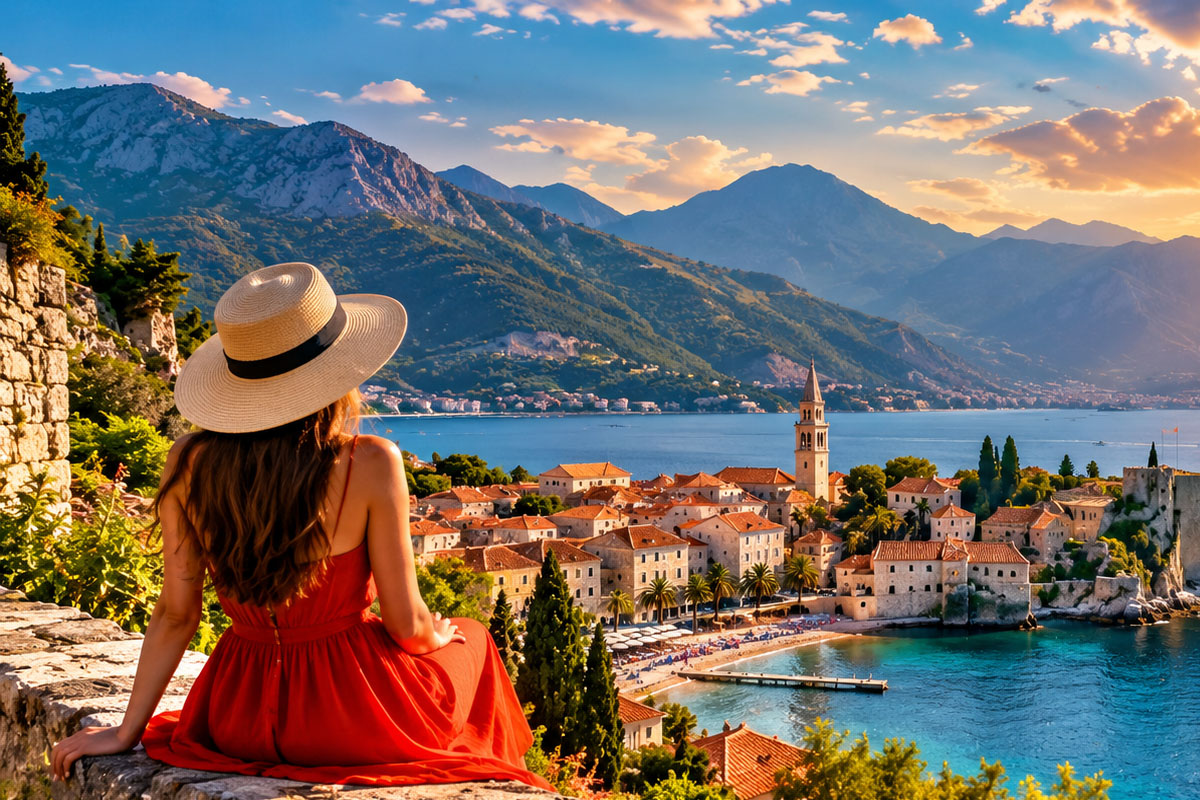 #Montenegro
Exercise normal precaution in Montenegro . Montenegro is generally a safe destination for travelers. Review our Travel Guidance for Montenegro to learn how to prepare for a safe trip.
#Montenegro#Visas & Entry RulesThere were no changes to the advisory level or risk indicators. Advisory summary was updated. Exercise normal precautions in Montenegro . Advisory summary Montenegro is generally a safe destination for travelers. Review our…
#Montenegro#Visas & Entry RulesThe coast enjoys a Mediterranean climate with hot summers and mild, wet winters. The mountainous interior is much cooler, with snowy winters and pleasant summers.
Typical daytime highs and rain in Kotor (approximate averages).
Day 1-2: Kotor's old town and fortress, with a boat trip to Perast. Day 3: the Lovćen serpentine, Njeguši and Cetinje. Day 4-5: Budva's old town and Sveti Stefan's beaches.
Day 1-3: Kotor, Perast and the bay. Day 4: Cetinje and Lovćen. Day 5: Lake Skadar boat trip. Day 6: Ostrog Monastery. Day 7-9: Durmitor National Park with hiking and Tara rafting. Day 10: Budva or Ulcinj for the beach.
Backpacker budget: about $35–55 a day
Emergency: 112 general · 122 police · 124 ambulance · 123 fire
Podgorica and Tivat airports have international flights, and Dubrovnik airport in Croatia is close to the Bay of Kotor. Buses connect Montenegro with Croatia, Bosnia and Herzegovina, Serbia and Albania, and a railway runs from Bar to Belgrade.
✈️ Cheap flights to Montenegro: airports, flight times & best time to fly →
Yes, Montenegro is generally very safe for visitors. The main risks are busy summer crowds and winding mountain roads.
May, June and September are ideal for the coast and the mountains. July and August are hot and crowded.
Five days covers the Bay of Kotor and coast. Ten days lets you add Lake Skadar, Ostrog and Durmitor National Park.
It depends on your passport – check the official government site or a Montenegrin embassy before you travel.
Montenegro uses the euro. Cards are accepted in many places, but cash is useful in rural areas.
Approximate daily cost per person (stay, food, local transport).
Buses run along the coast and to the main mountain towns. A rental car makes it easier to reach national parks.
Nothing in this tab yet – the agents add new stories every few minutes.
🌏 You reached the start of our archive.

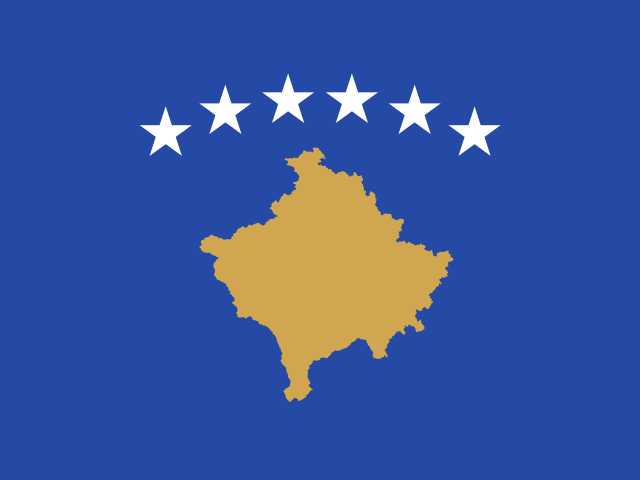 KosovoCafé culture, Ottoman old towns and dramatic mountain gorges
.jpg/500px-Ksamil_Albania_-_panoramio_(8).jpg)
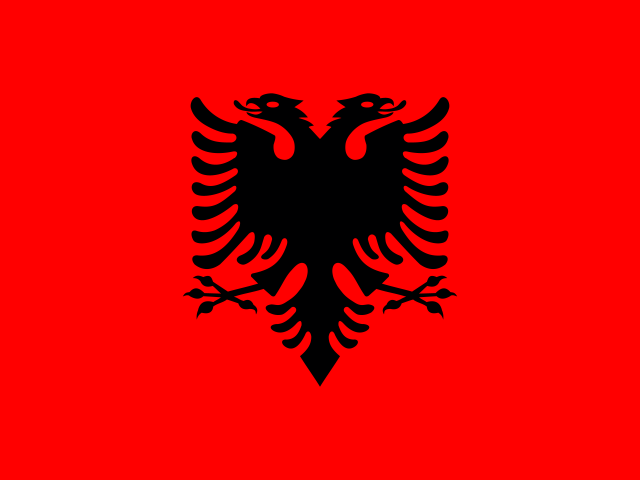 AlbaniaRiviera beaches, Ottoman towns and wild mountains
 Bosnia and HerzegovinaOttoman bridges, emerald rivers and coffee culture
 SerbiaLively nightlife, Orthodox monasteries and rolling green hills
 North MacedoniaLake Ohrid, Ottoman bazaars and mountain monasteries
 CroatiaIsland-hopping, walled cities and crystal-clear sea

 GreeceAncient ruins, whitewashed islands and endless blue sea
 HungaryThermal baths, Danube views and paprika-rich food