.jpg/1920px-Landscape_in_Balochistan_(Pakistan).jpg)


Pakistan📸 Photo album · 9 photos · Ultra-HD
Giant peaks, Mughal cities and legendary hospitality
🕒 –:– local time4 stories this week3 sources 6 top placesCapital Islamabad
Pakistan is home to some of the world's oldest civilisations. Around 2500 BC, the Indus Valley Civilisation built planned cities such as Mohenjo-daro and Harappa, with grid streets, drainage systems and granaries far ahead of their time. Later, the region of Gandhara in the north-west became a crossroads of cultures; after Alexander the Great passed through, Buddhist kingdoms flourished there, and Taxila became a famous centre of learning and Greco-Buddhist art.
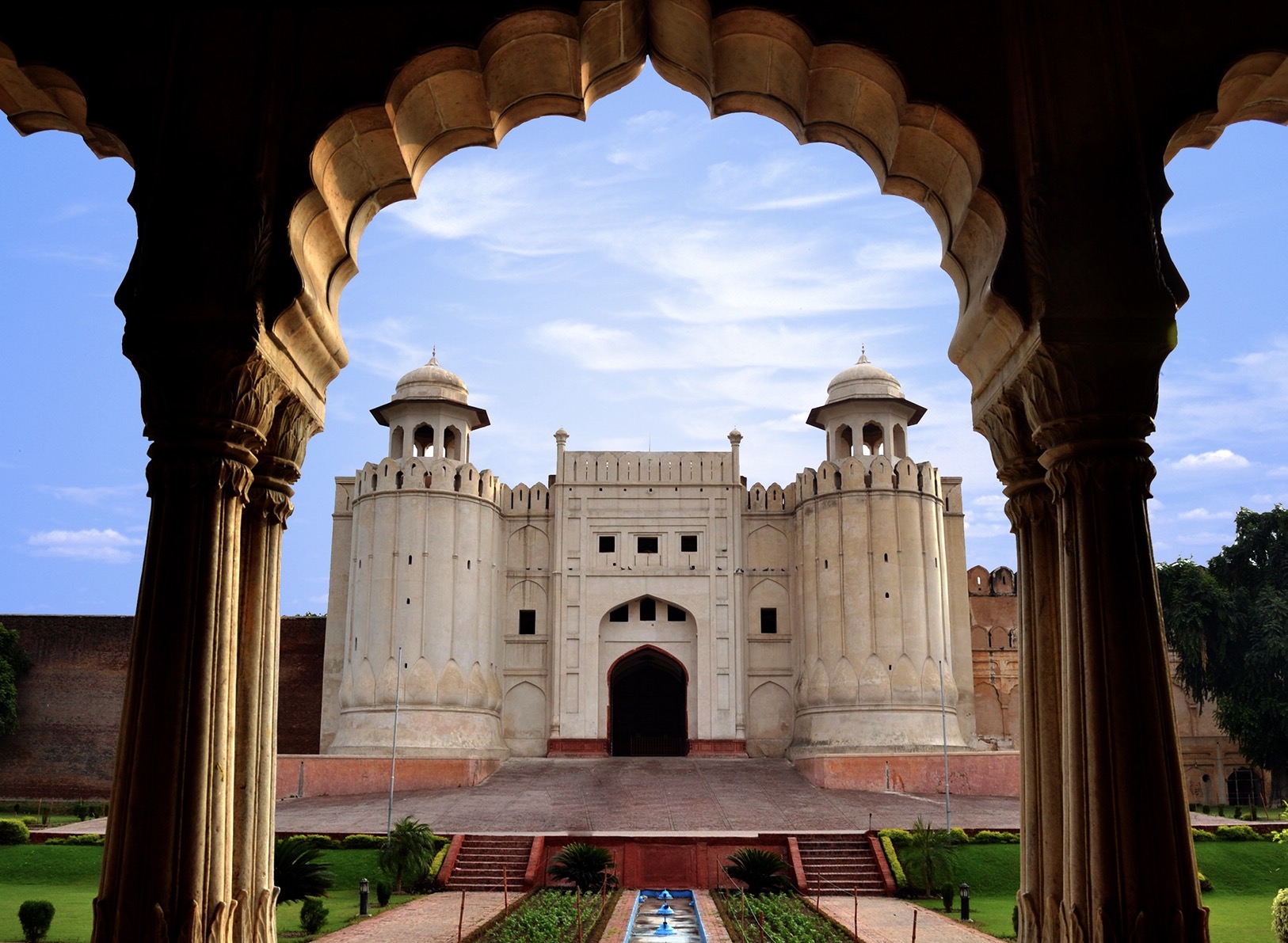
Islam arrived in Sindh in 711 with Arab forces, and over the following centuries Turkic and Afghan dynasties brought much of the region into the Islamic world. Sufi saints such as Data Ganj Bakhsh in Lahore and Lal Shahbaz Qalandar in Sehwan became deeply loved, and their shrines remain places of music and devotion. Under the Mughal Empire, Lahore blossomed with gardens, forts and mosques, including the Badshahi Mosque and the Shalimar Gardens. In the early nineteenth century, the Sikh Empire of Ranjit Singh ruled from Lahore.
The British gradually took control of the region in the nineteenth century, and it became part of British India. In the twentieth century, the All-India Muslim League, led by Muhammad Ali Jinnah, campaigned for a separate homeland for Muslims, inspired in part by the poet-philosopher Muhammad Iqbal. When British India was partitioned in 1947, Pakistan was created, accompanied by mass migration. East Pakistan became the independent nation of Bangladesh in 1971, and Islamabad was built as a new planned capital in the 1960s.
Modern Pakistan is a country of more than two hundred million people with vibrant cities and spectacular landscapes. For travellers, it offers extraordinary variety: the Mughal monuments of Lahore, the ruins of Mohenjo-daro and Taxila, the colourful chaos of Karachi, and in the north, some of the highest mountains on Earth along the Karakoram Highway, where the famous hospitality of the people often becomes the highlight of the journey.
Entry rules depend on your passport and change often.
Before you book, check the official rules for your passport:
The latest visa and entry news for Pakistan appears below as soon as publishers report it.
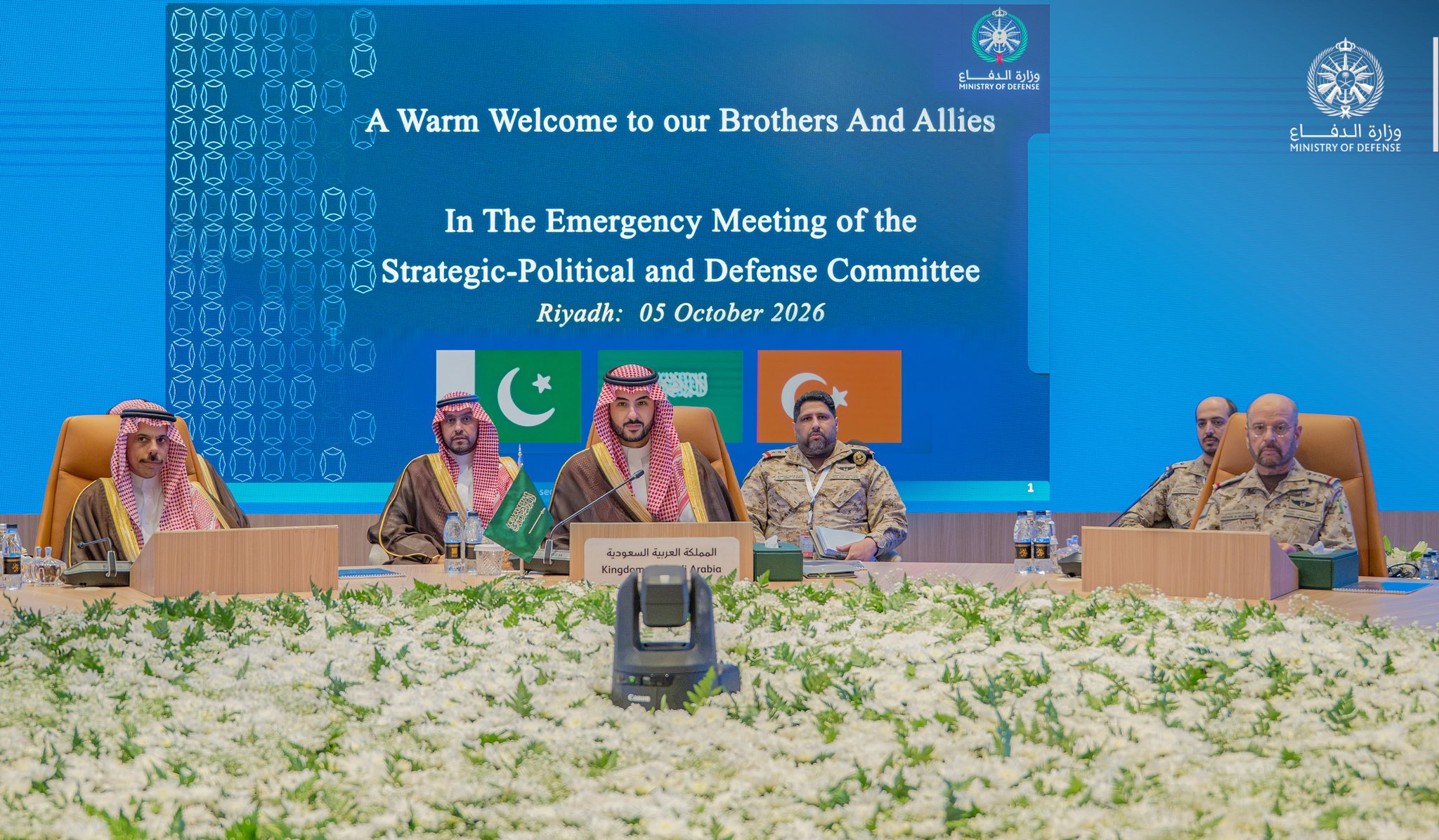
RIYADH: Saudi Arabia, Pakistan and Turkiye on Monday agreed to immediately implement collective-defense commitments under the Makkah Defense Alliance, including the swift deployment of agreed forces and military capabilities to…
 #Saudi Arabia#Pakistan#Pilgrimage & Spiritual
RIYADH: Saudi Arabia, Pakistan and Turkiye on Monday agreed to immediately implement collective-defense commitments under the previously agreed Makkah Defense Alliance, including the swift deployment of agreed forces and other…
#Saudi Arabia#Pakistan#Pilgrimage & Spiritual
Convoy of trucks, buses and cars carrying over 5,000 people departs Khyber Pakhtunkhwa for Islamabad after talks with federal government to postpone march collapse
 #Pakistan
Officials from Saudi Arabia, Pakistan, and Turkey will convene in Riyadh for a crucial meeting regarding their recently established joint defense pact amidst escalating tensions with the Houthis in Yemen.
 #Saudi Arabia#Pakistan#Riyadh#Pilgrimage & Spiritual
Pakistan's climate ranges from scorching summers on the Indus plains to cold, snowy winters in the mountains. The monsoon brings heavy rain to parts of the east in July and August.
Typical daytime highs and rain in Lahore (approximate averages).
Day 1-3: explore Lahore's Walled City, Lahore Fort, Badshahi Mosque, the Wagah ceremony and food streets. Day 4-5: travel to Islamabad for the Faisal Mosque, Margalla Hills and a day trip to Taxila.
Day 1-2: Islamabad and Taxila. Day 3-4: travel north along the Karakoram Highway towards Gilgit. Day 5-8: base in Hunza for forts, glaciers and the Khunjerab Pass. Day 9-10: Fairy Meadows or Skardu. Day 11-12: return to Islamabad by road or flight.
Backpacker budget: about $20–35 a day
Emergency: 15 police · 1122 rescue & ambulance · 16 fire
The main international airports are in Islamabad, Lahore and Karachi, with connections through the Gulf and Turkey. The Wagah–Attari border with India and the Khunjerab Pass with China are notable land crossings, subject to opening rules.
✈️ Cheap flights to Pakistan: airports, flight times & best time to fly →
Many travellers visit the main cities and the northern mountains without problems, and hospitality is legendary. Some border areas are dangerous, so check your government's latest travel advice and follow local guidance.
October to March is best for the cities and plains, while May to October is ideal for the northern mountains.
Five days lets you see Lahore and Islamabad. Allow ten to fourteen days to experience the Karakoram Highway and Hunza.
It depends on your passport – check the official government site or a Pakistani embassy before you travel.
Urdu and English are official languages, and English is widely understood in cities and tourism. Punjabi, Sindhi, Pashto, Balochi and many other languages are spoken regionally.
Approximate daily cost per person (stay, food, local transport).
Domestic flights and comfortable intercity coaches link major cities. In the north, travelers use shared vans, hired cars with drivers or flights to Skardu and Gilgit.
Nothing in this tab yet – the agents add new stories every few minutes.
🌏 You reached the start of our archive.

 AfghanistanTurquoise mosques, mountain valleys and the Silk Road
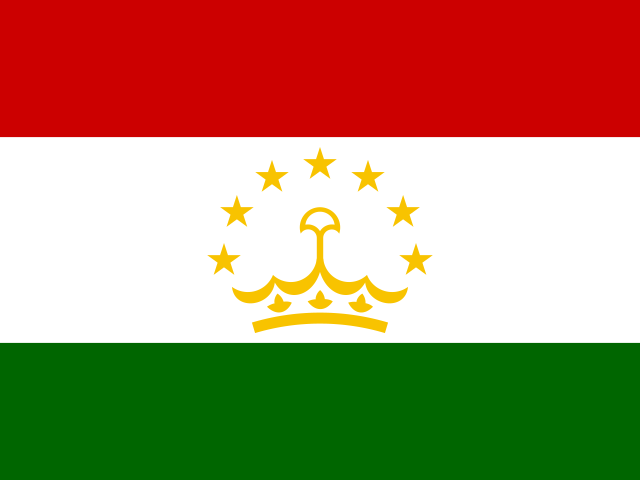 TajikistanRoof-of-the-world peaks and turquoise mountain lakes
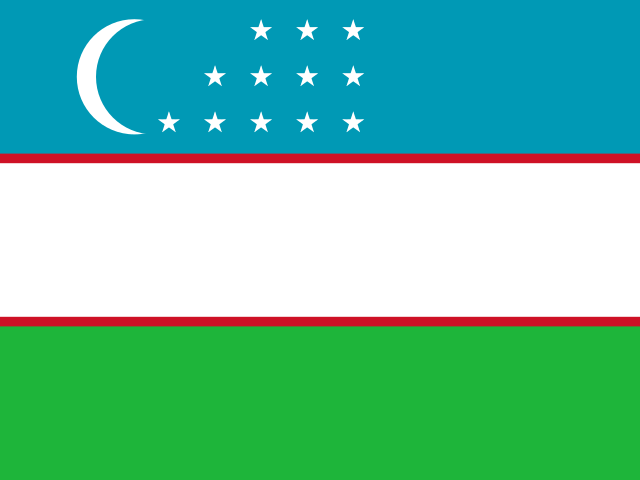 UzbekistanTurquoise domes and legendary Silk Road cities
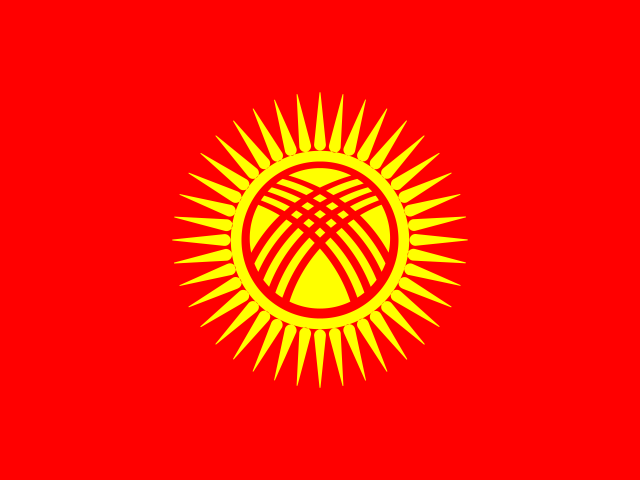 KyrgyzstanWild mountains, alpine lakes and nomad yurt camps
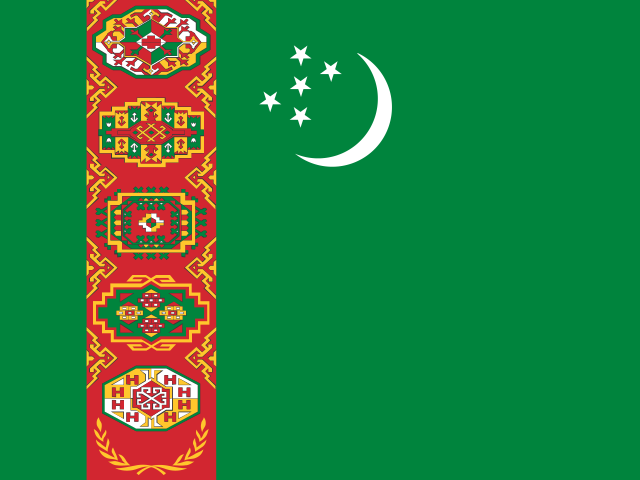 TurkmenistanWhite-marble capital, fiery crater and Silk Road ruins

 NepalHimalayan treks, ancient temples and jungle safaris
_-_img_01.jpg/500px-East_facade_Hawa_Mahal_Jaipur_from_ground_level_(July_2022)_-_img_01.jpg)

 IndiaPalaces, spice markets, Himalayan peaks and palm-lined beaches
 IranPersian gardens, tiled mosques and desert cities