Turkmenistan's deserts and oases have hosted civilisations for millennia. In the Bronze Age, the Margiana culture flourished around Gonur Depe in the Murghab delta, building fortified palaces and temples around 2000 BC. Later the land fell within the Persian Achaemenid Empire, and the Parthians, who rose to challenge Rome, had an early royal centre at Nisa near today's Ashgabat. Merv, on the great caravan routes between China and the Mediterranean, grew into one of the most important cities of the ancient and medieval world.
Arab armies brought Islam in the 7th and 8th centuries, and under the Seljuk Turks in the 11th and 12th centuries Merv became a glittering capital, crowned by the mausoleum of Sultan Sanjar. The Mongol invasions of the 13th century devastated the oasis cities, and for centuries afterwards the region was dominated by nomadic and semi-nomadic Turkmen tribes, famed for their horsemanship, felt yurts and intricately knotted carpets, living between rival Persian and Central Asian powers.
Read the full history
In the late 19th century the Russian Empire advanced into the region, and after the Battle of Geok Tepe in 1881 the Turkmen lands were absorbed. Following the Russian Revolution, the Turkmen Soviet Socialist Republic was created in 1924. Soviet rule brought collectivisation, cotton farming fed by the vast Karakum Canal, and the rebuilding of Ashgabat after a devastating earthquake in 1948.
Turkmenistan declared independence in 1991 and adopted a policy of permanent neutrality, recognised by the United Nations in 1995. Its huge natural-gas reserves funded a dramatic white-marble makeover of the capital. The country remains one of the world's least-visited, and tourism is tightly managed. For travellers who make the journey, the rewards are extraordinary: the ruins of Merv and Nisa, the medieval minarets of Kunya-Urgench, the fiery Darvaza gas crater, Akhal-Teke horses and a carpet-weaving tradition that is a source of national pride.
Timeline
c. 2000 BCBronze Age Margiana civilisation flourishes at Gonur Depe
c. 250 BCParthian Empire rises, with an early royal centre at Nisa
11th centurySeljuk Turks make Merv one of the world's great cities
1221Mongol invasions devastate Merv and other oasis cities
1881Battle of Geok Tepe leads to Russian imperial control
1924Turkmen Soviet Socialist Republic is established
1991Turkmenistan declares independence from the Soviet Union
There were no changes to the advisory level or risk indicators. Advisory summary was updated. Exercise normal precautions in Turkmenistan. Advisory summary Turkmenistan is generally a safe destination for travelers. Medical…
Exercise normal precaution in Turkmenistan . Turkmenistan is generally a safe destination for travelers. Medical services for routine and emergency procedures are limited. Review the Health section of the Travel Guidance on this…
Turkmenistan✨ 10 best things to do in Turkmenistan
Things to do in Turkmenistan
Camp by the Darvaza gas craterWatch the 'Door to Hell' roar with flames under a desert sky full of stars.
Explore ancient MervWalk among the crumbling walls and Seljuk mausoleums of a city that once rivalled Baghdad.
Tour white-marble AshgabatGaze at gleaming monuments, golden domes and vast empty boulevards in one of the world's most unusual capitals.
Browse the Tolkuchka BazaarHaggle for hand-knotted carpets, embroidered robes and camel-wool goods at the sprawling market outside Ashgabat.
Visit the Carpet MuseumSee enormous hand-woven masterpieces and learn the tribal patterns behind Turkmenistan's national symbol.
Meet Akhal-Teke horsesAdmire the shimmering, golden-coated horses revered as a national treasure at stud farms near Ashgabat.
Wander Kunya-UrgenchStand beneath the tall Kutlug Timur minaret among the tombs of a once-mighty Khorezm capital.
See the Parthian fortress of NisaClimb the earthen ramparts of an early Parthian royal centre with views to the Kopet Dag mountains.
Swim in Kow Ata underground lakeDescend into a cave to bathe in warm, mineral-rich waters deep below ground.
Hike Yangykala CanyonWatch sunset paint the red, pink and white cliffs of a remote canyon near the Caspian.
Turkmenistan🗺️ Where to visit in Turkmenistan
Where to go in Turkmenistan
AshgabatAkhal · capital cityA surreal city of white marble, gold domes and grand monuments, plus excellent museums and bazaars.
Darvaza Gas CraterKarakum Desert · natural wonderA burning crater in the heart of the desert, best seen after dark from a nearby camp.
📍
MervMary · ancient Silk Road cityA UNESCO-listed sprawl of successive cities spanning around 4,000 years of history.
Kunya-UrgenchDashoguz · medieval ruinsElegant mausoleums and soaring minarets recall the glory of the Khorezm empire.
NisaNear Ashgabat · Parthian fortressUNESCO-listed ruins of one of the earliest Parthian strongholds, an easy trip from the capital.
📍
Gonur DepeMary · Bronze Age siteThe excavated palace and temples of the Margiana civilisation, remote and atmospheric.
📍
Yangykala CanyonBalkan · desert canyonVivid striped cliffs rising from the desert floor in the far west of the country.
📍
Kow Ata Underground LakeAkhal · cave lakeA warm, sulphurous lake in a vast cave, popular with locals for a restorative dip.
Turkmenistan✨ Must-do experiences
Camp beside the Darvaza crater
Browse the Tolkuchka bazaar near Ashgabat
Explore the ruins of ancient Merv
See Akhal-Teke horses, the national treasure
Turkmenistan🍽️ Taste of Turkmenistan
Plov – rice with carrots and lamb
Dograma – soup of torn bread, meat and onion
Ishlekli – meat pie baked in hot sand or an oven
Shashlik – grilled meat skewers
Turkmenistan🌦️ Weather & best time to visit Turkmenistan
Best time to visit Turkmenistan
Turkmenistan has an extreme continental desert climate with scorching, bone-dry summers and cold winters. The Karakum Desert is hottest, while the Caspian coast and Kopet Dag foothills are slightly milder.
BestApril to May and September to October – warm, sunny days and cool nights, ideal for desert camping and exploring ruins.
ShoulderMarch and November – cooler and sometimes rainy, but comfortable for sightseeing with very few visitors.
AvoidJune to August – desert heat regularly exceeds 40°C; December to February can be cold and grey.
8°💧Jan
10°💧Feb
16°💧💧Mar
23°💧Apr
30°💧May
36°☀️Jun
38°☀️Jul
37°☀️Aug
31°☀️Sep
23°💧Oct
15°💧Nov
9°💧Dec
Typical daytime highs and rain in Ashgabat (approximate averages).
Turkmenistan🎉 Festivals & events in Turkmenistan
March
NowruzThe Persian New Year marks the spring equinox with feasts, music and traditional games.
April
Akhal-Teke Horse DayA national celebration of the famous golden horses, with races and beauty contests.
May
Turkmen Carpet DayExhibitions, weaving displays and festivities honour the country's legendary carpet craft.
September
Independence DayParades, concerts and fireworks in Ashgabat mark independence from the Soviet Union.
December
Neutrality DayA national holiday celebrating the UN recognition of Turkmenistan's permanent neutrality.
Turkmenistan🧭 Turkmenistan itinerary ideas
How many days in Turkmenistan?
5 daysHighlights in 5 days
Day 1-2 explore Ashgabat's monuments, Carpet Museum, Tolkuchka Bazaar and the ruins of Nisa. Day 3 drive into the Karakum to camp at the Darvaza gas crater. Day 4-5 continue north to Kunya-Urgench and cross into Uzbekistan, or fly back to Ashgabat.
10 daysDeserts and Silk Road ruins
Day 1-3 Ashgabat, Nisa, Kow Ata and an Akhal-Teke stud farm. Day 4-5 fly or drive to Mary for Merv and Gonur Depe. Day 6-7 Darvaza crater and Kunya-Urgench, then Day 8-10 head west to Yangykala Canyon and the Caspian coast.
Turkmenistan🎒 Backpacking Turkmenistan – tips & hacks
Backpacker budget: about $40–70 a day
Independent travel is very limited – most visitors join a registered tour or use a transit arrangement, so plan well in advance.
Share a guided tour or 4x4 with other travellers to split the cost of trips to Darvaza and remote sites.
Eat at local cafés and bazaars for affordable plov, shashlik and fresh flatbread.
Domestic flights and trains are inexpensive and useful for covering long desert distances.
Bring enough cash in a major currency and a phrasebook; internet can be slow and many sites are blocked.
Turkmenistan🛡️ Safety & money in Turkmenistan
Stay safe
Street crime is low, but photography of government buildings, police and military sites can cause problems – ask first.
Carry your passport and registration documents at all times, as checks are common.
Pack plenty of water, sun protection and warm layers for desert trips, where days are hot and nights cold.
Travel rules can change quickly; check your government's latest travel advice and stay in touch with your tour operator.
Money
Bring clean, undamaged banknotes in a major currency and exchange only at official banks or exchange offices.
Foreign cards are rarely accepted and ATMs that work with them are scarce – plan to rely on cash.
Tipping is not traditional but is appreciated by guides and drivers.
Emergency: 02 police · 03 ambulance · 01 fire
Turkmenistan🛬 Getting to Turkmenistan
Most visitors fly into Ashgabat International Airport; land borders connect with Uzbekistan, Iran and Kazakhstan, though crossings require advance arrangements.
Turkmenistan💡 Did you know? 5 facts about Turkmenistan
Ashgabat holds a Guinness World Record for the highest density of white-marble-clad buildings.
The Darvaza crater has been burning since the Soviet era, when natural gas was set alight.
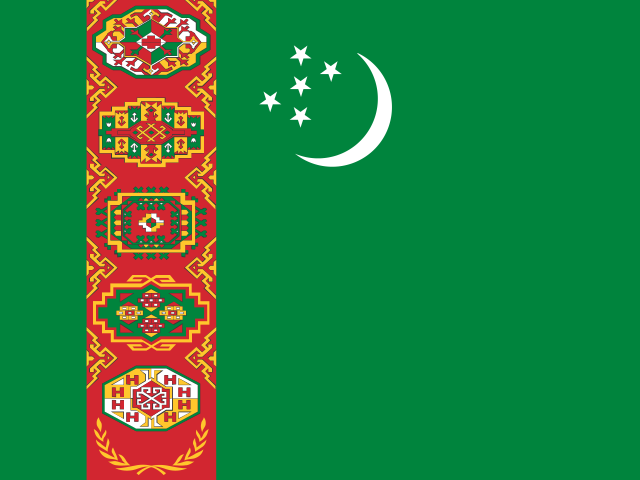
The Turkmen flag features five traditional carpet patterns, one for each major tribe.
Around 80 percent of Turkmenistan is covered by the Karakum Desert.
The Akhal-Teke horse is so treasured that it appears on the national coat of arms.
Turkmenistan❓ Turkmenistan travel FAQ
Turkmenistan travel questions
Is Turkmenistan safe for tourists?
Turkmenistan has low street crime and visitors on organised tours rarely face problems. However, the country is tightly controlled, so follow local rules, avoid photographing sensitive sites and check your government's latest travel advice.
Do I need a visa for Turkmenistan?
Visa requirements depend on your passport and usually involve advance paperwork, often arranged through a tour agency. Check the official government site or embassy well before you travel.
When is the best time to visit Turkmenistan?
Spring (April–May) and autumn (September–October) bring pleasant temperatures. Summer is extremely hot, and winter can be surprisingly cold.
Can you travel independently in Turkmenistan?
Independent travel is very restricted. Most visitors travel with a licensed guide or on a short transit arrangement with a fixed route.
How many days do you need in Turkmenistan?
Four to five days covers Ashgabat, Darvaza and Kunya-Urgench, while a week or more lets you add Merv and the far west.
Turkmenistan💰 What a trip costs
$$price level
$40–70backpacker / day
$120–200mid-range / day
Approximate daily cost per person (stay, food, local transport).
Turkmenistan🚌 Getting around
Most travelers move with a guide and driver arranged through a tour company. Domestic flights and trains link the main cities.
Turkmenistan🛕 Sacred & spiritual places
Mausoleum of Sultan Sanjar – 12th-century domed tomb at Merv, a place of local pilgrimage
Turkmenistan🤝 Local etiquette
Dress modestly, especially outside Ashgabat
Avoid photographing government buildings and officials
Accept green tea when offered as a sign of welcome
Nothing in this tab yet – the agents add new stories every few minutes.
📰 Older Turkmenistan stories Everything our agents ever found – keeps loading as you scroll

.jpg/1920px-View_of_Ashgabat_(42376779291).jpg)


.jpg/1920px-Mausoleum_of_Sultan_Sanjar_with_Camel_(42400295421).jpg)

 UzbekistanTurquoise domes and legendary Silk Road cities
 IranPersian gardens, tiled mosques and desert cities
 AfghanistanTurquoise mosques, mountain valleys and the Silk Road
 TajikistanRoof-of-the-world peaks and turquoise mountain lakes
.jpg/500px-Qobustan_giri%C5%9F_qayas%C4%B1_2026_(1).jpg)
 AzerbaijanFlame towers, old silk-road towns and Caspian Sea views
 KazakhstanEndless steppe, alpine lakes and futuristic Astana
 ArmeniaAncient monasteries, mountain views and warm hospitality
.jpg/500px-Landscape_in_Balochistan_(Pakistan).jpg)
 PakistanGiant peaks, Mughal cities and legendary hospitality