Uganda's fertile lakeshores and highlands have drawn people for thousands of years. Bantu-speaking farmers spread through the south, while Nilotic and Central Sudanic herding peoples settled the north and east. From around the 14th century powerful kingdoms emerged, first the legendary empire of Bunyoro-Kitara and later Buganda, Ankole, Toro and Busoga, with royal courts, drum regalia and elaborate systems of chiefs. Buganda's kings, the kabakas, still hold a cultural role today.
In the mid-19th century Arab and Swahili traders arrived from the coast, followed by European explorers searching for the source of the Nile; John Hanning Speke reached the outflow of Lake Victoria at Jinja in 1862. Christian missionaries soon followed, and rivalries between faiths and factions at the Buganda court led to turmoil, including the execution of young converts now honoured as the Uganda Martyrs. Britain declared a protectorate in 1894, governing through local kingdoms and developing cotton and coffee as cash crops.
Read the full history
Uganda became independent on 9 October 1962. The following decades brought serious instability, including periods of military rule and conflict in the 1970s and 1980s, before a long period of relative stability and economic growth began from the late 1980s. The traditional kingdoms were restored as cultural institutions in 1993, and tourism, built around the country's wildlife, has become an important part of national life.
For travellers, Uganda lives up to Winston Churchill's description of it as 'the Pearl of Africa'. You can trek to meet mountain gorillas in misty Bwindi, track chimpanzees in Kibale, cruise beneath the thundering Murchison Falls and raft the White Nile at Jinja. Royal sites such as the Kasubi Tombs, lively Kampala markets and the friendliness of Ugandans add a rich cultural layer to any safari.
Timeline
c. 1000 BCBantu-speaking farmers settle the region
14th centuryRise of the Bunyoro-Kitara kingdom
1862John Hanning Speke reaches the Nile's outflow from Lake Victoria
1886Christian converts executed at the Buganda court, later honoured as the Uganda Martyrs
1894Britain declares the Uganda Protectorate
1962Uganda gains independence on 9 October
1993Traditional kingdoms restored as cultural institutions
Uganda🛂 Visa & entry
Entry rules depend on your passport and change often.
EAC – East African Community member – look out for regional tourist visas.
Commonwealth – Commonwealth member.
Before you book, check the official rules for your passport:
Uganda has removed the yellow fever vaccination certificate from its mandatory entry requirements, according to immigration authorities, changing a long-standing travel condition. The article Uganda removes Yellow Fever…
Trek with mountain gorillasHike through the dense rainforest of Bwindi for an unforgettable hour with a gorilla family.
Track chimpanzees in KibaleFollow the hoots and calls of chimps through one of Africa's richest primate forests.
Raft the White NileTackle big rapids near Jinja, close to where the Nile begins its journey north.
Cruise to Murchison FallsSail past hippos, crocodiles and elephants to the foot of the falls, where the Nile squeezes through a narrow gorge.
Boat on the Kazinga ChannelDrift along the channel in Queen Elizabeth National Park, crowded with buffalo, hippos and birds.
Look for tree-climbing lionsSearch the fig trees of the Ishasha sector, where lions often lounge in the branches.
Canoe on Lake BunyonyiPaddle among terraced hills and tiny islands on one of Uganda's loveliest lakes.
Hike the Rwenzori MountainsTrek through giant lobelias and glaciers in the misty 'Mountains of the Moon'.
Visit Sipi FallsHike between three waterfalls on the slopes of Mount Elgon and tour small coffee farms.
Eat a rolexTry Uganda's favourite street snack, a chapati rolled around a vegetable omelette.
Uganda🗺️ Where to visit in Uganda
Where to go in Uganda
Bwindi Impenetrable National ParkSouthwest · gorillasA UNESCO-listed rainforest that is home to a large share of the world's mountain gorillas.
Murchison Falls National ParkNorthwest · safariUganda's largest park, with classic savannah wildlife and the dramatic Murchison Falls.
Queen Elizabeth National ParkWest · safariCrater lakes, the Kazinga Channel and Ishasha's tree-climbing lions in a scenic setting.
Kibale National ParkWest · chimpanzeesThe best place in East Africa for chimpanzee tracking, with many other primates.
JinjaEast · adventureThe source of the Nile and Uganda's adventure capital for rafting, kayaking and bungee jumping.
Lake BunyonyiSouthwest · lakeA peaceful, island-dotted lake perfect for relaxing after gorilla trekking.
📍
Rwenzori Mountains National ParkWest · trekkingSnow-capped peaks on the equator and challenging multi-day treks for serious hikers.
📍
Kidepo Valley National ParkFar northeast · wildernessA remote park of wide valleys and mountains, with lions, cheetahs and few other visitors.
Uganda✨ Must-do experiences
Trek to see mountain gorillas in Bwindi
Raft the Nile near Jinja
Track chimpanzees in Kibale
Take a boat trip on the Kazinga Channel
Uganda🍽️ Taste of Uganda
Rolex – chapati rolled with an omelette, a street favourite
Matoke – steamed and mashed green bananas
Luwombo – stew steamed in banana leaves
Groundnut sauce – peanut stew served with staples
Uganda🌦️ Weather & best time to visit Uganda
Best time to visit Uganda
Thanks to its altitude, Uganda enjoys a pleasant, warm climate all year despite sitting on the equator. Most of the country has two rainy seasons, while the southwest highlands are cooler and the northeast around Kidepo is hotter and drier.
BestJune to September and December to February – the drier seasons, ideal for gorilla trekking and game viewing.
ShoulderMarch and November – some rain, but lush scenery, good birding and fewer visitors.
AvoidNo bad time – but April to May and October bring the heaviest rains, which can make forest trails muddy and roads slow.
28°💧Jan
28°💧Feb
28°💧💧Mar
27°💧💧💧Apr
26°💧💧May
26°💧Jun
25°💧Jul
26°💧Aug
27°💧💧Sep
27°💧💧Oct
27°💧💧Nov
27°💧Dec
Typical daytime highs and rain in Kampala (approximate averages).
Uganda🎉 Festivals & events in Uganda
June
Uganda Martyrs DayOn 3 June huge numbers of pilgrims gather at the shrine in Namugongo near Kampala.
October
Independence Day9 October is marked with parades, flags and celebrations nationwide.
August (even-numbered years)
ImbaluThe Bagisu people of the Mount Elgon region celebrate a coming-of-age ceremony with dancing and drumming.
Usually late in the year
Nyege Nyege FestivalA multi-day electronic and African music festival on the banks of the Nile near Jinja.
Uganda🧭 Uganda itinerary ideas
How many days in Uganda?
7 daysPrimates and safari 7 days
Days 1-2 travel from Entebbe to Kibale for chimpanzee tracking. Days 3-4 take in Queen Elizabeth National Park and a Kazinga Channel cruise. Days 5-7 head south to Bwindi for gorilla trekking and finish at Lake Bunyonyi.
14 daysGrand Uganda 14 days
Days 1-3 cover Kampala and Jinja for rafting on the Nile. Days 4-6 are spent at Murchison Falls, then Days 7-9 at Kibale and Queen Elizabeth National Park. Days 10-14 finish with Bwindi's gorillas and a relaxing stay at Lake Bunyonyi.
Uganda🎒 Backpacking Uganda – tips & hacks
Backpacker budget: about $35–55 a day
Book gorilla and chimpanzee permits well in advance through the national wildlife authority or a licensed operator, as numbers are limited.
Long-distance buses and shared minibuses (matatus) are cheap but crowded; leave early as they depart when full.
Jinja, Kampala and Lake Bunyonyi have the best hostels and backpacker camps.
Eat local staples such as matoke, beans, posho and rolex from street stalls for very little.
Join a group or shared tour to cut costs for parks that are hard to reach by public transport.
Uganda🛡️ Safety & money in Uganda
Stay safe
Most tourist areas are safe, but check your government's latest travel advice, especially for border regions with the DR Congo and South Sudan and parts of the northeast.
Boda boda motorbike taxis are involved in many accidents; insist on a helmet or use a car where possible.
Uganda has strict laws on same-sex relationships, so LGBTQ+ travellers should read official advice carefully before travelling.
Take malaria precautions and follow ranger instructions at all times in national parks.
Money
The currency is the Ugandan shilling; ATMs are common in towns but scarce near national parks, so carry cash.
US dollars are often used for permits and tours, and newer, undamaged notes get better exchange rates.
Tipping guides, porters, rangers and drivers is customary and much appreciated.
Emergency: 999 · 112
Uganda🛬 Getting to Uganda
Entebbe International Airport, near Kampala, is the main international gateway. Land borders connect with Kenya, Rwanda and Tanzania, with frequent buses from Nairobi and Kigali.
Bwindi Impenetrable National Park is home to roughly half of the world's mountain gorillas.
The White Nile begins its long journey to the Mediterranean from Lake Victoria at Jinja.
Despite sitting on the equator, the Rwenzori Mountains have glaciers and permanent snow.
Uganda has recorded more than 1,000 bird species, making it a top birding destination.
Lake Victoria, shared with Kenya and Tanzania, is the largest lake in Africa.
Uganda❓ Uganda travel FAQ
Uganda travel questions
Is Uganda safe for tourists?
Uganda's main tourist routes and national parks are generally safe and welcoming. Some border regions carry higher risks, so check your government's latest travel advice before you go.
What is the best time to visit Uganda?
June to September and December to February are the driest periods and best for gorilla trekking and safaris. Visits are possible year-round, but the rainy months make trails muddier.
How many days do you need in Uganda?
A week is enough for gorillas, chimps and one savannah park. Two weeks lets you add Murchison Falls, Jinja and some relaxation.
Do I need a visa for Uganda?
It depends on your passport – check the official government site or your nearest embassy before you travel, and check health entry requirements such as vaccination certificates.
How do I get a gorilla trekking permit?
Permits are issued by the Uganda Wildlife Authority and can be booked directly or through a licensed tour operator. Book months ahead for the dry season, as daily numbers are strictly limited.
Uganda💰 What a trip costs
$$price level
$35–55backpacker / day
$100–200mid-range / day
Approximate daily cost per person (stay, food, local transport).
Uganda🚌 Getting around
Buses and matatu minibuses link towns, and boda-boda motorbikes are common for short trips. Most visitors take a safari vehicle with a driver.
Uganda🛕 Sacred & spiritual places
Uganda Martyrs Basilica, Namugongo – Major shrine drawing huge crowds on Martyrs Day, 3 June
Kasubi Tombs – Royal burial ground of the Buganda kings, a UNESCO site
Uganda National Mosque – Large hilltop mosque in Kampala with city views from its minaret
Uganda🤝 Local etiquette
Greet people before any question
Dress modestly in towns and villages
Ask before taking photos
Nothing in this tab yet – the agents add new stories every few minutes.
📰 Older Uganda stories Everything our agents ever found – keeps loading as you scroll


.jpg/1920px-Lake_Bunyonyi_(8146148093).jpg)

 #Uganda

 RwandaMountain gorillas, green hills and a clean, modern capital
 BurundiRoyal drummers, green hills and Lake Tanganyika beaches
 South SudanVast wetlands, cattle cultures and the White Nile

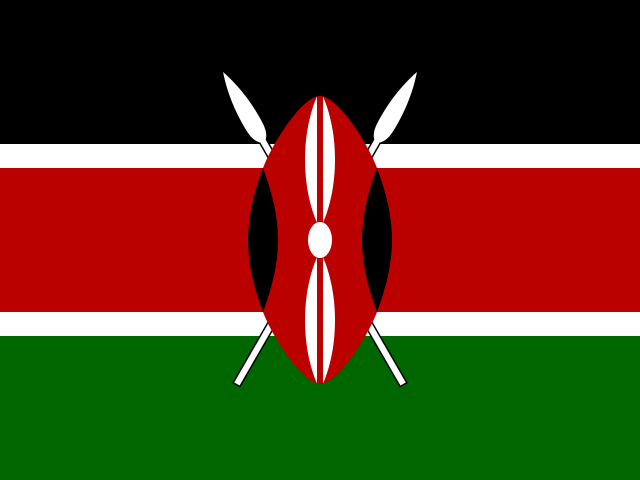 KenyaGreat Migration safaris, Indian Ocean beaches and Swahili towns

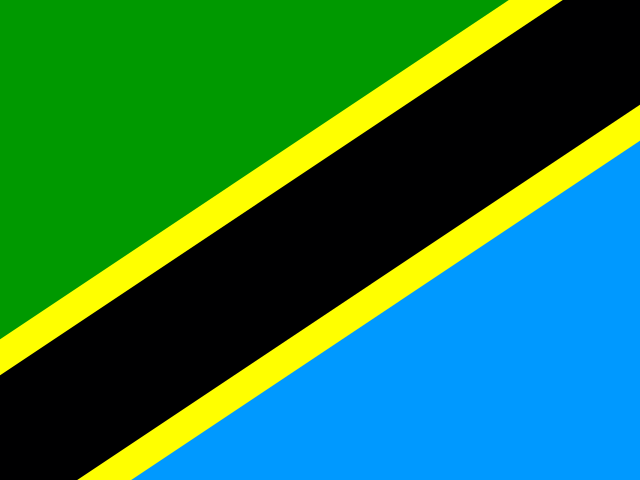 TanzaniaSerengeti safaris, Kilimanjaro and Zanzibar beaches
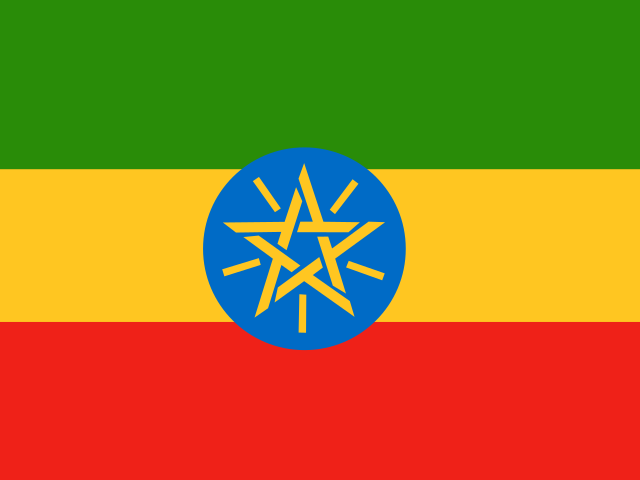 EthiopiaRock-hewn churches, high mountains and the birthplace of coffee
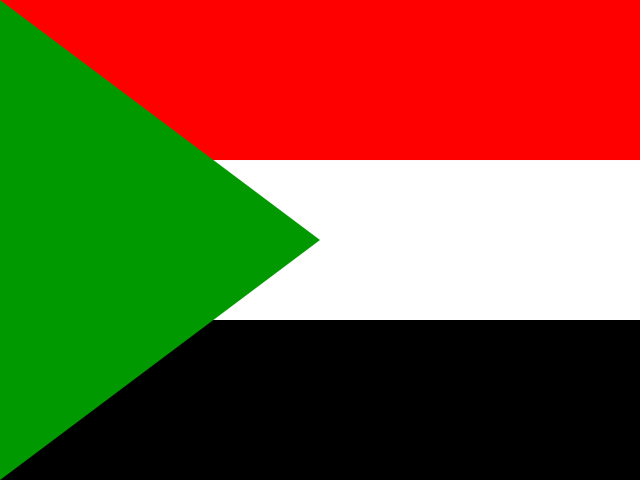 SudanPyramids of Meroë, the Nile and the Red Sea
 DR CongoMountain gorillas, lava lakes and the mighty Congo River