The oases between the Amu Darya and Syr Darya rivers have nurtured cities for thousands of years. In antiquity, this land was home to the Sogdians, Bactrians and Khorezmians, Iranian-speaking peoples who farmed irrigated fields and traded across Central Asia. The region became part of the Persian Achaemenid Empire, and in the 4th century BC Alexander the Great captured Marakanda, the city we now know as Samarkand. Over the following centuries, Sogdian merchants became the great middlemen of the Silk Road.
Arab armies brought Islam in the 8th century, and under the Samanids, Bukhara became a centre of learning, producing scholars such as the physician Ibn Sina (Avicenna) and the astronomer al-Biruni, who came from Khorezm. In 1220 Genghis Khan's Mongol armies devastated the cities. A century and a half later, Timur (Tamerlane) rose to power and made Samarkand the capital of a vast empire, filling it with turquoise-domed mosques and madrasas. His grandson Ulugh Beg built a famous observatory there in the 15th century.
Read the full history
From the 16th century, Uzbek dynasties ruled the khanates of Bukhara, Khiva and Kokand, whose walled cities and caravanserais still stand. In the 19th century the Russian Empire conquered the region, making Tashkent the centre of its Central Asian administration. After the Russian Revolution, the Uzbek Soviet Socialist Republic was formed in 1924. The Soviet era brought large-scale cotton farming, which contributed to the shrinking of the Aral Sea, and the rebuilding of Tashkent after a major earthquake in 1966.
Uzbekistan became independent in 1991, and since the late 2010s it has opened up rapidly to tourism, easing travel rules and investing in high-speed rail. For visitors, it is the heartland of the Silk Road: the Registan in Samarkand, the living old town of Bukhara, the perfectly preserved walled city of Khiva, Tashkent's grand metro, and a rich culture of bazaars, embroidered suzani, ceramics and generous hospitality centred on bread and plov.
Timeline
c. 700 BCFounding of Afrasiab, the ancient core of Samarkand
329 BCAlexander the Great captures Marakanda (Samarkand)
8th centuryArab conquest brings Islam to the region
1220Genghis Khan's armies sack Bukhara and Samarkand
1370Timur makes Samarkand the capital of his empire
1865Russian Empire captures Tashkent
1924Uzbek Soviet Socialist Republic is created
1991Uzbekistan declares independence
Uzbekistan🛂 Visa & entry
Entry rules depend on your passport and change often.
Before you book, check the official rules for your passport:
Kazakhstan Walks Alongside Uzbekistan And More In Safeguarding Travel Security As Central Asia Tightens Border Controls The Republic of Kazakhstan adds to the measures of Central Asian countries in increasing border controls in…
Stand in the RegistanWatch the sunset light up the tiled façades of three great madrasas in the heart of Samarkand.
Wander Bukhara's old townGet lost among trading domes, madrasas and the towering Kalyan Minaret in a living medieval city.
Walk Khiva's wallsClimb the ramparts of Itchan Kala for views over minarets and mud-brick domes at dusk.
Ride the high-speed trainZip between Tashkent, Samarkand and Bukhara on the fast Afrosiyob trains.
Explore Shah-i-ZindaClimb the avenue of glittering turquoise mausoleums, one of Samarkand's most beautiful sights.
Tour the Tashkent MetroAdmire chandeliers, marble and mosaics in some of the most ornate stations in the world.
Shop at Chorsu BazaarBrowse dried fruits, spices, bread and textiles under Tashkent's giant blue dome.
Eat plovShare a hearty rice dish with lamb, carrots and chickpeas, cooked in huge cauldrons at lunchtime.
Sleep in a desert yurtSpend a night near Lake Aydarkul with camel rides, campfires and starry skies.
See the Aral Sea ship graveyardVisit Moynaq to see rusting boats stranded in the desert where the sea once lapped.
Uzbekistan🗺️ Where to visit in Uzbekistan
Where to go in Uzbekistan
SamarkandCentral · Silk Road cityHome to the Registan, Gur-e-Amir and Bibi-Khanym, Samarkand is the jewel of Timur's empire.
BukharaCentral · historic cityA remarkably intact old town of madrasas, mosques and caravanserais, best explored on foot.
KhivaKhorezm · walled cityThe open-air museum of Itchan Kala feels like stepping into a Silk Road legend.
📍
TashkentNortheast · capital cityA modern capital with leafy parks, Soviet architecture, a stunning metro and busy bazaars.
📍
ShakhrisabzKashkadarya · Timur's birthplaceThe ruins of Timur's vast Ak-Saray Palace, an easy trip from Samarkand.
📍
Fergana ValleyEast · crafts regionFertile valley famous for silk-weaving in Margilan and ceramics in Rishtan.
📍
NukusKarakalpakstan · art museumHome to the Savitsky Museum and its extraordinary collection of avant-garde art.
📍
Chimgan MountainsTashkent region · mountainsHiking, cable cars and the Charvak Reservoir, a short drive from the capital.
Uzbekistan✨ Must-do experiences
See the Registan lit up at night
Ride the high-speed Afrosiyob train
Watch plov being cooked in giant pots
Shop for silk, ceramics and suzani embroidery
Uzbekistan🍽️ Taste of Uzbekistan
Plov – rice with carrots, meat and spices, the national dish
Samsa – flaky baked pastry with meat and onion
Lagman – hand-pulled noodles with meat and vegetables
Non – round bread baked in a clay oven
Uzbekistan🌦️ Weather & best time to visit Uzbekistan
Best time to visit Uzbekistan
Uzbekistan has a dry continental climate with very hot summers and cold winters. The western desert around Khiva is the most extreme, while the eastern mountains offer cooler relief in summer.
BestApril to May and September to October – warm, sunny days ideal for sightseeing and walking around old towns.
ShoulderMarch and November – cooler, with fewer crowds, though some days can be chilly or rainy.
AvoidJuly to August – heat often tops 40°C in Bukhara and Khiva; December to February can be cold and grey.
6°💧Jan
9°💧Feb
15°💧💧Mar
22°💧💧Apr
28°💧May
33°☀️Jun
36°☀️Jul
34°☀️Aug
29°☀️Sep
22°💧Oct
14°💧Nov
8°💧Dec
Typical daytime highs and rain in Tashkent (approximate averages).
Uzbekistan🎉 Festivals & events in Uzbekistan
March
NavruzThe spring New Year is celebrated with sumalak pudding, music, games and family feasts.
May/June
Silk and Spices FestivalBukhara hosts crafts, music, dance and food stalls celebrating its Silk Road heritage.
August/September
Sharq TaronalariAn international music festival held at Samarkand's Registan, typically every two years.
September
Independence DayConcerts, parades and fireworks across the country mark independence.
Uzbekistan🧭 Uzbekistan itinerary ideas
How many days in Uzbekistan?
5 daysSilk Road highlights in 5 days
Day 1 explore Tashkent's metro, Chorsu Bazaar and old town. Day 2-3 take the high-speed train to Samarkand for the Registan, Shah-i-Zinda and Gur-e-Amir. Day 4-5 continue to Bukhara to wander its old town and trading domes.
10 daysClassic Uzbekistan in 10 days
Day 1-2 Tashkent, then Day 3-5 Samarkand with a side trip to Shakhrisabz. Day 6 overnight in a yurt camp near Lake Aydarkul, followed by Day 7-8 in Bukhara. Day 9-10 travel to Khiva to explore Itchan Kala before flying back to Tashkent.
Uzbekistan🎒 Backpacking Uzbekistan – tips & hacks
Backpacker budget: about $25–40 a day
Book train tickets early, especially on the popular Tashkent–Samarkand–Bukhara route, as seats sell out.
Family-run guesthouses in Bukhara, Samarkand and Khiva are good value and usually include a big breakfast.
Use ride-hailing apps in Tashkent and Samarkand for cheap, fair-priced taxis.
Eat at local chaikhanas (teahouses) for plov, samsa and shashlik at low prices.
Shared taxis are a cheap way to reach places off the rail network, such as the Fergana Valley.
Uzbekistan🛡️ Safety & money in Uzbekistan
Stay safe
Uzbekistan is generally very safe, with low crime and friendly locals.
Keep your accommodation registration slips, as you may be asked for them when leaving.
Drink bottled or filtered water and carry rehydration salts in the summer heat.
Dress modestly when visiting mosques and holy sites, covering shoulders and knees.
Money
The currency is the Uzbek som; ATMs are now common in major cities and many accept foreign cards.
Carry cash for bazaars, small guesthouses and rural areas, where cards may not be accepted.
Tipping is not obligatory, but rounding up or leaving around 10 percent in restaurants is appreciated.
Emergency: 102 police · 103 ambulance · 101 fire
Uzbekistan🛬 Getting to Uzbekistan
Tashkent International Airport is the main gateway, with growing international flights to Samarkand, Bukhara and Urgench; land borders connect with Kazakhstan, Kyrgyzstan, Tajikistan and Turkmenistan.
Uzbekistan💡 Did you know? 5 facts about Uzbekistan
Uzbekistan is one of only two doubly landlocked countries in the world, along with Liechtenstein.
The Tashkent Metro was the first metro system in Central Asia, opening in 1977.
The physician and philosopher Ibn Sina (Avicenna) was born near Bukhara.
Ulugh Beg's 15th-century observatory in Samarkand produced one of the most accurate star catalogues of its era.
Bread (non) is considered sacred and should never be placed upside down or thrown away.
Uzbekistan❓ Uzbekistan travel FAQ
Uzbekistan travel questions
Is Uzbekistan safe for tourists?
Yes, Uzbekistan is considered one of the safest countries in Central Asia for travellers. Crime against tourists is rare, and locals are famously welcoming.
When is the best time to visit Uzbekistan?
Spring (April–May) and autumn (September–October) offer the most comfortable temperatures. Summers are extremely hot, especially in Bukhara and Khiva.
How many days do you need in Uzbekistan?
Five days covers Tashkent, Samarkand and Bukhara, while 10 days lets you add Khiva, Shakhrisabz and a yurt camp.
Is it easy to get around Uzbekistan?
Yes – high-speed trains link the main cities, and ride-hailing apps and shared taxis cover the rest. Russian and Uzbek are widely spoken, while English is common in tourist areas.
Do I need a visa for Uzbekistan?
It depends on your passport – many nationalities can now visit visa-free or with an e-visa. Check the official government site or embassy before you travel.
Uzbekistan💰 What a trip costs
$price level
$25–40backpacker / day
$70–130mid-range / day
Approximate daily cost per person (stay, food, local transport).
Uzbekistan🚌 Getting around
Fast trains connect Tashkent, Samarkand and Bukhara, with routes onward to Khiva. Shared taxis and domestic flights are also common.
Uzbekistan🛕 Sacred & spiritual places
Shah-i-Zinda – Avenue of tiled mausoleums in Samarkand, a major pilgrimage site
Bahauddin Naqshband Complex – Shrine of the founder of the Naqshbandi Sufi order near Bukhara
Kalyan Mosque and Minaret – Bukhara's great mosque beside a 12th-century tower
Uzbekistan🤝 Local etiquette
Never place bread upside down or throw it away carelessly
Dress modestly when visiting mosques and mausoleums
Greet elders first, often with a hand over the heart
Nothing in this tab yet – the agents add new stories every few minutes.
📰 Older Uzbekistan stories Everything our agents ever found – keeps loading as you scroll


.jpg/1920px-View_from_the_city_walls,_Khiva_(4934484894).jpg)
.jpg/1920px-Shah-i-Zinda,_Samarkand_(Shohi-Zinda_majmuasi,_Samarqand,_%D0%A8%D0%B0%D1%85%D0%B8_%D0%97%D0%B8%D0%BD%D0%B4%D0%B0).jpg)
 #Latvia#Uzbekistan#Visas & Entry Rules
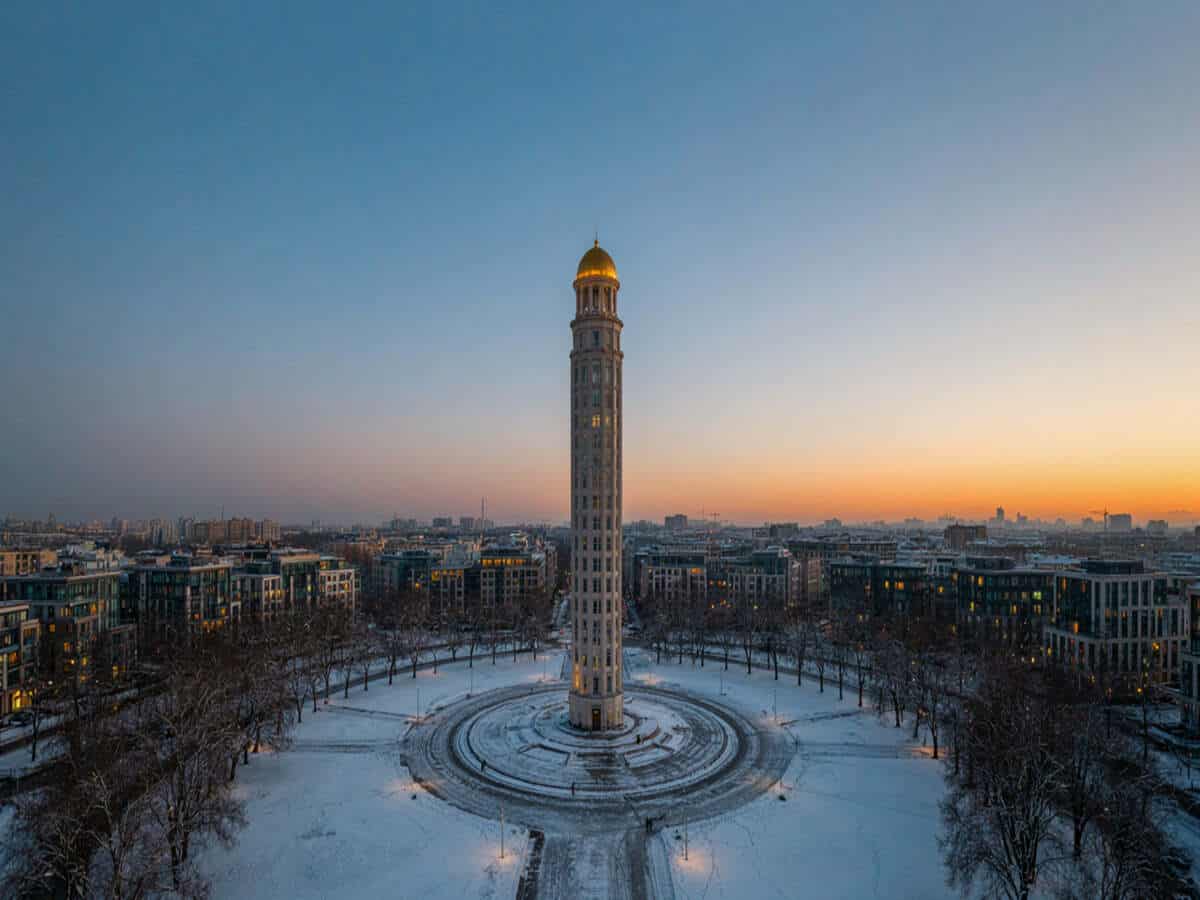 #Kazakhstan#Uzbekistan#Central

 TurkmenistanWhite-marble capital, fiery crater and Silk Road ruins
 TajikistanRoof-of-the-world peaks and turquoise mountain lakes
 KazakhstanEndless steppe, alpine lakes and futuristic Astana
 KyrgyzstanWild mountains, alpine lakes and nomad yurt camps
 AfghanistanTurquoise mosques, mountain valleys and the Silk Road
.jpg/500px-Landscape_in_Balochistan_(Pakistan).jpg)
 PakistanGiant peaks, Mughal cities and legendary hospitality
 IranPersian gardens, tiled mosques and desert cities
.jpg/500px-Qobustan_giri%C5%9F_qayas%C4%B1_2026_(1).jpg)
 AzerbaijanFlame towers, old silk-road towns and Caspian Sea views