Malta's story begins more than seven thousand years ago, when farmers crossed from Sicily to these small limestone islands. Their descendants built extraordinary megalithic temples such as Ġgantija on Gozo and Ħaġar Qim and Mnajdra on Malta, which are among the oldest free-standing stone structures on Earth. Beneath Paola, they carved the Ħal Saflieni Hypogeum, an underground burial complex of chambers and painted ceilings.
Phoenicians used Malta as a trading base, followed by the Carthaginians and the Romans. According to tradition, St Paul was shipwrecked here in 60 AD and brought Christianity to the islands. After Byzantine rule, Arabs controlled Malta from 870, leaving a deep imprint on the Maltese language, which is Semitic in origin yet written in the Latin alphabet. Normans arrived in 1091, and Malta then passed through various European dynasties.
Read the full history
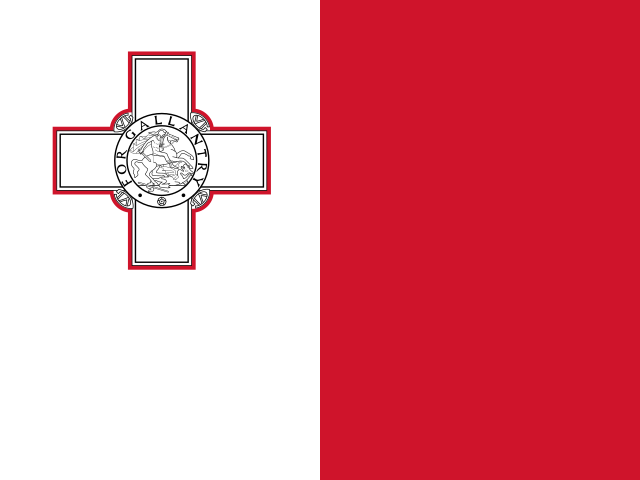
In 1530 the islands were granted to the Knights of St John, a military religious order. In 1565 they withstood the Great Siege by a vast Ottoman force, and afterwards built the fortified capital Valletta, filling it with baroque palaces and the lavish St John's Co-Cathedral, home to Caravaggio masterpieces. Napoleon expelled the Knights in 1798, but Maltese rebels with British help drove the French out, and Malta became a British colony and key naval base. During the Second World War it endured heavy bombing, and the island was awarded the George Cross for its bravery.
Malta gained independence in 1964, became a republic in 1974, and joined the European Union in 2004. For visitors, this tiny nation packs in an astonishing density of history: prehistoric temples, the fortress cities of Valletta and Mdina, the Three Cities across the Grand Harbour, and dramatic coastlines, all in a sunny Mediterranean setting with a distinctive language and culture.
Timeline
c. 5900 BCFirst farmers arrive from Sicily
c. 3600 BCĠgantija temples built on Gozo
60 ADSt Paul is shipwrecked on Malta, according to tradition
870Arab rule begins
1530Knights of St John take control of Malta
1565Great Siege of Malta
1964Malta gains independence
2004Malta joins the European Union
Malta🛂 Visa & entry
Entry rules depend on your passport and change often.
Schengen Area – Part of the Schengen Area – 29 European countries with no passport checks between them. Short visits are usually counted under the 90-days-in-any-180 rule across the whole area.
European Union – EU member – EU/EEA citizens can travel and stay freely.
Eurozone – Uses the euro.
Commonwealth – Commonwealth member.
Before you book, check the official rules for your passport:
Malta Powers Into a Spectacular Events Season With WTTC Global Summit, Rolex Middle Sea Race and Gozo Opera Experiences Through 2027 Discover Malta’s 2026–2027 events, from the WTTC Global Summit and Rolex Middle Sea Race to…
There were no changes to the advisory level or risk indicators. Advisory summary was updated. Advisory summary Malta is generally a safe destination for travelers. Riptides have caused drowning deaths among tourists. U.S.…
Discover a different kind of wellness in Malta, from ancient temples and coastal walks to sea swims, yoga, local food, and restorative stays in Gozo and beyond.
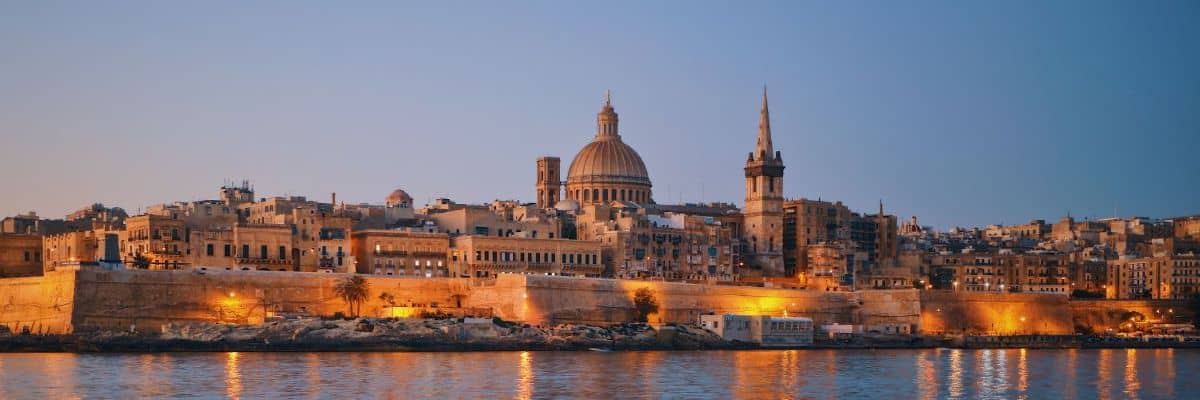
VallettaCapital · baroque cityA UNESCO-listed fortress capital overlooking the Grand Harbour.
MdinaCentral Malta · walled cityThe atmospheric 'Silent City', a medieval walled town on a hilltop.
📍
The Three CitiesGrand Harbour · historyBirgu, Senglea and Cospicua, the Knights' original base, with quiet streets and marinas.
GozoSister island · rural & divingGreener and slower-paced, with the Citadel, temples and great diving sites.
CominoIsland · lagoonsA tiny island famous for the Blue Lagoon and crystal-clear swimming.
MarsaxlokkSouth · fishing villageA fishing harbour filled with colourful luzzu boats and a Sunday fish market.
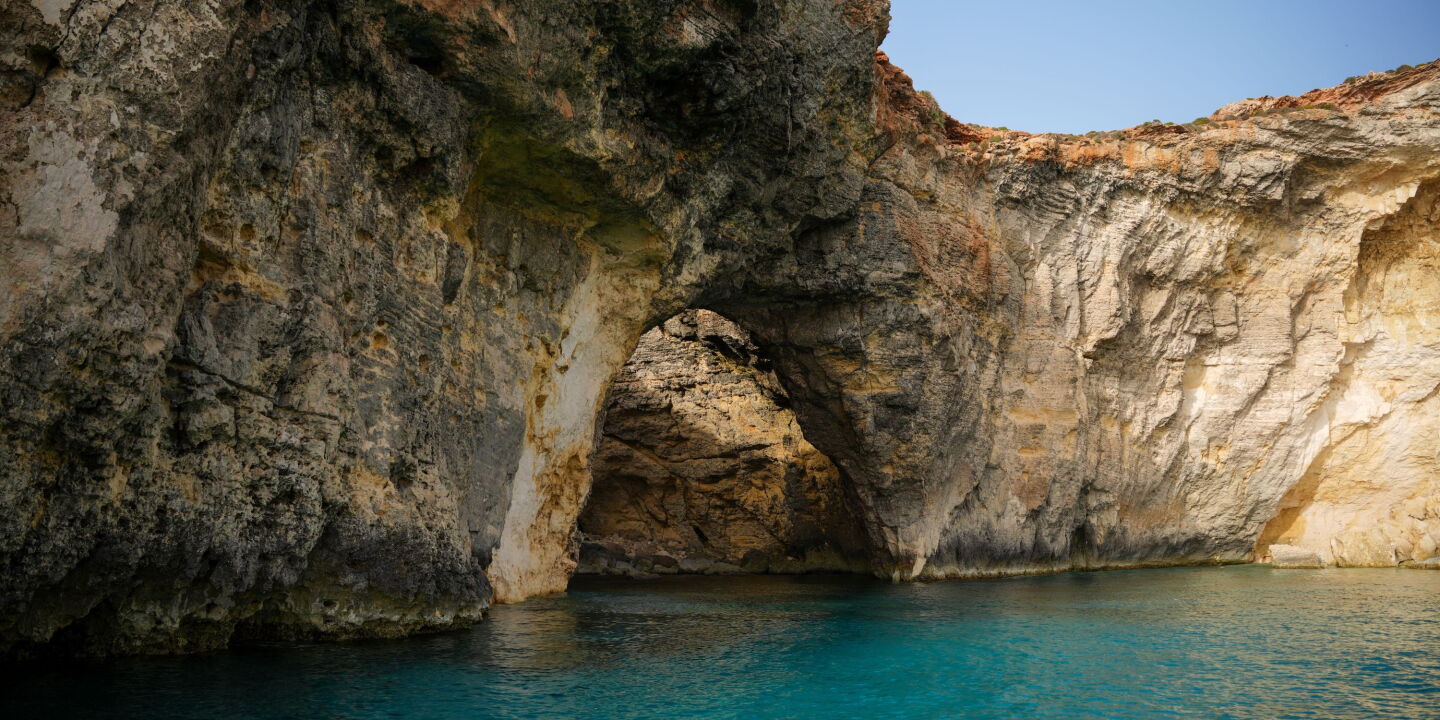
Blue GrottoSouth coast · sea cavesBoat trips into sea caves that glow with brilliant blue light in the morning.
📍
Dingli CliffsWest coast · viewpointMalta's highest cliffs, perfect for sunset walks over the sea.
Malta✨ Must-do experiences
Watch the noon gun at Valletta's Upper Barrakka Gardens
Swim in the Blue Lagoon on Comino
Dive among wrecks and reefs off Gozo
Visit the Ġgantija megalithic temples
Malta🍽️ Taste of Malta
Pastizzi – flaky pastries filled with ricotta or peas
Stuffat tal-fenek – rabbit stewed in wine and tomato
Ftira – Maltese bread filled with tuna, olives and tomato
Lampuki pie – fish pie made with dorado in autumn
Malta🌦️ Weather & best time to visit Malta
Best time to visit Malta
Malta enjoys a sunny Mediterranean climate with long, hot, dry summers and mild, damp winters. Conditions are similar across Malta, Gozo and Comino, though sea breezes make the coast more comfortable.
BestApril to June and September to October – warm, sunny weather and swimmable seas without peak summer heat.
ShoulderMarch and November – mild, quieter and good for sightseeing, though the sea is cooler.
AvoidNo bad time – July and August are hot and crowded, while winter is mild but windier with some rain.
16°💧Jan
16°💧Feb
18°💧Mar
20°💧Apr
24°☀️May
28°☀️Jun
31°☀️Jul
32°☀️Aug
28°💧Sep
25°💧Oct
21°💧Nov
17°💧💧Dec
Typical daytime highs and rain in Valletta (approximate averages).
Malta🎉 Festivals & events in Malta
February
Maltese CarnivalColourful floats, costumes and dancing fill Valletta and Gozo's Nadur in the days before Lent.
June–September
Village festasEach parish honours its patron saint with processions, brass bands, street decorations and fireworks.
Early October
Notte BiancaValletta stays open all night with free exhibitions, concerts and performances.
April–May
Malta International Fireworks FestivalSpectacular displays light up the Grand Harbour, a centuries-old local tradition.
July
Malta Jazz FestivalInternational jazz musicians perform by the harbour in Valletta.
Malta🧭 Malta itinerary ideas
How many days in Malta?
4 daysMalta highlights
Day 1: Valletta, St John's Co-Cathedral and the Upper Barrakka Gardens. Day 2: Mdina, Rabat and the Dingli Cliffs. Day 3: the temples of Ħaġar Qim and Mnajdra, the Blue Grotto and Marsaxlokk. Day 4: a boat trip to Comino's Blue Lagoon.
8 daysMalta and Gozo
Day 1-2: Valletta and the Three Cities. Day 3: Mdina and Rabat. Day 4: the south coast and temples. Day 5: Comino. Day 6-8: base yourself on Gozo for the Citadel, Ġgantija, salt pans and diving or coastal walks.
Malta🎒 Backpacking Malta – tips & hacks
Backpacker budget: about $50–75 a day
Public buses cover the whole of Malta and Gozo cheaply; a multi-journey card saves money if you are staying a while.
Hostels cluster in St Julian's, Sliema and Valletta, and booking early is essential in summer.
Pastizzi shops sell some of the cheapest snacks in Europe – perfect for a quick breakfast or lunch.
The public ferry from Ċirkewwa to Gozo is inexpensive, and you pay only on the return journey from Gozo.
Many top sights, such as the old cities, beaches and coastal walks, are free to explore.
Malta🛡️ Safety & money in Malta
Stay safe
Malta is very safe; just watch your belongings in busy nightlife areas such as Paceville.
Traffic drives on the left and roads can be congested, so take care crossing streets and driving.
Take sun protection and water in summer, and check sea conditions before swimming off rocky shores.
Respect dress codes in churches – cover shoulders and knees.
Money
Malta uses the euro (EUR), and ATMs are widely available across Malta and Gozo.
Cards are accepted in most places, though small cafés, kiosks and pastizzi shops may prefer cash.
Tipping around 5-10% in restaurants is appreciated but not obligatory.
Emergency: 112 police, fire & ambulance
Malta🛬 Getting to Malta
Malta International Airport at Luqa has direct flights from many European cities. High-speed ferries connect Valletta with Sicily, and the islands are a popular cruise stop.
_02_ies.jpg/1920px-Malta_-_Mdina_(Triq_San_Oswald)_02_ies.jpg)
.jpg/1920px-St_Sebastian_Curtain_(cropped).jpg)
.jpg)


 #Malta#Gozo#Inspiring & Scenic
 #Malta#Destinations

 TunisiaRoman ruins, Saharan oases and Mediterranean beaches

 ItalyAncient Rome, Renaissance art and the world's favourite food
 Vatican CityThe world's smallest country and the heart of Catholicism

 GreeceAncient ruins, whitewashed islands and endless blue sea
.jpg/500px-Ksamil_Albania_-_panoramio_(8).jpg)
 AlbaniaRiviera beaches, Ottoman towns and wild mountains
 MontenegroFjord-like bays, mountain canyons and Adriatic beaches
 North MacedoniaLake Ohrid, Ottoman bazaars and mountain monasteries
 San MarinoTiny hilltop republic with medieval towers and big views