Mongolia's grasslands, mountains and deserts have been shaped by nomadic herders for thousands of years. Prehistoric peoples left rock art and deer stones across the steppe, and in the third century BC the Xiongnu formed a powerful confederation that pressured China's empires. Later steppe peoples such as the Turks and Uighurs built their own states here, leaving inscriptions and ruins along the Orkhon Valley, now a UNESCO World Heritage landscape.
In 1206 a chieftain named Temüjin united the Mongol tribes and took the title Genghis Khan. His armies and those of his successors created the largest contiguous land empire in history, stretching from Korea to Eastern Europe. The empire linked East and West along the Silk Road, and its capital at Karakorum hosted envoys and merchants from many lands. His grandson Kublai Khan founded the Yuan dynasty in China.
Read the full history
After the empire fragmented, Mongol tribes returned to the steppe, and Tibetan Buddhism spread widely from the sixteenth century, giving rise to monasteries such as Erdene Zuu, built from the ruins of Karakorum. From the late seventeenth century much of Mongolia came under Qing Chinese rule. In 1911 Mongolia declared autonomy under the Bogd Khan, and in 1921 a revolution backed by Soviet Russia led to the Mongolian People's Republic, the world's second communist state, during which many monasteries were closed.
A peaceful democratic revolution in 1990 brought multiparty elections and a market economy, and mining has since driven growth, while Ulaanbaatar has expanded rapidly. Yet around a quarter of Mongolians still live a nomadic or semi-nomadic life. For travellers, Mongolia offers boundless landscapes, gers on the open steppe, the Gobi Desert, the Naadam festival, revived monasteries and some of the most genuine hospitality anywhere.
Timeline
c. 209 BCXiongnu confederation rises
1206Genghis Khan unites the Mongol tribes
1235Karakorum becomes the imperial capital
1586Erdene Zuu Monastery founded
1911Mongolia declares autonomy from Qing China
1921Revolution leads to a Soviet-aligned state
1990Peaceful democratic revolution
Mongolia🛂 Visa & entry
Entry rules depend on your passport and change often.
Before you book, check the official rules for your passport:
There were no changes to the advisory level or risk indicators. Advisory summary was updated. Exercise normal precautions in Mongolia . Advisory summary Mongolia is generally a safe destination for travelers. Review our travel…
Lake KhövsgölNorth · lakeMongolia's 'blue pearl', surrounded by taiga forest and reindeer herders' territory.
KharkhorinOrkhon Valley · historicSite of the old imperial capital Karakorum and Erdene Zuu Monastery.
Gorkhi-Terelj National ParkNear Ulaanbaatar · parkEasy-to-reach rock formations, ger camps and hiking trails.
📍
Altai Tavan Bogd National ParkFar west · mountainsGlaciers, high peaks and Kazakh eagle-hunting culture.
📍
Khustain Nuruu National ParkCentral · steppeHome to reintroduced takhi, the Przewalski's wild horse.
📍
Genghis Khan Equestrian StatueNear Ulaanbaatar · landmarkA giant stainless-steel statue of the great khan on horseback.
Mongolia✨ Must-do experiences
Stay overnight in a nomad family's ger
Watch wrestling, archery and horse racing at Naadam
Ride a camel across the Gobi dunes
See wild Przewalski's horses at Khustai National Park
Mongolia🍽️ Taste of Mongolia
Buuz – steamed meat dumplings
Khuushuur – fried meat pastries
Khorkhog – mutton cooked with hot stones
Suutei tsai – salty milk tea
Mongolia🌦️ Weather & best time to visit Mongolia
Best time to visit Mongolia
Mongolia has a harsh continental climate with long, very cold winters and short, warm summers. The Gobi gets hot in summer and bitterly cold in winter, and most rain falls in July and August.
BestJune to August – warm, green summers perfect for road trips, horse riding and Naadam.
ShoulderMay and September – cooler, quieter and beautiful, though weather can change fast.
AvoidNovember to March – extremely cold, especially in Ulaanbaatar, unless you want a winter adventure.
-15°☀️Jan
-10°☀️Feb
-1°☀️Mar
9°☀️Apr
17°💧May
22°💧Jun
24°💧💧Jul
22°💧💧Aug
15°💧Sep
6°☀️Oct
-5°☀️Nov
-13°☀️Dec
Typical daytime highs and rain in Ulaanbaatar (approximate averages).
Mongolia🎉 Festivals & events in Mongolia
11–15 July
NaadamMongolia's national festival of wrestling, horse racing and archery, held across the country.
January or February (lunar new year)
Tsagaan SarFamilies greet the new year with feasts of buuz and visits to relatives.
Early October
Golden Eagle FestivalKazakh eagle hunters compete in western Mongolia in Bayan-Ölgii.
March
Thousand Camel FestivalCamel races and polo celebrate the Bactrian camel in the Gobi.
Mongolia🧭 Mongolia itinerary ideas
How many days in Mongolia?
7 daysCentral Mongolia
Day 1-2 explore Ulaanbaatar's monasteries and museums. Day 3 visit Terelj National Park. Day 4-5 drive to Kharkhorin and Erdene Zuu with a ger stay. Day 6-7 see wild horses at Khustain Nuruu and return to the capital.
14 daysGobi and the steppe
Day 1-2 Ulaanbaatar. Day 3-7 head south to the Gobi for the White Stupa, Yolyn Am canyon, Khongoryn Els dunes and Flaming Cliffs. Day 8-10 cross to the Orkhon Valley and Kharkhorin. Day 11-12 relax at Terkhiin Tsagaan Lake. Day 13-14 back to Ulaanbaatar.
Mongolia🎒 Backpacking Mongolia – tips & hacks
Backpacker budget: about $30–50 a day
Ulaanbaatar has many hostels that also organise shared 4x4 tours – joining a group cuts costs significantly.
Public buses connect the capital to provincial centres cheaply, but tours are easier for remote sights.
Eat at local guanz canteens for cheap, hearty meals of noodles, mutton and dumplings.
Bring snacks and a warm sleeping bag for road trips, as nights can be cold even in summer.
Book Naadam-period accommodation early, as prices rise and space fills quickly.
Mongolia🛡️ Safety & money in Mongolia
Stay safe
Mongolia is generally safe, but pickpocketing is common in busy parts of Ulaanbaatar and on buses.
Roads in the countryside are often unpaved – travel with experienced drivers and reliable vehicles.
Respect nomadic etiquette, such as not stepping on the threshold of a ger and accepting offered food with your right hand.
Be prepared for extreme weather and long distances without services.
Money
The currency is the tögrög (MNT).
Cards work in Ulaanbaatar, but carry cash for rural areas; ATMs are available in provincial centres.
Tipping is not traditional but is appreciated for tour guides and drivers.
Emergency: 102 police · 101 fire · 103 ambulance
Mongolia🛬 Getting to Mongolia
Chinggis Khaan International Airport near Ulaanbaatar is the main gateway with flights from Asia, Europe and Turkey. The Trans-Mongolian Railway links Ulaanbaatar with Beijing and Russia.
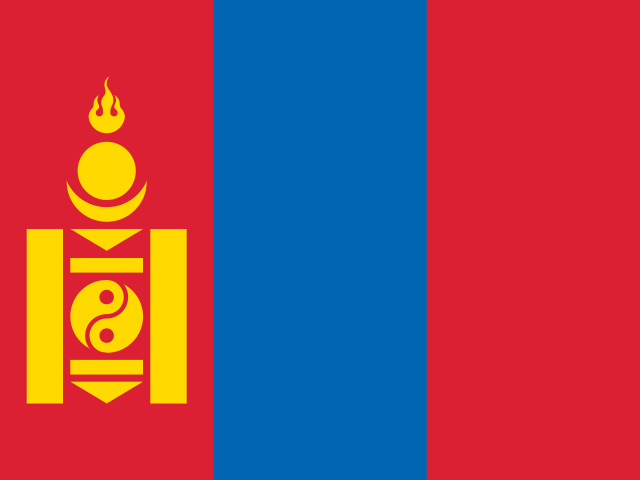


 Mongolia

 ChinaGreat Wall, ancient capitals and futuristic megacities

 RussiaOnion domes, grand palaces and vast wild landscapes
.jpg/500px-The_Arch_of_Triumph_(11360607534).jpg)
 North KoreaRare guided journeys to Pyongyang and the Korean countryside

 South KoreaPalaces, K-culture and sizzling street food
 KyrgyzstanWild mountains, alpine lakes and nomad yurt camps
 BhutanHimalayan kingdom of fortress monasteries and prayer flags
 NepalHimalayan treks, ancient temples and jungle safaris
 KazakhstanEndless steppe, alpine lakes and futuristic Astana