
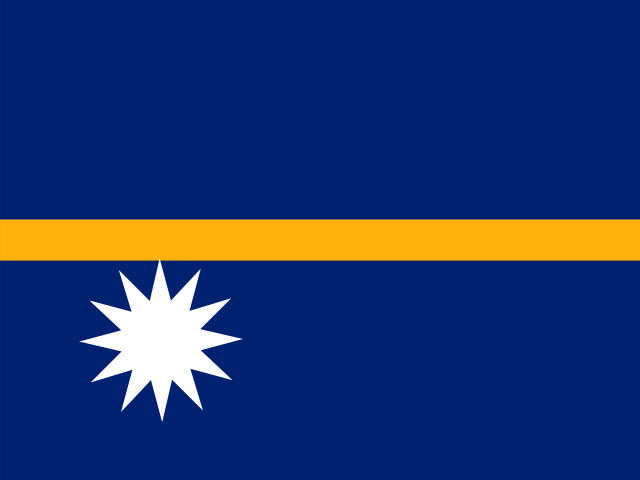
Nauru📸 Photo album · 1 photos · Ultra-HD
A tiny coral island nation with rugged cliffs and quiet beaches
🕒 –:– local time0 stories this week0 sources 4 top placesCapital Yaren
Nauru, a single raised coral island in the central Pacific, was settled roughly three thousand years ago by voyagers whose descendants formed twelve clans, remembered today in the twelve-pointed star on the national flag. Islanders lived from fishing, coconuts and pandanus, and raised milkfish in Buada Lagoon. Their isolation was nearly complete until 1798, when the British captain John Fearn sighted the island and, charmed by its welcome, named it 'Pleasant Island'.
During the nineteenth century, whalers and beachcombers introduced firearms and alcohol, and a long period of conflict between clans followed. Germany annexed Nauru in 1888 and restored order. Soon after, rich deposits of high-grade phosphate – formed over millennia – were identified, and large-scale mining began in 1906. After the First World War, Nauru was administered by Australia on behalf of Britain, Australia and New Zealand, and mining continued apace. Japan occupied the island during the Second World War, sending many Nauruans to Chuuk, and the population took years to recover.
Nauru became a UN trust territory after the war and gained independence on 31 January 1968, becoming the world's smallest republic. Phosphate wealth gave the nation one of the highest incomes per person in the world for a time, but as reserves dwindled the economy faced serious challenges, and the mined interior was left as a landscape of jagged limestone pinnacles. The country has since sought new sources of income and rehabilitation of its land.
For the rare visitor, Nauru offers an unusual insight into Pacific history and the impact of mining. A single road circles the island past white-sand beaches, wartime relics on Command Ridge and the green oasis of Buada Lagoon, while the eerie 'Topside' plateau reveals the legacy of phosphate. The island's small size and friendly people make it easy to explore in a day or two.
Entry rules depend on your passport and change often.
Before you book, check the official rules for your passport:
The latest visa and entry news for Nauru appears below as soon as publishers report it.
🛰️ The agents haven't spotted fresh news about Nauru in the last few days – here is the travel guide, plus the latest from nearby countries.
Alaska’s Atmos Rewards is a valuable airline loyalty program thanks to its high-value airline partners, such as Cathay Pacific and Fiji Airways, and excellent redemption rates on American Airlines flights. Given the number of…
 #United States#Hong Kong#American Airlines#Alaska Airlines
Nauru has a hot, humid equatorial climate with little temperature change through the year. Rainfall varies widely from year to year, with long dry spells in some years and heavy rain in others.
Typical daytime highs and rain in Yaren (approximate averages).
Day 1: drive the coastal loop, swim at Anibare Bay and watch sunset from the reef. Day 2: explore Topside, Command Ridge and Buada Lagoon, then visit Moqua Well near Yaren.
Day 1: arrive and settle in, with an evening walk on the reef. Day 2: Topside, Command Ridge and Buada Lagoon. Day 3: a fishing trip offshore. Day 4: beach time at Anibare Bay and a final loop of the island.
Backpacker budget: about $80–120 a day
Emergency: 110 police · 111 ambulance · 112 fire
Nauru International Airport near Yaren is served by flights from Brisbane and a few Pacific islands; there are no passenger ferries.
✈️ Cheap flights to Nauru: airports, flight times & best time to fly →
Yes, Nauru is generally safe and friendly. Take care when swimming and walking on the rough terrain of Topside.
Entry requirements depend on your passport and may need to be arranged in advance. Check the official Nauru government site or embassy before you travel.
One or two days is enough to see the main sights. Many visitors stay a little longer because flights are infrequent.
Nauruan is the national language, and English is widely spoken and used in government and business.
There is no public transport, so most visitors rent a car or arrange lifts. The island is small enough to circle in under an hour.
Approximate daily cost per person (stay, food, local transport).
Most visitors rent a car or scooter or use hotel transfers. One ring road circles the island.
Nothing in this tab yet – the agents add new stories every few minutes.
🌏 You reached the start of our archive.

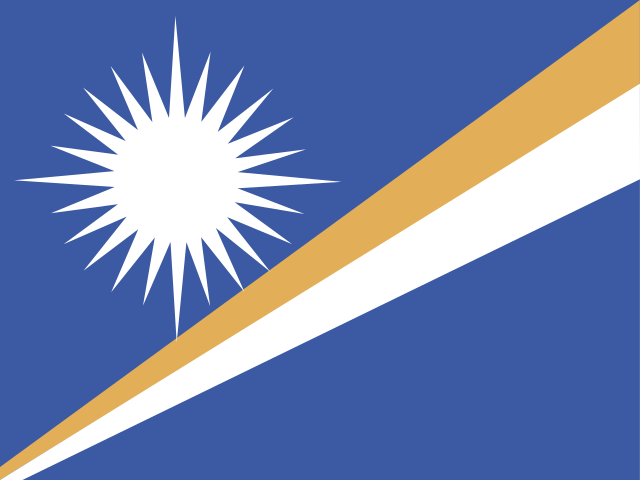 Marshall IslandsTurquoise lagoons and coral atolls in the central Pacific
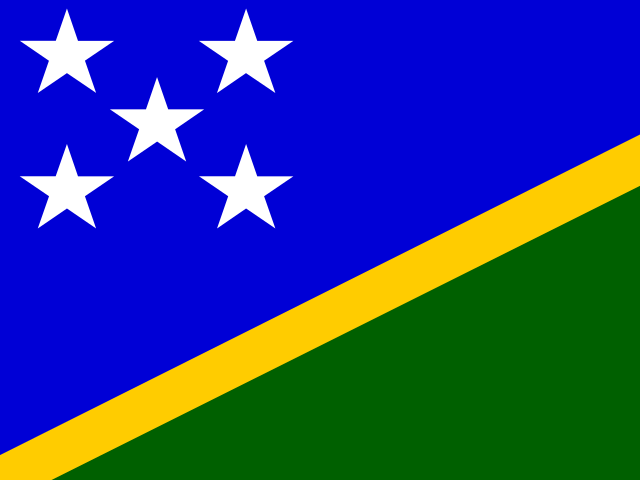 Solomon IslandsWWII history, lagoons and village life off the beaten track
.jpg/500px-Landscape,_Tuvalu,_2011._Photo-_DFAT_(12779525995).jpg)
 TuvaluTiny coral atolls and a calm lagoon far from the crowds
 VanuatuActive volcanoes, blue holes and WWII wreck diving
.jpg/500px-Pacific_Partnership_2024-2_Band_Performs_at_Gilman_Elementary_School_in_Yap,_Federated_States_of_Micronesia_(8643664).jpg)
 MicronesiaAncient stone ruins, WWII wrecks and remote Pacific islands
_-_August_2016.jpg/500px-Naviti_island,_Yasawa,_Fiji_(1)_-_August_2016.jpg)
 FijiBula spirit, coral islands and soft white beaches
 New CaledoniaFrench flair, Kanak culture and a giant turquoise lagoon
 Papua New GuineaHighland festivals, rainforests and hundreds of cultures