
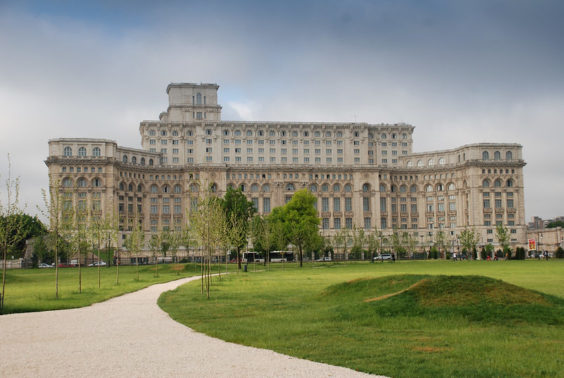
.jpg/1920px-Bucharest_University_Square_(cropped).jpg)


Romania📸 Photo album · 9 photos · Ultra-HD
Castles, painted monasteries and wild Carpathian mountains
🕒 –:– local time5 stories this week4 sources 6 top placesCapital Bucharest
In ancient times the lands of present-day Romania were home to the Dacians, a Thracian people who built mountain fortresses in the Carpathians and grew rich from gold and silver mines. Under kings such as Burebista and Decebalus they challenged Rome, until Emperor Trajan conquered much of Dacia in AD 106, a campaign carved in stone on Trajan's Column in Rome. Roman rule lasted less than two centuries, but it left behind a Latin-based language that makes Romanian unique in Eastern Europe.
After the Romans withdrew, waves of migrating peoples crossed the region. In the Middle Ages three territories took shape: Transylvania, ruled by the Kingdom of Hungary and settled by Saxon Germans who built fortified churches; and the principalities of Wallachia and Moldavia, founded in the 14th century. Rulers such as Stephen the Great of Moldavia and Vlad III of Wallachia, remembered as Vlad the Impaler, resisted the expanding Ottoman Empire, yet both principalities eventually accepted Ottoman overlordship. In 1600 Michael the Brave briefly united all three lands.
In 1859 Wallachia and Moldavia united under Alexandru Ioan Cuza, forming the core of modern Romania. Independence from the Ottomans was won in 1877-78, and the country became a kingdom in 1881. After the First World War, Transylvania and other regions joined on 1 December 1918, now Romania's national day. Following the Second World War a communist regime took power, later dominated by Nicolae Ceaușescu, whose rule ended in the revolution of December 1989. Romania joined NATO in 2004 and the European Union in 2007.
For travellers, this history creates a fascinating mix: Dacian ruins in the mountains, Saxon villages and fortified churches, the painted monasteries of Bucovina, wooden churches of Maramureș, fairytale castles, and medieval citadels like Sighișoara, all set amid the wild Carpathians and the Danube Delta.
Entry rules depend on your passport and change often.
Before you book, check the official rules for your passport:
The latest visa and entry news for Romania appears below as soon as publishers report it.
Romanian carrier AnimaWings has temporarily suspended flight operations until 24 October as it restructures its activities following technical problems that reduced aircraft availability. The article AnimaWings suspends flights…
 #Romania#Flights & Airlines
Romania Focuses on Having the Most Varied Nightlife in Bucharest and Several Other Places Discover why Romania has a growing nightlife tourism through cities like Bucharest, major festivals, Black Sea parties, cultural evenings…
 #Romania#Bucharest#Festivals
A good sale to Bucharest. Pricing will vary slightly depending on routing. The $964 fare includes advance seat assignment, a normal size
 #Romania#Netherlands#San Francisco#Bucharest
A good sale to Bucharest. Pricing will vary slightly depending on routing. The $964 fare includes advance seat assignment, normal size carry-on
#Romania#Bucharest#Delta#Deals & Budget
Romanian private airline Animawings filed for insolvency at a court in Bucharest on September 30, 2026. Under this…
 #Romania#Flights & Airlines
Romania has a continental climate with hot summers and cold, snowy winters, especially in the Carpathians. The Black Sea coast is milder, and the high Transfăgărășan road usually opens only in summer.
Typical daytime highs and rain in Bucharest (approximate averages).
Day 1 explore Bucharest. Day 2 visit Peleș Castle on the way to Brașov. Day 3 see Bran Castle and Râșnov. Days 4-5 visit Sighișoara and Sibiu.
Days 1-4 cover Bucharest, Sinaia, Brașov and Bran. Days 5-6 visit Sighișoara and the Saxon villages, then Days 7-8 Sibiu and the Transfăgărășan (in summer). Days 9-10 head north to the painted monasteries of Bucovina or Maramureș.
Backpacker budget: about $30–50 a day
Emergency: 112 police, fire & ambulance
Bucharest's Henri Coandă International Airport is the main gateway, with other international airports including Cluj-Napoca, Iași, Timișoara and Sibiu. Romania has land borders with Hungary, Serbia, Bulgaria, Moldova and Ukraine.
✈️ Cheap flights to Romania: airports, flight times & best time to fly →
Yes, Romania is generally safe for travellers. Take ordinary precautions against pickpockets and taxi scams in big cities.
Late spring and early autumn are ideal for sightseeing and hiking. Summer is great for the Transfăgărășan and the Danube Delta, and winter for skiing and Christmas traditions.
Five days covers Bucharest and the highlights of Transylvania. Allow 10 days or more to include Bucovina, Maramureș or the Danube Delta.
English is widely spoken by younger people and in tourist areas. In rural regions, a few Romanian phrases are helpful.
It depends on your passport. Check the official Romanian government website or your nearest embassy before you travel.
Approximate daily cost per person (stay, food, local transport).
Trains connect the main cities but can be slow, so buses and minibuses are often faster. Renting a car is the easiest way to explore villages in Transylvania.
Nothing in this tab yet – the agents add new stories every few minutes.
🌏 You reached the start of our archive.
.jpg/500px-%D0%A1%D0%BE%D1%80%D0%BE%D0%BA%D1%81%D0%BA%D0%B0%D1%8F_%D0%BA%D1%80%D0%B5%D0%BF%D0%BE%D1%81%D1%82%D1%8C_Cetatea_Soroca_Soroca_Fortress_(42928890910).jpg)
 MoldovaVast wine cellars, cave monasteries and rolling countryside
 BulgariaBlack Sea beaches, mountain monasteries and old towns
 SerbiaLively nightlife, Orthodox monasteries and rolling green hills
 HungaryThermal baths, Danube views and paprika-rich food
 KosovoCafé culture, Ottoman old towns and dramatic mountain gorges
 SlovakiaCastle ruins, alpine peaks and a compact Danube capital
 UkraineGolden domes, Carpathian villages and rich food traditions
 North MacedoniaLake Ohrid, Ottoman bazaars and mountain monasteries