
_(33286165680).jpg/1920px-Ljubljana_Old_Town,_Slovenia_(Old_Camera)_(33286165680).jpg)

.jpg/1920px-Aerial_image_of_Lake_Bohinj_(view_from_the_south).jpg)
.jpg/1920px-Postojna_(22206343750).jpg)

Slovenia📸 Photo album · 8 photos · Ultra-HD
Emerald rivers, alpine lakes and a green little capital
🕒 –:– local time5 stories this week3 sources 6 top placesCapital Ljubljana
Slovenia's story stretches back to the Stone Age: a cave bear bone flute from the Divje Babe cave, thought by some to have been made by Neanderthals, is one of the oldest possible musical instruments ever found, and the world's oldest known wooden wheel was discovered in the Ljubljana Marshes. Later, Celtic tribes settled the region, followed by the Romans, who founded Emona, the forerunner of Ljubljana, and built roads linking Italy to the Danube.
In the sixth century Slavic peoples, the ancestors of today's Slovenes, settled the Eastern Alps, forming the principality of Carantania. From the eighth century the region came under Frankish rule, and by the late Middle Ages most Slovene lands were part of the Habsburg domains, where they remained for centuries. The Protestant Reformation brought the first books printed in Slovene, by Primož Trubar in 1550, and the poet France Prešeren later became a symbol of Slovene identity.
After the First World War, Slovenia joined the Kingdom of Serbs, Croats and Slovenes, later Yugoslavia. It was occupied during the Second World War and became one of the republics of socialist Yugoslavia after 1945. In 1991 Slovenia declared independence and, after a brief ten-day war, became a sovereign state. It joined the European Union and NATO in 2004 and adopted the euro in 2007.
Today Slovenia is a green, prosperous country known for its Alpine scenery, caves, wine and charming towns. Visitors can explore the capital Ljubljana, the Julian Alps, Lake Bled, the Škocjan Caves and the Venetian-influenced coastal towns, enjoying a rich blend of Central European, Mediterranean and Balkan influences.
Entry rules depend on your passport and change often.
Before you book, check the official rules for your passport:
The latest visa and entry news for Slovenia appears below as soon as publishers report it.
Spain Aligns with France and Other Destinations as Regional Tourism Puts Hotel Costs and Resort Access in Focus Spain, France, Italy, Slovenia, Croatia and Portugal: see how regional tourism, hotel costs and resort access shape…
 #Spain#France#Hotels & Stays
Slovenia Follows New Zealand and Others in Bold New Tourism Era as Climate Pressures Reshape Travel Seasons and Accelerate Sustainable Destination Growth Slovenia, New Zealand, Panama and Others reshape tourism as climate…
 #Slovenia#New Zealand
Štajerska has been named Best Wine Region in Europe 2027 by European Best Destinations, adding to recent international recognition for the Slovenian region. The article Štajerska named Europe’s Best Wine Region for 2027 first…
 #Slovenia
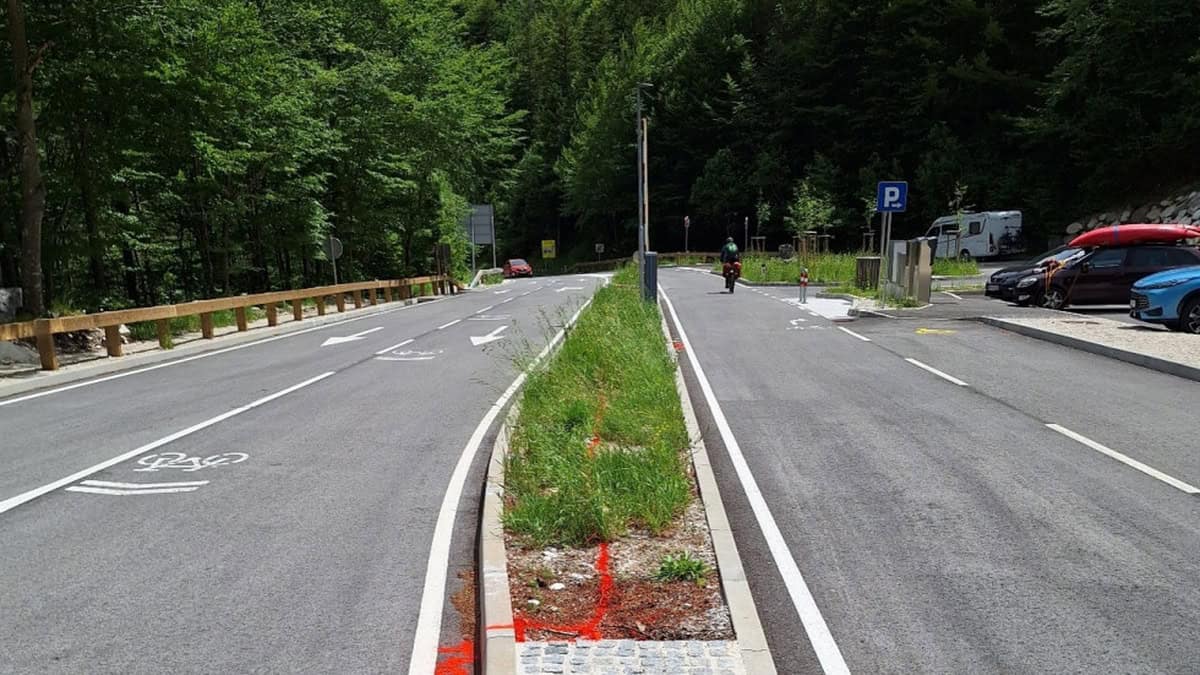
Slovenia Changes Alpine Travel Access as Kluže Closure Diverts Traffic via Vršič for Autumn Adventure Slovenia reroutes Alpine travel via Vršič as Kluže works reshape autumn adventure access.
 #Slovenia
Croatia Aligns with Slovenia and More Welcomes Travellers to Historic Towns Ahead of Summer Crowds Discover Croatia and Slovenia as travel experts highlight twenty historic destinations offering heritage architecture, coastal…
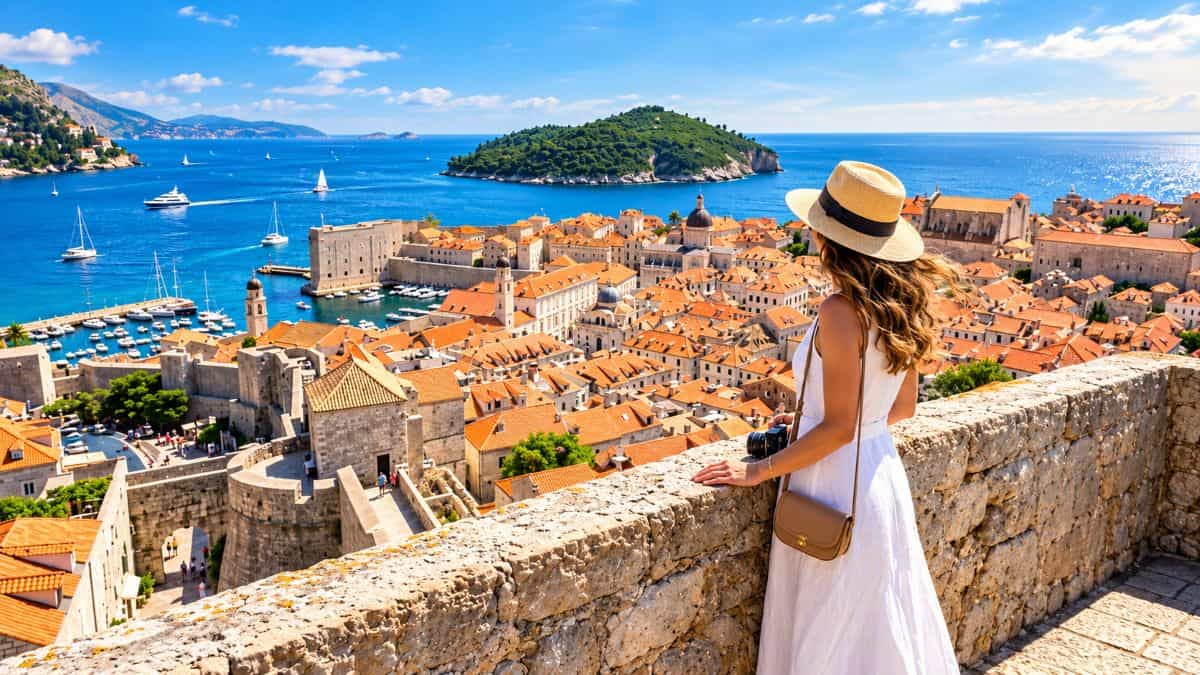 #Croatia#Slovenia
The capitals of Slovenia and Croatia are overlooked in favour of lake and coastal destinations elsewhere – here’s why it’s time for you to change that.
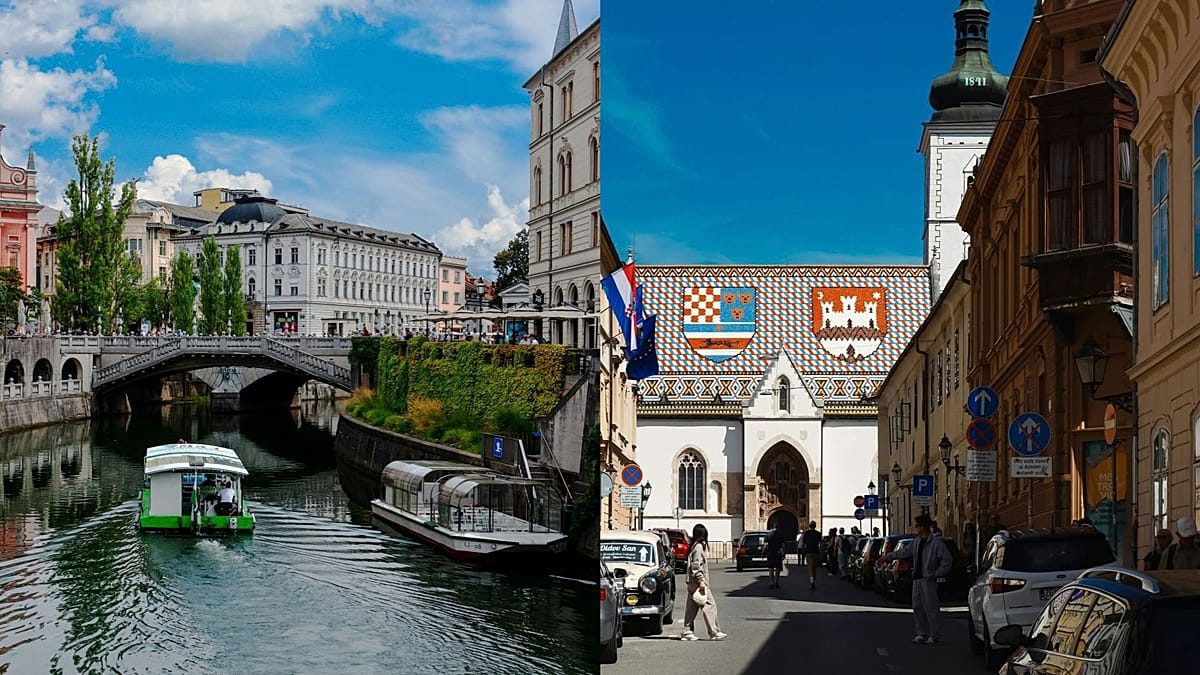 #Slovenia#Croatia#Ljubljana#Zagreb
Slovenia has a varied climate: alpine in the mountains, continental in the east and Mediterranean on the coast. Summers are warm, while winters are cold in the mountains.
Typical daytime highs and rain in Ljubljana (approximate averages).
Day 1-2: Ljubljana. Day 3: Lake Bled. Day 4: Lake Bohinj and hiking. Day 5: Postojna Cave and Predjama Castle.
Day 1-2: Ljubljana. Day 3-4: Bled and Bohinj. Day 5-6: Soča Valley via the Vršič Pass. Day 7: Škocjan Caves. Day 8-9: Piran and the coast. Day 10: back to Ljubljana.
Backpacker budget: about $50–75 a day
Emergency: 112 fire & ambulance · 113 police
Ljubljana Jože Pučnik Airport (LJU) is the main international airport, while many travellers also use airports in Venice, Trieste, Zagreb or Vienna. Trains and buses connect Slovenia with Italy, Austria, Croatia and Hungary.
✈️ Cheap flights to Slovenia: airports, flight times & best time to fly →
Slovenia is one of the safest countries in Europe. Normal travel precautions are sufficient.
May to September is ideal for outdoor activities. Winter is great for skiing in the Alps.
Five days covers the main highlights. Ten days lets you explore the Alps, caves and coast.
Slovenia is part of the Schengen Area, and entry requirements depend on your passport. Check the official government site or embassy before you travel.
Slovenia is moderately priced compared with Western Europe. Budget travellers can keep costs down with hostels, buses and local food.
Approximate daily cost per person (stay, food, local transport).
Buses and trains connect most towns, and distances are short. A rental car makes it easy to reach the Alps and the Soča Valley.
Nothing in this tab yet – the agents add new stories every few minutes.
🌏 You reached the start of our archive.

 CroatiaIsland-hopping, walled cities and crystal-clear sea
.jpg/500px-Salzburg_(48489551981).jpg)
 AustriaAlpine peaks, imperial palaces and classical music
 San MarinoTiny hilltop republic with medieval towers and big views
 Bosnia and HerzegovinaOttoman bridges, emerald rivers and coffee culture
 HungaryThermal baths, Danube views and paprika-rich food
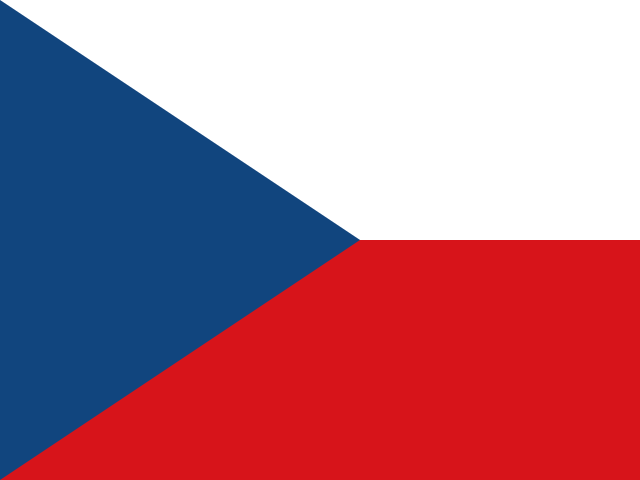 CzechiaFairy-tale castles, Gothic spires and world-famous beer
.jpg/500px-Malbun_seen_from_Augstenberg_(valo139).jpg)
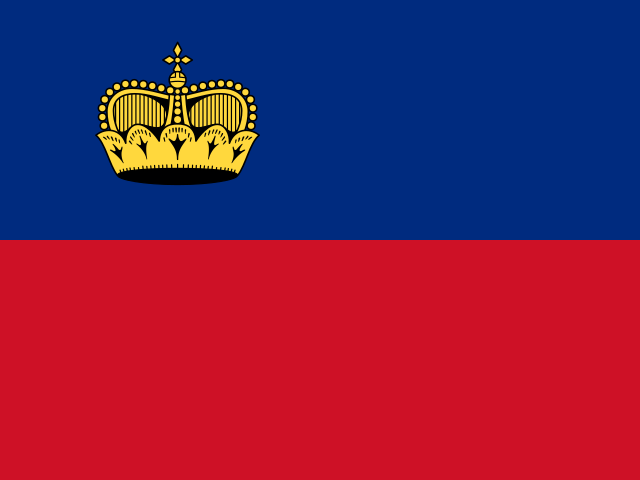 LiechtensteinA tiny Alpine principality of castles, vineyards and trails
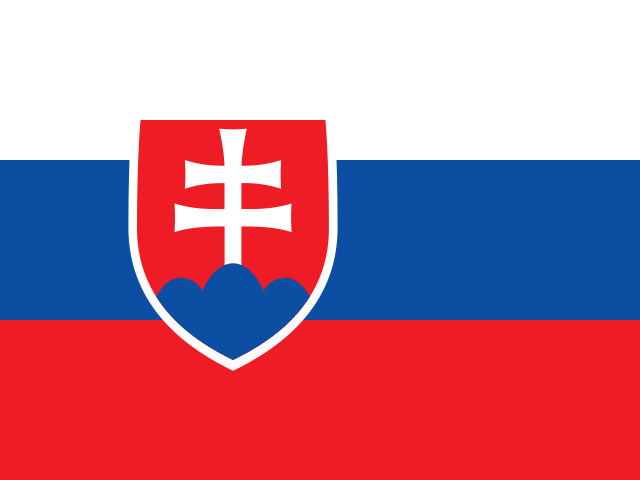 SlovakiaCastle ruins, alpine peaks and a compact Danube capital