Long before borders were drawn, the land that is now Angola was home to Khoisan hunter-gatherers, who were gradually joined over many centuries by Bantu-speaking farmers and ironworkers moving in from the north. By the 14th century powerful states had emerged: the Kingdom of Kongo in the north, with its capital at Mbanza Kongo, and the Mbundu kingdom of Ndongo further south, whose rulers bore the title ngola – the word that eventually gave the country its name.
Portuguese navigators led by Diogo Cão reached the mouth of the Congo River in 1483, and Kongo's kings soon exchanged envoys with Lisbon and adopted Christianity. Relations turned darker as the Atlantic slave trade grew. Luanda was founded in 1576 and became one of the busiest slaving ports on the continent, shipping enormous numbers of captives to Brazil. Resistance was fierce: Queen Nzinga of Ndongo and Matamba spent decades in the 17th century outmanoeuvring the Portuguese through war and diplomacy, and she remains a national heroine.
Read the full history
Full colonial control of the interior only came in the late 19th and early 20th centuries, bringing forced labour, coffee and diamond plantations and a growing settler population. In 1961 an armed struggle for independence began, led by rival movements – the MPLA, FNLA and UNITA. After a change of government in Portugal, Angola became independent on 11 November 1975, but the rival movements soon turned on each other and a long civil war, entangled with Cold War politics, lasted until a peace agreement in 2002.
Since then oil and diamonds have driven rapid rebuilding, from new roads to Luanda's gleaming seafront promenade. For visitors, Angola is one of Africa's least-touristed big countries: the ruins and royal sites of Mbanza Kongo (a UNESCO World Heritage Site), colonial forts, the haunting Slavery Museum near Luanda, and a living culture of semba and kizomba music give real depth to a journey through its deserts, highlands and waterfalls.
Timeline
c. 1390Kingdom of Kongo emerges, centred on Mbanza Kongo
1483Portuguese explorer Diogo Cão reaches the Congo River mouth
1576Luanda is founded by the Portuguese
1624-1663Queen Nzinga leads resistance in Ndongo and Matamba
1961Armed struggle for independence begins
1975Independence from Portugal on 11 November
2002Peace agreement ends the long civil war
2017Mbanza Kongo inscribed as a UNESCO World Heritage Site
Angola🛂 Visa & entry
Entry rules depend on your passport and change often.
Before you book, check the official rules for your passport:
Stroll the MarginalWalk Luanda's palm-lined bayfront promenade at sunset as the city lights flicker on across the water.
Feel the spray at KalandulaStand at the edge of Kalandula Falls, one of Africa's largest waterfalls by volume, roaring through a horseshoe of green cliffs.
Drive the Serra da LebaSnake down the famous hairpin road from the cool Huíla highlands to the desert coast below.
Peer into Tundavala GapLook over a sheer escarpment edge near Lubango where the plateau drops away more than a kilometre to the plains.
Hunt for welwitschiaSpot the bizarre two-leaved desert plant that can live for over a thousand years in the Namib Desert of the south.
Learn at the Slavery MuseumVisit the small but powerful National Museum of Slavery in a former chapel on the coast south of Luanda.
Dance semba and kizombaJoin a live-music night where Angola's signature partner dances fill the floor until late.
Go on safari at KissamaLook for elephants, giraffes and antelope in Kissama National Park, a short drive from the capital.
Climb the Black RocksScramble among the giant dark boulders of Pungo Andongo, linked in legend to Queen Nzinga.
Beach-hop around BenguelaLaze on the calm bays near Benguela and Lobito, where seafood grills line the sand.
Exercise increased caution in Sao Tome and Principe due to health risks. U.S. government employee travel restrictions As of August 12, 2026, U.S. government employees working for the U.S. Mission to Angola and Sao Tome and…
LuandaCapital · coastA fast-changing oil city with a colonial fortress, a lively bay promenade and the sandy Ilha spit packed with beach bars and seafood spots.
Kalandula FallsMalanje · waterfallA thundering, broad curtain of water that is at its most dramatic after the rainy season.
Pungo AndongoMalanje · rock formationsTowering black monoliths rising from the savannah, steeped in royal legend and ideal for short hikes.
📍
Lubango & TundavalaHuíla highlandsA cool, relaxed highland city with a Christ statue overlook, gateway to the vertiginous Tundavala Gap and Serra da Leba pass.
📍
Namibe & Iona National ParkSouthwest · desertWhere the Namib Desert meets the Atlantic, with red dunes, welwitschia plants and remote wilderness for 4x4 adventures.
📍
Kissama National ParkBengo · wildlifeAngola's most accessible park, home to restocked herds and coastal river scenery within reach of Luanda.
📍
Benguela & LobitoCentral coast · beachesLaid-back coastal towns with old Portuguese architecture, a historic railway and sweeping bays.
Mbanza KongoZaire province · historyThe former royal capital of the Kongo Kingdom, with cathedral ruins and a UNESCO-listed historic centre.
Angola✨ Must-do experiences
Feel the spray at Kalandula Falls
Look over the edge at Tundavala Gap
Spend a beach day on Mussulo
Dance to kizomba and semba music in Luanda
Angola🍽️ Taste of Angola
Muamba de galinha – chicken stewed in palm oil sauce
Funge – smooth cassava or maize porridge
Calulu – dried fish stew with vegetables
Mufete – grilled fish with beans, plantain and sweet potato
Angola🌦️ Weather & best time to visit Angola
Best time to visit Angola
Angola has a hot, humid rainy season from roughly October to April and a cooler, often overcast dry season from May to September. The coast and southern desert are much drier than the north, while highland cities like Lubango and Huambo stay pleasantly mild year-round.
BestMay–September: the dry, cooler cacimbo season brings comfortable temperatures, clearer roads and good wildlife viewing.
ShoulderOctober–November: warming up with the first rains, landscapes start to green and waterfalls begin to swell.
AvoidMarch–April: the heaviest rains can wash out rural roads, especially in the north and central highlands.
29°💧Jan
30°💧Feb
30°💧💧Mar
29°💧💧Apr
28°☀️May
25°☀️Jun
23°☀️Jul
23°☀️Aug
25°☀️Sep
26°☀️Oct
28°💧Nov
28°💧Dec
Typical daytime highs and rain in Luanda (approximate averages).
Angola🎉 Festivals & events in Angola
February/March
Luanda CarnivalColourful parade groups march along the bayfront in costume, dancing to semba rhythms in a tradition with deep local roots.
August
Festas da Nossa Senhora do MonteLubango's big annual celebration mixing a religious pilgrimage with concerts, fairs and festivities.
April (4th)
Peace and Reconciliation DayA national holiday marking the 2002 peace agreement, with public events across the country.
November (11th)
Independence DayFlags, concerts and ceremonies celebrate independence from Portugal in 1975.
Angola🧭 Angola itinerary ideas
How many days in Angola?
5 daysLuanda & the north
Day 1-2 explore Luanda's fortress, Marginal promenade, Ilha and the Slavery Museum. Day 3 make a day trip to Kissama National Park. Day 4-5 head inland to Kalandula Falls and the Black Rocks of Pungo Andongo before returning to the capital.
10 daysCoast, highlands & desert
Day 1-2 Luanda, then Day 3-4 Kalandula and Pungo Andongo. Day 5-6 fly or drive south to Benguela and Lobito for beaches. Day 7-8 base in Lubango for Tundavala Gap and the Serra da Leba, and Day 9-10 descend to Namibe for desert landscapes and welwitschia.
Angola🎒 Backpacking Angola – tips & hacks
Backpacker budget: about $50–80 a day
Angola has very few hostels; guesthouses and simple pensões outside Luanda are the budget option, so book ahead where you can.
Long-distance buses link Luanda with Benguela, Lubango and Malanje and are far cheaper than domestic flights.
Shared minibus taxis (candongueiros) are the cheapest way around towns – ask locals for the route and hand signals.
Eat where locals do: street grills and small restaurants serve funge, grilled fish and muamba de galinha at a fraction of upscale prices.
Learn some basic Portuguese – English is rarely spoken outside business circles and it will make bus stations and markets much easier.
Angola🛡️ Safety & money in Angola
Stay safe
Petty theft and bag snatching occur in Luanda; keep phones out of sight and avoid walking alone at night.
Use trusted taxis or ride-hailing apps after dark rather than flagging cars in the street.
Do not photograph government buildings, police or military sites – it can lead to trouble.
Landmines remain in some remote rural areas; stick to used roads and paths and follow local advice.
Money
The kwanza is the local currency; carry enough cash for rural areas, where card payments are rare.
ATMs are common in cities but can run out of cash or reject foreign cards – Visa tends to work more often than other networks.
Tipping around 10% in sit-down restaurants is appreciated but not mandatory.
Emergency: 113 police · 115 fire · 112 ambulance
Angola🛬 Getting to Angola
Most travellers fly into Luanda, which has connections to Europe, the Middle East, Brazil and southern Africa. Overland, the main crossing is from northern Namibia at Oshikango–Santa Clara.
The country's name comes from 'ngola', the title of the kings of Ndongo.
The giant sable antelope, or palanca negra, is found only in Angola and is a beloved national symbol.
Welwitschia plants in Angola's southern desert can live for more than a thousand years.
Kizomba, the sensual partner dance now popular worldwide, developed in Angola.
Much of the water that feeds Botswana's Okavango Delta starts as rain in Angola's central highlands.
Angola❓ Angola travel FAQ
Angola travel questions
Is Angola safe for tourists?
Most visits pass without problems, but petty crime is a concern in Luanda and other cities. Take usual big-city precautions, avoid walking at night and check your government's latest travel advice before you go.
What is the best time to visit Angola?
May to September is the dry, cooler season and the easiest time for road trips and wildlife. Waterfalls like Kalandula are fullest at the end of the rains around April and May.
Do I need a visa for Angola?
It depends on your passport – rules have been changing in recent years. Check the official Angolan government site or your nearest embassy before you travel.
How many days do you need in Angola?
Five days covers Luanda plus Kalandula Falls, while ten days to two weeks lets you add the southern highlands and the Namibe desert. Distances are large, so consider a domestic flight or two.
What language is spoken in Angola?
Portuguese is the official language and is widely spoken, alongside Bantu languages such as Umbundu, Kimbundu and Kikongo. English is limited, so a phrasebook or translation app helps a lot.
Angola💰 What a trip costs
$$$price level
$50–80backpacker / day
$120–220mid-range / day
Approximate daily cost per person (stay, food, local transport).
Angola🚌 Getting around
Domestic flights link Luanda with regional cities, and long-distance buses run on main roads. Many travelers hire a car with a driver for remote areas.
Angola🛕 Sacred & spiritual places
Muxima Sanctuary – Riverside church that draws huge Catholic pilgrimages every year
Mbanza Kongo – Old Kongo kingdom capital with the ruins of an early cathedral
Angola🤝 Local etiquette
Greet people politely before asking questions
Ask before taking photos of people
Dress neatly in towns and churches
Nothing in this tab yet – the agents add new stories every few minutes.
📰 Older Angola stories Everything our agents ever found – keeps loading as you scroll

.jpg/1920px-Luanda_2025_focused_(cropped).jpg)



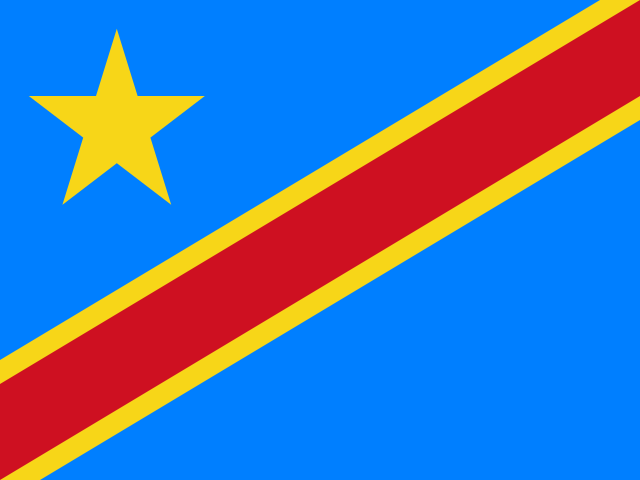 DR CongoMountain gorillas, lava lakes and the mighty Congo River
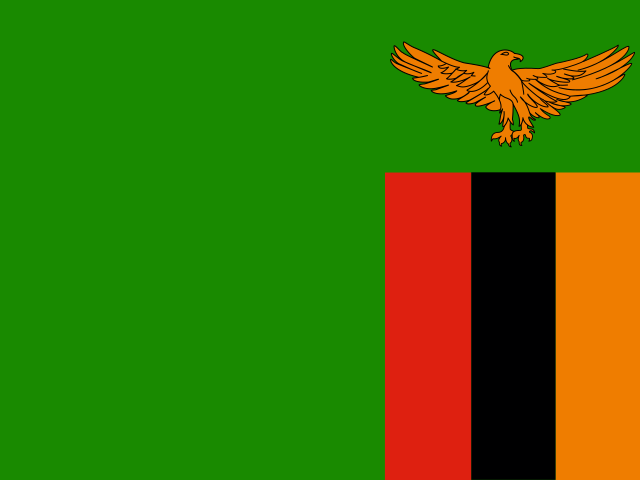 ZambiaWalking safaris, mighty falls and the Zambezi River
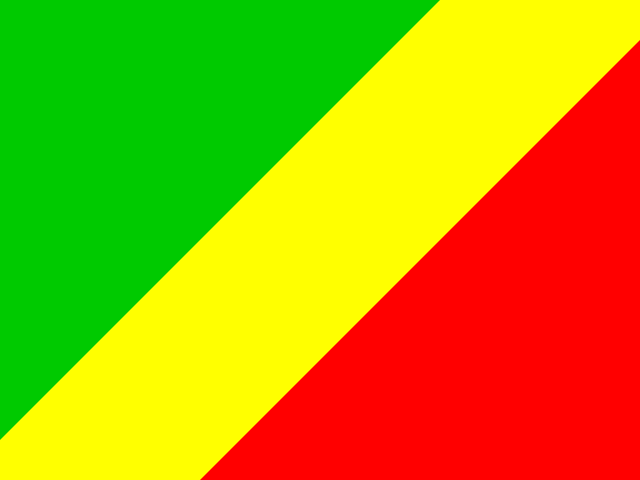 Republic of the CongoRainforest gorillas, the Congo River and Brazzaville
 NamibiaRed dunes, desert wildlife and endless open roads
 GabonRainforest parks where elephants walk on the beach
 BotswanaDelta safaris, salt pans and huge elephant herds
.jpg/500px-Hwange_National_Park,_Zimbabwe_(48595113747).jpg)
 ZimbabweVictoria Falls, ancient stone ruins and big-game parks
 BurundiRoyal drummers, green hills and Lake Tanganyika beaches