The Cook Islands were settled by Polynesian voyagers who navigated thousands of kilometres of open ocean by stars, swells and birds, arriving at least a thousand years ago. Oral traditions trace close links with Tahiti and the Society Islands, and from these islands, according to Māori tradition, great canoes later set out for Aotearoa New Zealand. Communities were organised around chiefly titles, tribal lands and marae – sacred meeting grounds – while on Rarotonga an ancient inland road, the Ara Metua, was laid with coral and stone.
Spanish navigators sighted some of the northern atolls in the late 16th and early 17th centuries, and Captain James Cook charted several southern islands in the 1770s. A Russian admiral later gave the group Cook's name. Christian missionaries of the London Missionary Society, including the Tahitian teacher Papeiha, arrived from the 1820s and reshaped island life; the whitewashed coral-lime churches they inspired still stand in villages across the islands.
Read the full history
Concerned about French expansion in the Pacific, the islands' chiefs accepted a British protectorate in 1888, and in 1901 the islands were annexed to New Zealand. In 1965 the Cook Islands became self-governing in free association with New Zealand, running their own affairs with their own parliament while sharing New Zealand citizenship. Many Cook Islanders now live in New Zealand and Australia, keeping close family ties across the ocean.
For visitors, this heritage is alive and welcoming. Sunday church services ring with powerful a cappella hymns, drum dancing is among the most electrifying in Polynesia, and the Cook Islands Māori language is spoken alongside English. Traditional land ownership still shapes every village, while the vast Marae Moana marine park protects the surrounding ocean for future generations.
Timeline
c. 1000 or earlierPolynesian voyagers settle the islands
1595Spanish navigator Álvaro de Mendaña sights Pukapuka
1773Captain James Cook charts islands in the southern group
1821Missionary teacher Papeiha lands on Aitutaki
1888British protectorate declared
1901Islands annexed to New Zealand
1965Self-government in free association with New Zealand
2017Marae Moana marine park established
Cook Islands🛂 Visa & entry
Entry rules depend on your passport and change often.
Before you book, check the official rules for your passport:
Alaska Airlines has made plenty of announcements this week regarding its Atmos Rewards frequent flier program, which we have covered, and changes to its equipment, such as seats, which we didn’t. There is one more change that…
Cook Islands✨ 10 best things to do in Cook Islands
Things to do in Cook Islands
Snorkel Muri LagoonFloat over coral heads and giant clams in the calm, glassy lagoon on Rarotonga's southeast coast.
Hike the Cross-Island TrackClimb through jungle to the base of Te Rua Manga, the Needle, for sweeping views of Rarotonga's peaks and reef.
Cruise Aitutaki's lagoonSail across one of the Pacific's most beautiful lagoons to the dazzling sandbars of One Foot Island.
Shop the Punanga Nui MarketJoin locals on Saturday morning in Avarua for island food, crafts, black pearls and live music.
Hear a Sunday church choirAttend a service at a historic coral-lime church to hear soaring Cook Islands Māori hymn singing.
Watch an island nightFeast on local dishes and watch thrilling drum dancing at a traditional island night show.
Explore Atiu's cavesCrawl through limestone caves where kopeka swiftlets echolocate in the dark.
Ride the round-island busCircle Rarotonga on the clockwise and anticlockwise buses, hopping off at whichever beach looks best.
Paddle an outrigger canoeTake a vaka or kayak out across the lagoon at sunset for a classic Polynesian experience.
Spot whalesWatch humpback whales breaching beyond the reef during their winter migration from roughly July to October.
Cook Islands🗺️ Where to visit in Cook Islands
Where to go in Cook Islands
AvaruaRarotonga · main townThe small, friendly capital with its harbour, market, cafés and historic mission buildings.
📍
Muri BeachRarotonga · lagoonThe island's most popular stretch, with shallow turquoise water and small motu islands to swim or paddle to.
Te Rua Manga (The Needle)Rarotonga · hikingA dramatic volcanic spire at the heart of the island's best-known jungle trail.
📍
AitutakiSouthern group · lagoonA triangle-shaped lagoon of extraordinary colours, ringed by uninhabited islets and white sandbars.
📍
One Foot Island (Tapuaetai)Aitutaki · sandbarA postcard-perfect motu where you can wade across sandbanks in impossibly clear water.
📍
AtiuSouthern group · caves & birdsA raised coral island with forests, caves, coffee growing and a strong traditional culture.
📍
MangaiaSouthern group · geologyOne of the Pacific's oldest islands, ringed by fossilised coral cliffs and quiet taro valleys.
📍
MaukeSouthern group · off the beaten pathA tiny, gentle island of swimming caves, a unique divided church and almost no tourists.
Cook Islands✨ Must-do experiences
Take a lagoon cruise in Aitutaki
Do the cross-island hike on Rarotonga
Watch an island night dance show
Shop at Punanga Nui Market
Cook Islands🍽️ Taste of Cook Islands
Ika mata – raw fish in lime and coconut cream
Rukau – taro leaves cooked in coconut cream
Umu – food cooked in an earth oven
Poke – banana and arrowroot pudding
Cook Islands🌦️ Weather & best time to visit Cook Islands
Best time to visit Cook Islands
The Cook Islands are warm year-round, with a cooler dry season from May to October and a hot, wet season from November to April. The northern atolls lie closer to the equator and are hotter than the southern group.
BestMay–October: the dry season brings sunshine, lower humidity and pleasant temperatures, plus whale-watching in the later months.
ShoulderApril and November: warm with fewer visitors, though rain becomes more likely.
AvoidJanuary–March: the hottest, most humid months with heavy downpours and the highest cyclone risk.
29°💧💧💧Jan
29°💧💧💧Feb
29°💧💧💧Mar
28°💧💧Apr
26°💧May
25°💧Jun
24°💧Jul
24°💧Aug
25°💧Sep
26°💧Oct
27°💧💧Nov
28°💧💧Dec
Typical daytime highs and rain in Avarua (Rarotonga) (approximate averages).
Cook Islands🎉 Festivals & events in Cook Islands
Late July–early August
Te Maeva NuiThe biggest celebration of the year, marking self-government with dance and drumming competitions, parades and feasts.
November
Vaka EivaA week-long outrigger canoe festival with races around Rarotonga's lagoon and coast.
October
Gospel DayIslands commemorate the arrival of Christianity with re-enactments, singing and church events.
Cook Islands🧭 Cook Islands itinerary ideas
How many days in Cook Islands?
5 daysRarotonga escape
Day 1-2 settle into Muri, snorkel the lagoon and take a sunset paddle. Day 3 hike the Cross-Island Track and explore Avarua, then Day 4-5 enjoy the Saturday market, an island night and a Sunday church service.
10 daysRarotonga, Aitutaki & Atiu
Day 1-4 explore Rarotonga's lagoon, mountains and markets. Day 5-8 fly to Aitutaki for a lagoon cruise and lazy beach days, then Day 9-10 visit Atiu for caves, birdlife and village culture before returning to Rarotonga.
Rarotonga has a handful of backpacker hostels and budget lodges – book ahead in the dry season as beds are limited.
Use the round-island bus instead of taxis; it runs in both directions and is the cheapest way to get around.
Snorkelling from the shore is free – bring your own mask and fins to skip rental costs.
Eat at the market and local takeaways for ika mata (raw fish in coconut milk) and other affordable island food.
Groceries are imported and pricey, so stock up in Avarua's supermarkets and cook in hostel kitchens.
Cook Islands🛡️ Safety & money in Cook Islands
Stay safe
Crime is low, but don't leave valuables unattended on beaches or in unlocked rooms.
Swim inside the lagoon and stay away from reef passages, where currents can be dangerous.
Wear a helmet and ride carefully if you rent a scooter – roads are narrow and dogs wander freely.
Use strong reef-safe sun protection and carry water; the tropical sun is fierce even on cloudy days.
Money
The New Zealand dollar is used, along with local Cook Islands coins and notes that make popular souvenirs.
ATMs and card payments are common on Rarotonga and available on Aitutaki, but carry cash for the outer islands.
Tipping is not a local custom, though it won't offend if you want to reward great service.
Emergency: 999 police · 998 ambulance · 996 fire
Cook Islands🛬 Getting to Cook Islands
Rarotonga International Airport is the only international gateway, with flights mainly from Auckland and some connections from Australia and Tahiti. Domestic flights link Rarotonga to Aitutaki and the other outer islands.
Cook Islands💡 Did you know? 5 facts about Cook Islands
Cook Islanders are New Zealand citizens, and more of them live in New Zealand than in the Cook Islands themselves.
A local custom holds that no building on Rarotonga should be taller than a coconut palm.
The Marae Moana marine park covers the country's entire ocean area, making it one of the largest protected marine areas in the world.
Some of the country's coins have been triangular, prized by collectors and visitors alike.
You can drive right around Rarotonga on the coastal road in under an hour.
Cook Islands❓ Cook Islands travel FAQ
Cook Islands travel questions
Are the Cook Islands safe for tourists?
Yes, the Cook Islands are one of the safest destinations in the Pacific, with very low crime. The main hazards are ocean currents, road safety on scooters and strong sun.
When is the best time to visit the Cook Islands?
May to October is the dry, sunny and less humid season, with whale-watching from around July. November to April is hotter and wetter, with a risk of cyclones.
How many days do you need in the Cook Islands?
A week is ideal: four or five days on Rarotonga and two or three on Aitutaki. With more time, add an outer island like Atiu.
Do I need a visa for the Cook Islands?
Entry requirements depend on your passport. Check the official Cook Islands government site or your nearest New Zealand or Cook Islands representative before you travel.
Is Rarotonga or Aitutaki better?
Rarotonga has more activities, food and hiking, while Aitutaki offers the more breathtaking lagoon and a quieter pace. Most visitors combine both.
Cook Islands💰 What a trip costs
$$$price level
$70–100backpacker / day
$160–280mid-range / day
Approximate daily cost per person (stay, food, local transport).
Cook Islands🚌 Getting around
On Rarotonga, a round-island bus runs clockwise and anticlockwise, and scooters and bikes are popular. Domestic flights link the outer islands.
Cook Islands🛕 Sacred & spiritual places
Cook Islands Christian Church, Avarua – Historic coral-stone church with lively Sunday singing
Arai-Te-Tonga Marae – Ancient sacred meeting ground on Rarotonga
Cook Islands🤝 Local etiquette
Dress modestly in villages and at church
Sunday is a quiet day of church and family
Ask before entering private land or beaches
Nothing in this tab yet – the agents add new stories every few minutes.
📰 Older Cook Islands stories Everything our agents ever found – keeps loading as you scroll


.jpg/1920px-Te_Rua_Manga_(7189164097).jpg)


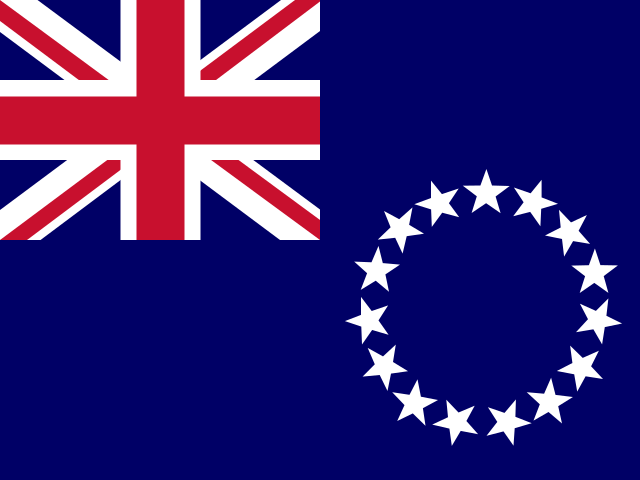
 #United States#Cook Islands#Alaska Airlines#Hotels & Stays

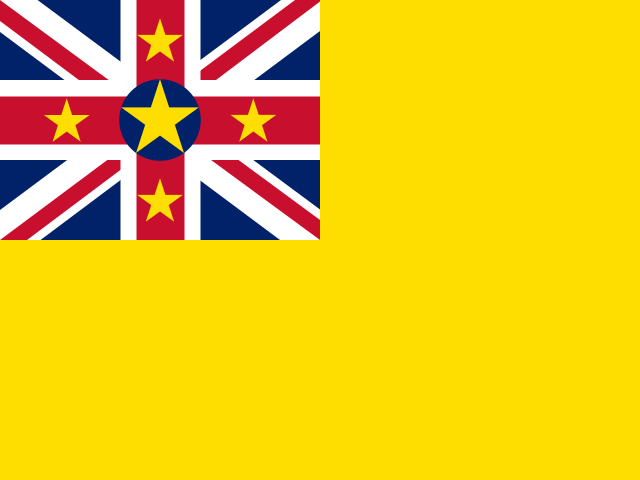 NiueA raised coral island of sea caves, chasms and humpback whales

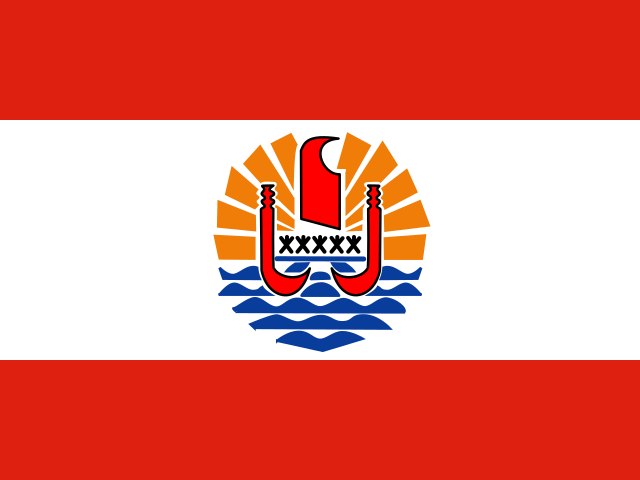 French PolynesiaOverwater bungalows, coral atolls and Tahitian culture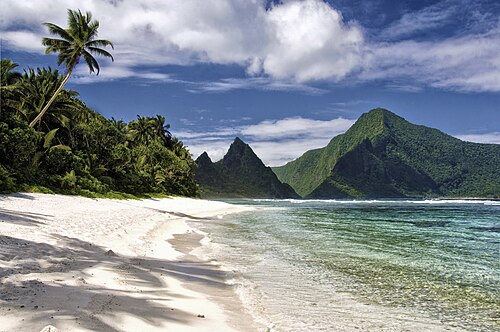
 American SamoaRainforest peaks, quiet reefs and traditional Samoan life
 SamoaWaterfalls, ocean trenches and traditional Polynesian life
 TongaThe Pacific's last kingdom, with whales and quiet islands
 KiribatiRemote coral atolls on both sides of the date line
_-_August_2016.jpg/500px-Naviti_island,_Yasawa,_Fiji_(1)_-_August_2016.jpg)
 FijiBula spirit, coral islands and soft white beaches
.jpg/500px-Landscape,_Tuvalu,_2011._Photo-_DFAT_(12779525995).jpg)
 TuvaluTiny coral atolls and a calm lagoon far from the crowds