Curaçao's first inhabitants were the Caquetío, an Arawak-speaking people who crossed from the coast of present-day Venezuela in canoes. They lived by fishing, farming and gathering, and left rock paintings in caves and on cliffs that can still be seen in places such as Christoffel National Park and the Hato Caves.
Spanish explorers led by Alonso de Ojeda reached the island in 1499. Finding no gold, the Spanish deported many of the Caquetío to work elsewhere in their empire and used the island mainly for cattle ranching. In 1634 the Dutch West India Company seized Curaçao, attracted by its deep natural harbour, and built the fort that grew into Willemstad. The town became a major trading hub, welcoming Sephardic Jewish merchants whose synagogue is among the oldest in the Americas still in use.
Read the full history
Curaçao was also a central depot in the Dutch Atlantic slave trade, and enslaved Africans worked on plantations called landhuizen, many of which still dot the countryside. In 1795 an enslaved man named Tula led a major uprising and is now honoured as a national hero; slavery was finally abolished in 1863. In the early twentieth century a large oil refinery transformed the economy and drew workers from across the Caribbean, Europe and beyond.
Curaçao joined the Netherlands Antilles in 1954 and became an autonomous country within the Kingdom of the Netherlands in 2010. Visitors today enjoy the candy-coloured, UNESCO-listed waterfront of Willemstad, restored plantation houses, a creole cuisine with African, Dutch and Latin influences, and Papiamentu, the island's own expressive language.
Timeline
c. 2500 BCEarliest known human settlement on the island
1499Spanish expedition led by Alonso de Ojeda arrives
1634The Dutch West India Company takes control
1732The Mikvé Israel-Emanuel synagogue is consecrated in Willemstad
1795Tula leads a major revolt against slavery
1863Slavery is abolished in the Dutch colonies
2010Curaçao becomes an autonomous country within the Kingdom of the Netherlands
Curacao🛂 Visa & entry
Entry rules depend on your passport and change often.
Before you book, check the official rules for your passport:
There was no change to the advisory level. Advisory summary was updated. Exercise normal precautions in Curaçao. Advisory summary Curaçao is generally a safe destination for travelers. Petty crime is most likely to occur in…
Exercise normal precaution in Curaçao. Curaçao is generally a safe destination for travelers. Petty crime is most likely to occur in popular tourist locations. Stay aware of your surroundings. Most crimes against foreigners are…
Cross the swinging bridgeWalk the Queen Emma pontoon bridge as it swings open to let ships into Willemstad's harbour.
Snap HandelskadePhotograph the famous row of pastel Dutch-colonial facades lining Willemstad's waterfront.
Snorkel at Playa LagunSwim alongside turtles in a sheltered cove framed by cliffs and fishing boats.
Climb Mount ChristoffelStart early to hike to the island's highest point for views stretching across the whole island.
Feel the waves at Shete BokaWatch the surf thunder into rocky inlets and natural bridges on the wild north coast.
Sail to Klein CuraçaoTake a boat to the uninhabited islet with a pink-tinged lighthouse and powder-white beach.
Dive the reefsExplore steep reef walls close to shore at sites such as the Mushroom Forest and Tugboat wreck.
Explore the Hato CavesTour limestone caverns with stalactites and ancient Caquetío rock drawings.
Visit the Kura Hulanda MuseumLearn about the African diaspora and the history of the transatlantic slave trade.
Eat at a plasa bieuJoin locals at Willemstad's old market for hearty stews, fried fish and funchi.
Curacao🗺️ Where to visit in Curacao
Where to go in Curacao
WillemstadCapital · UNESCO old townPunda and Otrobanda face each other across the harbour, full of colourful facades, museums and lively squares.
📍
Christoffel National ParkWestpunt · hiking and wildlifeCactus-covered hills, Caquetío rock art and the island's highest peak.
Shete Boka National ParkNorth coast · wild seascapesPounding surf, blowholes and turtle-nesting beaches along a rugged limestone coast.
📍
Playa KenepaWest coast · beachGrote Knip's turquoise cove is one of the most photographed beaches in the Caribbean.
Klein CuraçaoOffshore islet · day tripA tiny desert island with a lighthouse, a shipwreck and excellent snorkelling.
📍
WestpuntWestern tip · cliffs and beachesA quiet area of small beaches, cliff jumping at Playa Forti and sunset views.
📍
Hato CavesNear the airport · cavesLimestone caves once used by the Caquetío and later as a refuge by escaped enslaved people.
📍
Landhuis KnipWestpunt · plantation historyA restored plantation house that tells the story of Tula's 1795 revolt.
Curacao✨ Must-do experiences
Walk across the Queen Emma floating bridge in Willemstad
Snorkel with sea turtles at Playa Piskado
Take a day trip by boat to Klein Curaçao
Hike to the top of Christoffelberg at sunrise
Curacao🍽️ Taste of Curacao
Keshi yena – cheese stuffed with spiced meat and baked
Stoba – slow-cooked stew of goat or beef
Funchi – cornmeal side dish, similar to polenta
Pastechi – fried pastries filled with cheese or meat
Curacao🌦️ Weather & best time to visit Curacao
Best time to visit Curacao
Curaçao has a hot, semi-arid climate cooled by steady trade winds. Rainfall is low and concentrated in brief showers between October and December.
BestJanuary–September: dry, sunny and breezy, with calm seas for diving and snorkelling.
ShoulderOctober–December: the short rainy season brings occasional showers but lush scenery and fewer visitors.
AvoidNo bad time – Curaçao lies south of the main hurricane belt and is warm all year.
30°💧Jan
30°☀️Feb
30°☀️Mar
31°☀️Apr
31°☀️May
32°☀️Jun
32°☀️Jul
32°☀️Aug
32°☀️Sep
32°💧Oct
31°💧Nov
30°💧Dec
Typical daytime highs and rain in Willemstad (approximate averages).
Curacao🎉 Festivals & events in Curacao
January–February/March
Curaçao CarnivalWeeks of tumba music competitions, parades and parties culminate in the Grand Parade.
Easter Monday
Seú Folkloric ParadeA harvest celebration with traditional dancers and music honouring the island's African roots.
Late August–September
Curaçao North Sea Jazz FestivalInternational stars play an energetic music festival in Willemstad.
10 October
Curaçao DayFlags and festivities mark the island becoming an autonomous country in 2010.
Curacao🧭 Curacao itinerary ideas
How many days in Curacao?
4 daysWillemstad and beaches
Day 1-2 explore Punda, Otrobanda and the Kura Hulanda Museum. Day 3 head west for Playa Lagun and Playa Kenepa. Day 4 take a boat trip to Klein Curaçao.
8 daysIsland explorer
Days 1-3 Willemstad, the Hato Caves and a plantation house. Days 4-6 base yourself in Westpunt for Christoffel National Park, Shete Boka and beach-hopping. Days 7-8 dive or snorkel the reefs and finish with a sunset sail.
Curacao🎒 Backpacking Curacao – tips & hacks
Backpacker budget: about $80–120 a day
Public buses are cheap but infrequent; konvooi buses run longer routes from Willemstad's bus stations, so plan around their timetables.
Renting a car or scooter shared with friends is often the most affordable way to reach the western beaches.
Guesthouses and apartments in Pietermaai and Otrobanda are good budget bases close to Willemstad's nightlife.
Fill up at truki pan food trucks and local snack bars serving pastechi and stews.
Snorkel straight from public beaches with your own gear instead of booking tours.
Curacao🛡️ Safety & money in Curacao
Stay safe
Curaçao is generally safe for tourists, but avoid isolated areas at night and lock valuables out of sight in cars.
Never leave belongings unattended on beaches or in parked rental cars.
The sun is fierce year-round, so use high-factor reef-safe sunscreen and drink plenty of water.
Swim only at calm beaches; the north coast has strong waves and currents.
Money
The local currency is the Caribbean guilder, and US dollars are also widely accepted.
Cards are accepted in most restaurants and shops, and ATMs are common in Willemstad.
Many restaurants include a service charge; otherwise a tip of around ten to fifteen percent is appreciated.
Emergency: 911 police, fire & ambulance
Curacao🛬 Getting to Curacao
Curaçao International Airport (Hato) has direct flights from Europe, North America and South America. Cruise ships also dock at Willemstad's terminals.
Papiamentu, a creole language blending Portuguese, Spanish, Dutch and African languages, is an official language alongside Dutch and English.
The Mikvé Israel-Emanuel synagogue has a sand-covered floor.
The Queen Emma Bridge is a floating pontoon bridge that swings open for passing ships.
Blue Curaçao liqueur is flavoured with the peel of the laraha orange, which grows on the island.
Willemstad's colourful buildings are often linked to a story about a governor who claimed bright white walls gave him headaches.
Curacao❓ Curacao travel FAQ
Curacao travel questions
Is Curaçao safe for tourists?
Yes, Curaçao is generally safe, with most visits trouble-free. Take normal precautions such as not leaving valuables in cars and avoiding deserted areas at night.
When is the best time to visit Curaçao?
Curaçao is a year-round destination, with the driest weather from January to September. It sits outside the main hurricane belt, making it a reliable choice even in late summer.
How many days do you need in Curaçao?
Four days covers Willemstad and the best beaches. A week or more allows time for diving, hiking Christoffel and a trip to Klein Curaçao.
Do I need a visa for Curaçao?
It depends on your passport – many visitors can enter without a visa, but requirements vary. Check the official government site or a Dutch embassy before you travel.
What language do they speak in Curaçao?
Papiamentu is the everyday language, and Dutch and English are also official. Spanish is widely understood, so most visitors communicate easily.
Curacao💰 What a trip costs
$$$price level
$80–120backpacker / day
$180–300mid-range / day
Approximate daily cost per person (stay, food, local transport).
Curacao🚌 Getting around
A rental car is the best way to reach the western beaches. Taxis are easy to find, and buses are limited.
Curacao🛕 Sacred & spiritual places
Mikvé Israel-Emanuel Synagogue – Oldest synagogue in continuous use in the Americas, with a sand floor
Curacao🤝 Local etiquette
Say 'bon dia' (good day) in Papiamentu, the local language
Wear swimwear only on the beach
Use reef-safe sunscreen and do not touch coral
Nothing in this tab yet – the agents add new stories every few minutes.
📰 Older Curacao stories Everything our agents ever found – keeps loading as you scroll


.jpg/1920px-Klein_Curacao_(34873648396).jpg)

 ArubaSunny, breezy island of white beaches and desert landscapes
.JPG/500px-Sur_de_M%C3%A9rida_(Venezuela).JPG)
 VenezuelaThe world's tallest waterfall, tabletop mountains and Caribbean isles
 Puerto RicoColonial forts, rainforest and glowing bays in the Caribbean
 Dominican RepublicPalm-lined beaches, merengue beats and colonial history
 GrenadaThe Spice Isle of nutmeg, rainforest and white-sand bays
 U.S. Virgin IslandsNational-park beaches and Danish colonial towns
 HaitiMountain fortresses, Creole art and a proud island history
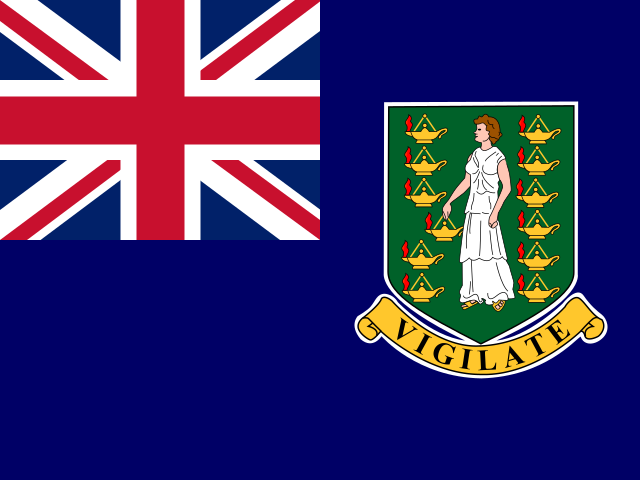 British Virgin IslandsSailing paradise of calm bays and island-hopping