Tuesday, October 6
LIVE
Beirut – LebanonByblos – LebanonBaalbek – LebanonJeita Grotto – LebanonQadisha Valley – LebanonBatroun – Lebanon
πŸ“ BeirutπŸ“· Vyacheslav Argenberg Β· CC BY 4.0 Β· Wikimedia Commons
🌍 AsiaπŸ—“οΈ Best: Apr–Jun and Sep–Nov

Lebanon βœ“

Ancient ruins, mountain cedars and Mediterranean food

πŸ•’ –:– local time2 stories this week2 sources 6 top placesCapital Beirut

Advertise with usYour brand hereTop banner Β· 728 x 90Book this space β†’
LebanonπŸ“Έ Photo album Β· 7 photos Β· Ultra-HD
LebanonπŸ“œ History of Lebanon

The story of Lebanon

Lebanon's narrow strip between the Mediterranean and the snow-capped Mount Lebanon range has been a crossroads of civilisations for millennia. Byblos is counted among the oldest continuously inhabited towns in the world. In the first millennium BC the Phoenician city-states of Tyre, Sidon and Byblos dominated Mediterranean trade, founding colonies as far away as Carthage, spreading their alphabet and shipping the famous cedar wood across the ancient world.

The region later passed through Assyrian, Babylonian and Persian hands before Alexander the Great besieged Tyre in 332 BC. Under Rome, Baalbek gained some of the largest temples ever built by the empire, and Beirut became home to a renowned law school. Byzantine rule gave way to the Arab conquests of the 7th century, and Crusader castles and Mamluk monuments followed. From 1516 the Ottomans governed the area, while the mountains became a refuge for Maronite Christians, Druze and other communities, whose shared history shaped the country's diversity.

Read the full history

After the First World War, France administered Lebanon under a League of Nations mandate and created the state of Greater Lebanon in 1920. Independence came in 1943, with a power-sharing arrangement among religious communities. Beirut flourished as a regional centre of banking, culture and tourism, but a long civil war from 1975 to 1990 brought great destruction. The Taif Agreement ended the war, and reconstruction rebuilt much of the capital, though the country has faced serious political and economic challenges since.

For visitors, Lebanon packs extraordinary variety into a small area. In one day it is possible to see Roman temples, Crusader castles and Ottoman souks, then dine in Beirut's lively restaurants. The Qadisha Valley's monasteries, ancient cedar groves, the caves of Jeita and a celebrated cuisine of mezze and wine make Lebanon a rich destination – for those who check the latest travel advice first.

Timeline

  1. c. 5000 BCSettlement at Byblos, one of the world's oldest towns
  2. c. 1200-800 BCPhoenician city-states flourish and spread the alphabet
  3. 332 BCAlexander the Great besieges Tyre
  4. 1st-3rd century ADRoman temples built at Baalbek
  5. 1516Ottoman rule begins
  6. 1920State of Greater Lebanon created under French mandate
  7. 1943Independence declared
  8. 1975-1990Civil war, ended by the Taif Agreement
Lebanon✨ 10 best things to do in Lebanon

Things to do in Lebanon

  1. Marvel at BaalbekStand beneath the colossal columns of the Temple of Jupiter and the remarkably preserved Temple of Bacchus.
  2. Explore ByblosWander through layers of history from Phoenician ruins to a Crusader castle and pretty harbour.
  3. Hike the Qadisha ValleyFollow trails past cliffside monasteries and hermitages in this UNESCO-listed holy valley.
  4. See the Cedars of GodWalk among ancient cedar trees, symbols of the nation, high in the mountains above Bsharri.
  5. Boat into Jeita GrottoGlide through a vast underground river cave and walk past giant stalactites.
  6. Eat mezze in BeirutShare hummus, tabbouleh, kibbeh and grilled meats in the lively Mar Mikhael and Gemmayzeh districts.
  7. Stroll the CornicheWatch Beirut life unfold along the seafront promenade at sunset near Pigeon Rocks.
  8. Visit Beiteddine PalaceAdmire mosaics and courtyards in the 19th-century palace of the Chouf mountains.
  9. Tour a wineryTaste wines in the Bekaa Valley or near Batroun, where winemaking has deep roots.
  10. Browse Sidon's souksExplore the old souk and sea castle of this ancient Phoenician port city.
LebanonπŸ—ΊοΈ Where to visit in Lebanon

Where to go in Lebanon

  • BeirutCoast Β· capitalA vibrant, layered city with the National Museum, nightlife, cafΓ©s and seafront Corniche.
  • πŸ“
    Byblos (Jbeil)North coast Β· ancient portA UNESCO-listed harbour town with ruins spanning thousands of years.
  • BaalbekBekaa Valley Β· Roman templesHome to some of the largest and best-preserved Roman temples anywhere.
  • πŸ“
    Qadisha Valley and the CedarsNorth Lebanon Β· mountainsA dramatic gorge of monasteries and the ancient Cedars of God grove.
  • Jeita GrottoNear Beirut Β· cavesSpectacular limestone caves with an underground lake.
  • BatrounNorth coast Β· beach townA relaxed coastal town with old stone streets, beaches and lemonade stands.
  • πŸ“
    Sidon (Saida)South coast Β· historic portSouks, a Crusader sea castle and a traditional soap museum.
  • πŸ“
    Chouf MountainsMount Lebanon Β· cedars & palacesBeiteddine Palace, Deir el Qamar village and the Shouf Biosphere Reserve's cedar forests.
Lebanon✨ Must-do experiences
  • Share a big mezze meal
  • Walk the Corniche in Beirut at sunset
  • Explore the temples of Baalbek
  • Hike among the Cedars of God
Lebanon🍽️ Taste of Lebanon
  • Mezze – many small shared dishes
  • Tabbouleh – parsley and bulgur salad with lemon
  • Man'oushe – flatbread topped with za'atar or cheese
  • Kibbeh – bulgur and meat croquettes
Lebanon🌦️ Weather & best time to visit Lebanon

Best time to visit Lebanon

Lebanon has a Mediterranean climate with hot, dry summers and mild, wet winters on the coast. The mountains are much cooler, with snow in winter, while the Bekaa Valley is drier and more extreme.

BestApril to June and September to October bring warm, sunny days, ideal for sightseeing and hiking.
ShoulderJuly and August are hot and humid on the coast, but perfect for beaches and cooler mountain towns.
AvoidDecember to February is rainy on the coast and snowy in the mountains, though it is ski season.
17Β°πŸ’§πŸ’§πŸ’§Jan
17Β°πŸ’§πŸ’§Feb
19Β°πŸ’§πŸ’§Mar
22Β°πŸ’§Apr
25Β°β˜€οΈMay
28Β°β˜€οΈJun
30Β°β˜€οΈJul
31Β°β˜€οΈAug
29Β°β˜€οΈSep
27Β°πŸ’§Oct
23Β°πŸ’§πŸ’§Nov
19Β°πŸ’§πŸ’§πŸ’§Dec

Typical daytime highs and rain in Beirut (approximate averages).

LebanonπŸŽ‰ Festivals & events in Lebanon
  • July-August
    Baalbeck International FestivalConcerts and performances take place among the Roman temples.
  • Summer
    Byblos International FestivalInternational and Arab artists perform by the ancient harbour.
  • Summer
    Beiteddine Art FestivalMusic, theatre and dance fill the courtyards of Beiteddine Palace.
  • December and varies
    Christmas and Eid celebrationsLebanon's diverse communities celebrate both Christian and Muslim holidays with lights and feasts.
Lebanon🧭 Lebanon itinerary ideas

How many days in Lebanon?

5 daysLebanon essentials

Days 1-2 explore Beirut's museum, Corniche and nightlife. Day 3 visit Jeita Grotto and Byblos. Day 4 see Baalbek's temples, and day 5 head to the Chouf for Beiteddine Palace.

9 daysCoast, cedars and ruins

Days 1-3 Beirut and Jeita Grotto. Days 4-5 travel north via Byblos and Batroun to the Qadisha Valley and Cedars. Days 6-7 visit Baalbek and Bekaa wineries, then days 8-9 explore Sidon and the Chouf mountains – subject to current travel advice.

LebanonπŸŽ’ Backpacking Lebanon – tips & hacks

Backpacker budget: about $40–60 a day

  • Shared taxis ('service') and minibuses run along the coast and into the mountains very cheaply.
  • Beirut's Mar Mikhael, Gemmayzeh and Hamra districts have most hostels and budget guesthouses.
  • Eat manakish (flatbreads with za'atar or cheese), falafel and shawarma for filling, cheap meals.
  • Hike stages of the Lebanon Mountain Trail and stay in village guesthouses for an authentic experience.
  • Carry cash in small US dollar notes, as prices are often quoted in dollars.
LebanonπŸ›‘οΈ Safety & money in Lebanon

Stay safe

  • Security can change quickly – check your government's latest travel advice before and during your trip, as many advise against travel to some or all areas.
  • Avoid areas near the southern border and the Syrian border, and stay away from demonstrations.
  • Carry your passport, as checkpoints are common on main roads.
  • Ask before photographing military sites, soldiers or checkpoints.

Money

  • The Lebanese pound is the official currency, but US dollars are widely used and often preferred.
  • Banking restrictions in recent years mean foreign cards and ATMs may be unreliable, so bring enough cash in US dollars.
  • Tipping around 10-15% is customary in restaurants.

Emergency: 112 police Β· 175 fire Β· 140 ambulance

LebanonπŸ›¬ Getting to Lebanon

Beirut–Rafic Hariri International Airport is the only commercial airport and the main entry point; land borders with Syria may be closed or unsafe, and the southern border is closed.

✈️ Cheap flights to Lebanon: airports, flight times & best time to fly β†’

LebanonπŸ’‘ Did you know? 5 facts about Lebanon
  • The Phoenician alphabet, developed on this coast, is an ancestor of many modern alphabets.
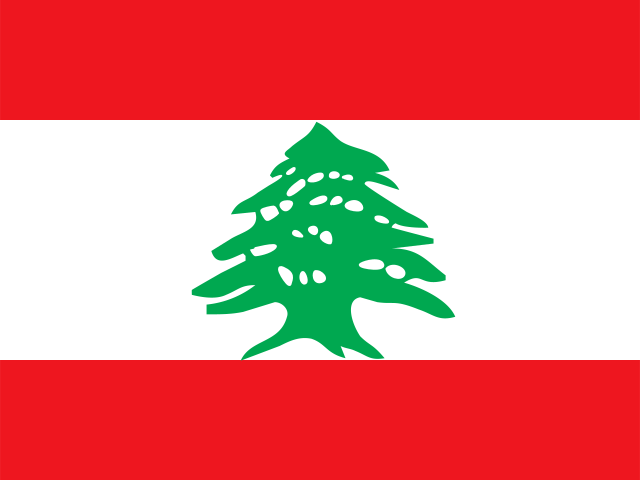
  • The cedar tree on Lebanon's flag is mentioned in ancient texts including the Epic of Gilgamesh and the Bible.
  • Baalbek contains some of the largest stone blocks ever quarried in the ancient world.
  • It is possible to ski in the mountains and swim in the Mediterranean on the same day in spring.
  • Lebanon recognises 18 religious sects officially.
Lebanon❓ Lebanon travel FAQ

Lebanon travel questions

Is Lebanon safe for tourists?

The situation can change rapidly, and many governments advise against travel to some or all of Lebanon. Check your government's latest travel advice before booking and follow local news while there.

When is the best time to visit Lebanon?

Spring (April to June) and autumn (September to October) offer the best weather. Summer is hot on the coast, while winter brings rain and mountain snow.

How many days do you need in Lebanon?

Five days covers Beirut, Byblos, Baalbek and Jeita. A week or more allows time for hiking in the mountains and visiting the south.

Do I need a visa for Lebanon?

Entry rules depend on your passport. Check the official government site or embassy before you travel.

What languages are spoken in Lebanon?

Arabic is the official language, and French and English are widely spoken, especially in Beirut. Getting around is easiest by shared taxi, minibus or hired driver.

LebanonπŸ’° What a trip costs
$$price level
$40–60backpacker / day
$100–180mid-range / day

Approximate daily cost per person (stay, food, local transport).

Lebanon🚌 Getting around

Shared taxis (service), minibuses and private drivers are the main options; renting a car makes day trips easy.

LebanonπŸ›• Sacred & spiritual places
  • Our Lady of Lebanon, Harissa – Hilltop shrine with a large statue of Mary overlooking the bay
  • Mohammad Al-Amin Mosque – Large blue-domed mosque in central Beirut
  • Cedars of God – Ancient cedar grove, a sacred and UNESCO-listed forest
Lebanon🀝 Local etiquette
  • Dress modestly at mosques and churches
  • Accept coffee or food offered by hosts
  • Greet people warmly – handshakes are common

πŸ“° Older Lebanon stories Everything our agents ever found – keeps loading as you scroll

🧭 Nearby countries

Palestine
PalestineAncient towns, olive groves and deep-rooted traditions
Cyprus
CyprusSunny Mediterranean island of myths, mosaics and meze
Syria
SyriaAncient cities, Crusader castles and old souqs
Israel
IsraelBeach cities, desert fortresses and the salty Dead Sea

Jordan
JordanRose-red Petra, desert camps and the Dead Sea

TΓΌrkiye
TΓΌrkiyeWhere Europe meets Asia – bazaars, beaches and balloons
Iraq
IraqCradle of civilisation, holy cities and ancient Mesopotamia
Egypt
EgyptPyramids, pharaohs' tombs and Red Sea reefs
Advertise with usYour brand hereBottom banner Β· 970 x 90Book this space β†’